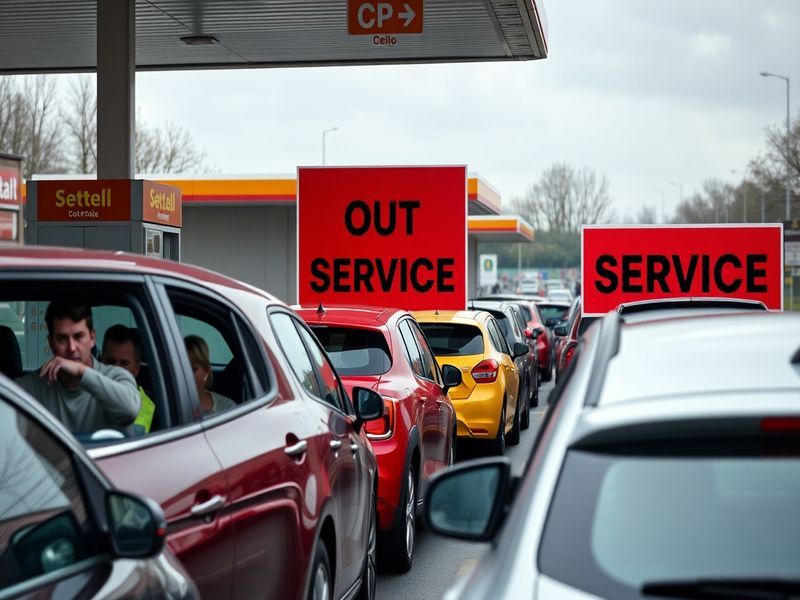
Motorists across the United Kingdom are encountering long queues and empty forecourts as petrol stations report significant fuel shortages today. Reports from industry monitors suggest that availability has plummeted in several regions, particularly in the South East and Midlands, where some stations have completely run dry. The issue appears to be concentrated in urban areas and major transport hubs, raising concerns about supply chain disruptions and consumer behavior.
Regional Breakdown: Where Shortages Are Most Severe
The most severe shortages are being reported in Greater London, Kent, and parts of the West Midlands. According to the latest data from the Petrol Retailers Association (PRA), over 20% of stations in these areas have either no fuel or extremely limited supplies. The situation is less pronounced in Scotland and Northern Ireland, where availability remains closer to normal levels, though isolated shortages have been noted in Edinburgh and Glasgow.
Transport analysts point to a combination of factors driving the regional disparities. High-density urban areas with greater vehicle traffic are experiencing faster depletion rates, while rural stations with lower turnover are less affected. The PRA has published an interactive map showing real-time availability, which motorists can use to plan their refuelling stops.
Key Affected Areas
- London (particularly outer boroughs and commuter routes)
- Kent (M25 and A2 corridors)
- West Midlands (Birmingham and Coventry)
- Parts of the South East (Surrey, Sussex, and Essex)
Root Causes: Why Are Stations Running Dry?
The shortages stem from a confluence of logistical, economic, and behavioral factors. One primary driver is the reduced flow of tanker deliveries to forecourts, which has been attributed to ongoing HGV driver shortages—a persistent issue since the post-pandemic recovery. Industry insiders report that some fuel distributors are prioritising deliveries to larger chains, leaving independent stations vulnerable to stockouts.
Economic pressures are also playing a role. The rising cost of crude oil has led some suppliers to reduce credit terms for smaller retailers, forcing them to operate with tighter cash flow. This has made it difficult for some stations to maintain normal stock levels, particularly those operating on thin margins. Additionally, panic buying triggered by rumours of shortages has exacerbated the problem, creating a self-fulfilling cycle of empty forecourts.
Global events have contributed to the volatility. Disruptions in European refinery operations, combined with reduced imports from key suppliers, have tightened the supply chain. The UK’s reliance on imported fuel—particularly from the Netherlands and Belgium—has made the market more susceptible to international shocks.
Consumer Impact: Queues, Prices, and Alternative Solutions
Motorists are facing longer wait times at stations that still have fuel, with some reporting waits of up to an hour. Social media is flooded with images of crowded forecourts and frustrated drivers, while local news outlets are sharing footage of petrol stations with “NO FUEL” signs prominently displayed. The AA and RAC have issued advisories urging drivers not to top up their tanks unnecessarily, as this accelerates depletion rates.
Fuel prices have remained relatively stable in response to government interventions, but there are reports of isolated price hikes at stations with dwindling supplies. The UK’s Competition and Markets Authority (CMA) has warned retailers against exploiting the situation, and spot checks are being conducted to prevent profiteering. Meanwhile, some consumers are turning to electric vehicle charging points or public transport as temporary alternatives.
How Drivers Are Adapting
- Using fuel price comparison apps to find stations with availability
- Sharing real-time updates on community forums like Facebook groups
- Reducing non-essential trips to conserve fuel
- Switching to hybrid or electric vehicles where possible
- Carpooling or using ride-sharing services
Industry and Government Response
The government has mobilised the military to assist with fuel deliveries, a move that has provided temporary relief in some areas. Defence Secretary Ben Wallace confirmed that up to 100 military tankers are being deployed to support logistics operations. This intervention follows calls from the Road Haulage Association (RHA) for more immediate action to address the HGV driver shortage.
Energy companies are also stepping up efforts to reassure consumers. BP, Shell, and Esso have issued statements pledging to maintain supply levels and prioritise independent retailers. However, some industry analysts argue that these measures are merely short-term fixes and that a more sustainable solution is needed to address the structural issues in the fuel supply chain.
The situation has reignited debates about the UK’s energy security. With North Sea oil production declining and refining capacity reduced, the country is increasingly dependent on imports. Critics of the current government’s energy policy argue that the shortages highlight the need for greater investment in domestic refining and alternative fuels.
Government and Industry Actions
- Military deployment to assist with fuel deliveries
- CMA monitoring for price gouging and unfair practices
- Temporary relaxation of drivers’ hours regulations for HGV drivers
- Encouragement of fuel-efficient driving habits
- Long-term reviews of supply chain resilience
Looking Ahead: What’s Next for UK Fuel Supply?
The immediate outlook remains uncertain, with forecasters predicting that shortages could persist for several weeks unless decisive action is taken. The PRA has called for a coordinated effort between government, industry, and consumer groups to stabilise the market. In the longer term, the UK may need to reassess its fuel supply strategy, particularly in light of global energy transitions and decarbonisation goals.
For now, motorists are advised to check fuel availability before setting out on journeys and to avoid panic buying, which only worsens the situation. Industry experts recommend that those who can refuel should do so during off-peak hours to reduce strain on forecourts. As the situation evolves, staying informed through reliable sources will be key to navigating this disruption.
This episode serves as a reminder of the fragility of supply chains in an interconnected world. While the UK has faced fuel shortages before, the current crisis underscores the need for resilience and adaptability in the face of global challenges. Whether through policy changes, technological innovation, or shifts in consumer behaviour, the lessons learned today could shape the country’s energy future.
For more insights into how fuel shortages impact daily life, visit our News section. To understand the broader economic implications, explore our Business category.