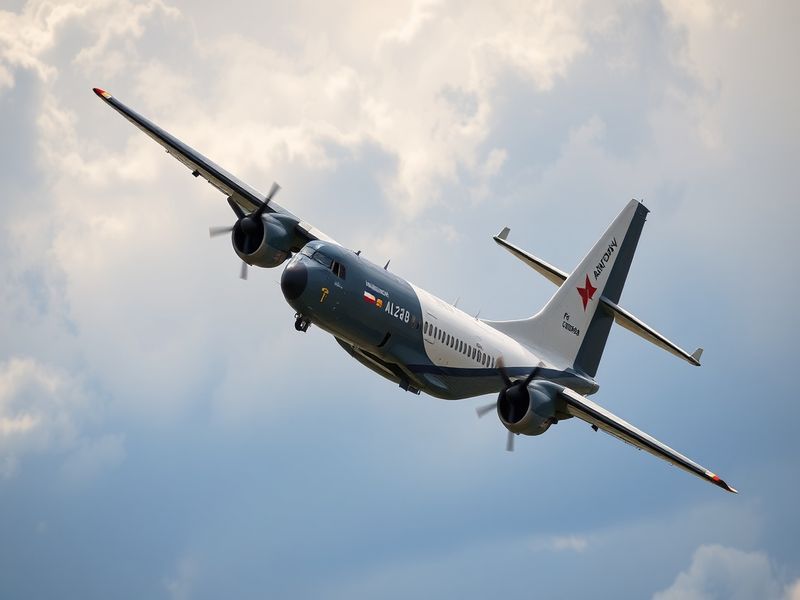
The Antonov An-26B is more than just another military transport aircraft. Introduced in the early 1980s, this twin-engine turboprop has carved a niche for itself in both military and civilian operations worldwide. Its rugged design, reliability, and adaptability have made it a staple in regions where infrastructure is limited and conditions are extreme.
Originally developed as an upgrade to the An-26, the An-26B incorporated several improvements that enhanced its performance and versatility. With a focus on short takeoff and landing (STOL) capabilities, the aircraft became particularly valuable in remote and challenging environments, from the Arctic tundra to tropical jungles.
A Brief History and Development
The Antonov An-26 first took to the skies in 1969, designed as a successor to the An-24 and An-26 series. The An-26B, an improved variant, entered service in the late 1970s and early 1980s. Its development was driven by the need for a more robust and versatile aircraft capable of operating in diverse conditions, including high-altitude airstrips and unprepared runways.
The An-26B featured several key upgrades over its predecessor. These included enhanced avionics, improved cargo handling systems, and a reinforced airframe to withstand harsh operating environments. Its design also allowed for quick conversion between cargo and passenger configurations, making it a flexible asset for military and humanitarian missions alike.
During the Cold War, the An-26B became a critical component of Soviet military logistics, serving in various theaters across Europe, Asia, and Africa. After the fall of the Soviet Union, many of these aircraft found their way into the inventories of newly independent states and other nations, where they continued to prove their worth in both peacekeeping and combat operations.
Design and Capabilities
The Antonov An-26B is powered by two Ivchenko AI-24VT turboprop engines, each producing 2,820 horsepower. This powerplant allows the aircraft to operate efficiently at high altitudes and in hot climates. The twin-engine configuration also provides redundancy, a crucial feature for operations in remote or hostile regions.
One of the An-26B’s most notable features is its STOL capability. The aircraft can take off and land on runways as short as 600 meters, making it ideal for operations in areas with limited infrastructure. Its rugged landing gear and reinforced fuselage further enhance its ability to operate in rough terrain.
The aircraft’s cargo hold is another standout feature. Measuring 11.5 meters in length, 2.78 meters in width, and 1.91 meters in height, it can accommodate a wide range of cargo, including vehicles, pallets, and even small helicopters. The An-26B can carry up to 5,500 kilograms of cargo or 38 passengers in a fully equipped configuration.
Below are some of the key specifications of the Antonov An-26B:
- Crew: 5 (pilot, co-pilot, navigator, flight engineer, radio operator)
- Length: 23.8 meters
- Wingspan: 29.2 meters
- Height: 8.58 meters
- Empty Weight: 15,020 kilograms
- Max Takeoff Weight: 24,000 kilograms
- Max Speed: 540 kilometers per hour
- Range: 2,550 kilometers
- Service Ceiling: 9,000 meters
Operational Roles and Global Impact
The Antonov An-26B has played a pivotal role in a variety of missions, from military logistics to humanitarian aid. Its ability to operate in austere environments has made it a favorite among air forces and civilian operators in Africa, Asia, and South America. In military contexts, the An-26B has been used for troop transport, airdrops, and medical evacuations.
One of the most notable examples of the An-26B’s versatility occurred during the Soviet-Afghan War. The aircraft was instrumental in transporting troops, supplies, and equipment across the rugged terrain of Afghanistan. Its ability to land on short, unpaved runways made it indispensable in a conflict where traditional airfields were often targeted or inaccessible.
In civilian operations, the An-26B has been used for everything from cargo transport to disaster relief. For example, during natural disasters such as earthquakes or floods, the aircraft’s STOL capabilities allow it to deliver critical supplies to areas where larger aircraft cannot land. Its adaptability has also made it a popular choice for charter companies and cargo operators in remote regions.
The An-26B’s global reach is further evidenced by its widespread use in Africa. Many African nations operate the aircraft as part of their air forces or civilian fleets, relying on its durability and reliability to support operations in challenging environments. The aircraft’s ability to operate in high temperatures and at high altitudes has made it particularly valuable in the Sahel region and other hot climates.
Challenges and the Future
Despite its many strengths, the Antonov An-26B is not without its challenges. One of the most significant issues facing the aircraft today is its age. Many An-26B airframes are now approaching or exceeding 40 years of service, raising concerns about maintenance and airworthiness. The cost of keeping these aging aircraft operational can be prohibitive, particularly for smaller operators with limited budgets.
Another challenge is the availability of spare parts. As the An-26B is no longer in production, finding compatible components can be difficult. This has led some operators to cannibalize parts from retired aircraft or seek alternatives, such as the newer An-140 or other transport aircraft.
Nevertheless, the An-26B remains a critical asset for many operators. Its unmatched combination of ruggedness, versatility, and reliability ensures that it will continue to serve in various roles for years to come. Efforts are underway to modernize existing fleets, with upgrades focusing on avionics, engines, and structural enhancements to extend the aircraft’s service life.
For those interested in exploring more about military transport aircraft, visit Dave’s Locker Aviation category. Additionally, you can find in-depth analysis of global military operations in the Defense section.
Conclusion
The Antonov An-26B stands as a testament to the enduring value of robust, adaptable aircraft. From its origins as a Soviet-era workhorse to its continued service in some of the world’s most challenging environments, the An-26B has proven itself time and again. Its ability to operate in austere conditions, combined with its versatility and reliability, ensures that it will remain a vital asset for military and civilian operators alike.
As the aviation industry evolves, the An-26B serves as a reminder of the importance of designing aircraft that can withstand the demands of real-world operations. While newer models may offer advanced features, the An-26B’s legacy is secure—a true workhorse of the skies.