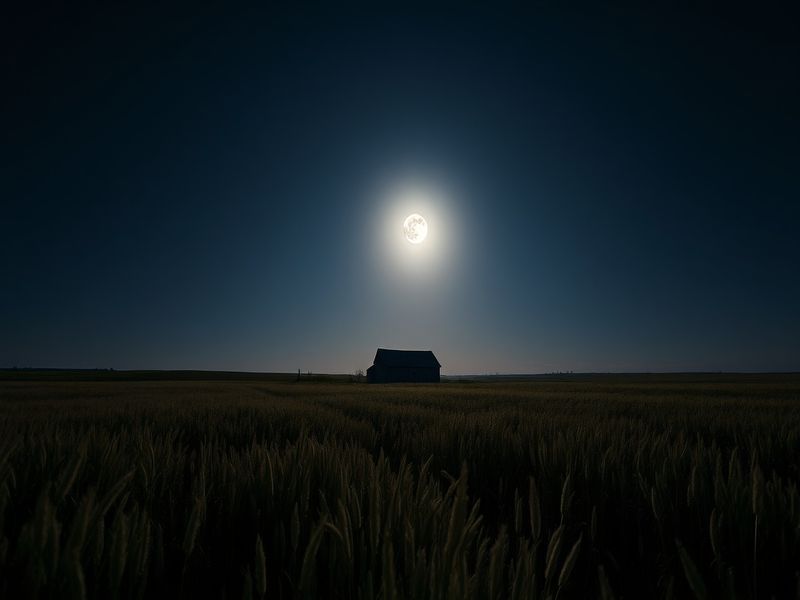
The moon has always held a special place in human culture, guiding everything from ancient agricultural calendars to modern-day superstitions. Tonight, if you look up at the sky, you might wonder: Is it a full moon tonight? The answer depends on several factors, including your location, the exact time, and the moon’s current phase in its monthly cycle.
Full moons occur roughly every 29.5 days, but the timing varies depending on your time zone and global position. While some nights appear to have a perfectly round moon, the actual full moon phase lasts only a brief moment—when the moon is directly opposite the sun from Earth’s perspective. This means that what you see tonight might already be a waning gibbous or still waxing toward fullness.
How to Check Tonight’s Moon Phase
If you want an accurate answer, several reliable tools can tell you the exact phase of the moon for your location. Here are some of the best resources:
- NASA’s Moon Phase and Libration Website: This official NASA tool provides real-time visualizations of the moon’s current phase, including its illumination percentage and exact timing of the next full moon. It’s updated daily and accounts for your local time zone.
- Time and Date Moon Calculator: A user-friendly website that lets you input your location and see a detailed breakdown of tonight’s moon phase, including rise and set times. It also offers historical and future moon phase data.
- Mobile Apps: Apps like Moon Phase Calendar, Luna Solaria, or even built-in phone widgets can give you instant updates. Many sync with your device’s location settings for precision.
For a quick check, simply search “moon phase tonight” in your browser. Google and other search engines often display an interactive moon phase graphic at the top of the results page, showing whether the moon is waxing, waning, or full.
The Science Behind Full Moons
A full moon occurs when the Earth is positioned directly between the sun and the moon. This alignment allows the entire face of the moon visible from Earth to be illuminated by sunlight. However, the moon’s orbit is slightly tilted (about 5 degrees) relative to Earth’s orbit around the sun, which is why we don’t experience a full moon every month.
The term “full moon” refers to a precise moment in time, not an entire night. For example, the full moon in May 2024 was officially at 9:53 AM EDT. If you looked up the night before or after, the moon still appeared full, but technically, it was either a waxing gibbous or waning gibbous. This is why the moon often looks full for two to three nights in a row.
Not all full moons are created equal. Some are closer to Earth (perigee) and appear slightly larger and brighter, known as a Supermoon. Others are farther away (apogee) and look smaller. The difference in size is subtle but noticeable to keen observers.
Cultural and Historical Significance of Full Moons
Full moons have been tied to human rituals, myths, and even agricultural practices for millennia. Many cultures named full moons based on seasonal events. For example:
- Wolf Moon (January): Named by Native American tribes for the time when wolf packs howled more frequently due to winter food scarcity.
- Harvest Moon (September or October): Occurs closest to the autumnal equinox and historically provided farmers with extra moonlight to gather crops late into the night.
- Blue Moon: Refers to the second full moon in a calendar month. Despite the name, the moon doesn’t appear blue unless atmospheric conditions (like volcanic ash) scatter red light.
In folklore, full moons have been associated with increased supernatural activity, sleep disturbances, and even madness—a concept known as “lunar lunacy.” While modern science dismisses most of these claims, some studies suggest a possible link between full moons and minor changes in sleep patterns or emergency room visits. However, the evidence remains inconclusive and often contradictory.
What to Expect Tonight and Beyond
To determine if tonight’s moon is full, check a reliable source like the ones mentioned earlier. If it’s not a full moon tonight, you can look forward to the next one. Full moons for the rest of 2024 are scheduled as follows (times in EDT):
- June 21, 2024 – 9:08 PM
- July 21, 2024 – 6:17 AM
- August 19, 2024 – 2:26 PM
- September 17, 2024 – 10:34 PM
If tonight isn’t a full moon, you might notice the moon appearing slightly less than fully round. This is because the moon’s phases are gradual. A week before or after the full moon, it will appear as a half-moon (first or last quarter), and two weeks away, it will be a thin crescent.
For stargazers and photographers, full moons offer unique opportunities. The bright light can illuminate landscapes beautifully, though it also washes out faint stars and deep-sky objects. If you’re into astrophotography, a night with a waxing or waning gibbous moon might provide better contrast for capturing the Milky Way.
Final Thoughts
Whether you’re a casual observer or a dedicated moon enthusiast, knowing the current phase of the moon adds a layer of connection to the natural world. Tonight’s moon might not always be full, but each phase offers its own beauty and intrigue. From ancient agricultural calendars to modern-day scientific tracking, the moon continues to captivate us.
Next time you find yourself wondering, “Is it a full moon tonight?” take a moment to check one of the reliable sources above. You might discover that the moon is in a different phase entirely—but that’s part of the wonder. The night sky is always changing, and so is our relationship with it.