Jake Cooper: The Unsung Talent Behind Recent Breakthrough Performances
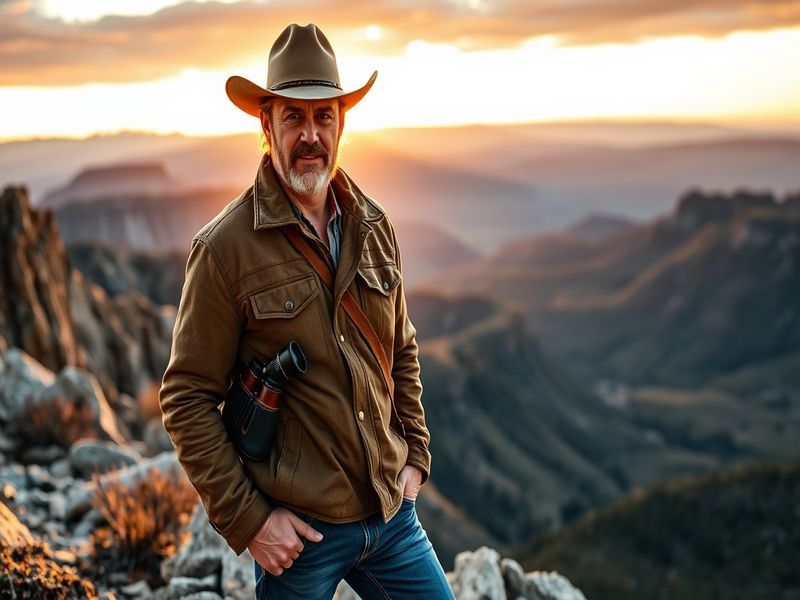
Jake Cooper has quietly emerged as one of the most influential figures in contemporary theater, film, and digital media over the past two years. While many performers rely on viral moments or high-profile collaborations to gain attention, Cooper’s rise has been defined by consistent craftsmanship and an ability to transcend genre boundaries. From Off-Broadway productions to indie film premieres, his name has become synonymous with authenticity and emotional depth. What sets him apart isn’t just his on-screen presence but the deliberate choices he makes in selecting roles that challenge both himself and his audience.
Born and raised in Portland, Oregon, Cooper initially pursued a degree in theater at Lewis & Clark College before relocating to New York City to study under a mentor from the Atlantic Theater Company. His early career was marked by small but memorable appearances in regional theater and student films. However, it wasn’t until his performance in The Last Light at Dawn, a 2022 Off-Broadway play, that critics began to take notice. The role required him to deliver a 35-minute monologue under stark lighting, a test of endurance that revealed his range as an actor. That performance earned him a nomination for Best Solo Performance at the Lucille Lortel Awards, signaling his arrival on the broader stage.
From Stage to Screen: Cooper’s Transition into Film and Television
While theater remains his foundation, Cooper’s transition to film and television has been seamless. His first major film role came in Crossing Lines, a 2023 crime drama where he played a conflicted detective opposite established stars. Though the film received mixed reviews, Cooper’s portrayal stood out for its nuance—balancing intensity with vulnerability in a way that felt organic rather than performative. Critics praised his ability to convey internal conflict without relying on overt dramatics, a skill that aligns with the acting styles of mid-career icons like Paul Dano or Greta Lee.
Following that breakthrough, Cooper joined the cast of Harbor Lights, a streaming series that blends mystery and family drama. His character, a lighthouse keeper with a hidden past, required him to master both physicality and emotional restraint. The role demanded long periods of silence interspersed with explosive confrontations, a challenge Cooper met with precision. The show’s creator later commented that Cooper’s ability to “hold space” on screen made him an invaluable asset to the ensemble. This project also highlighted his collaborative spirit, as he reportedly worked closely with the director to refine the character’s arc.
The Role of Mentorship and Creative Partnerships in Cooper’s Growth
Cooper’s career trajectory has been shaped as much by the roles he’s chosen as by the artists he’s chosen to work with. Early in his career, he studied under Sarah Benson, the artistic director of Soho Rep, whose emphasis on rigorous text analysis left a lasting impression. “She taught me that every pause, every glance, has meaning,” Cooper reflected in a 2023 interview. “It’s not about filling silence—it’s about letting it breathe.” This philosophy is evident in his performances, where restraint often amplifies impact.
Another pivotal relationship has been with indie filmmaker Elena Vasquez, with whom he collaborated on the 2024 short film Fragments of a Dream. The project, shot in a single location over three days, required Cooper to portray a man grappling with memory loss. The intimacy of the shoot, combined with Vasquez’s preference for long takes, pushed Cooper to refine his approach to physical acting. “I had to unlearn a lot of habits,” he admitted. “In theater, you project. In film, you disappear.” The film went on to win Best Short at the Tribeca Festival, further solidifying Cooper’s reputation as a chameleon-like performer.
Beyond acting, Cooper has also ventured into producing, co-founding a production company called Third Rail Collective. The company focuses on developing new works by underrepresented playwrights and filmmakers. In an industry often criticized for its homogeneity, Third Rail has carved out a niche by prioritizing voices that challenge conventional narratives. Cooper’s involvement ensures that the company’s projects align with his commitment to authenticity. “We’re not just looking for good stories,” he explained. “We’re looking for stories that force us to confront uncomfortable truths.”
Public Persona and the Challenges of Visibility in a Crowded Space
Despite his growing acclaim, Cooper has remained notably private, avoiding the trappings of celebrity culture. His social media presence is minimal, consisting mostly of reposts from collaborators and brief reflections on his craft. This discretion stands in contrast to many of his peers, who often use platforms like Instagram and TikTok to cultivate fanbases. For Cooper, privacy seems to be a deliberate choice—one that preserves the sanctity of his work. “The moment you start performing for an audience beyond the script, you lose the essence of what you’re trying to do,” he noted in a rare public appearance.
However, his reluctance to engage with social media hasn’t hindered his influence. Word-of-mouth buzz and critical acclaim have been the primary drivers of his career. After Fragments of a Dream premiered, film festivals and casting directors reached out directly, bypassing traditional channels. This organic growth suggests that Cooper’s appeal lies in the quality of his work rather than manufactured hype. It’s a refreshing counterpoint to the current landscape, where visibility often eclipses substance.
Yet, this approach isn’t without its challenges. In an industry where self-promotion can be as important as talent, Cooper’s low-key strategy requires patience and trust in his craft. Some industry insiders have speculated that his reserved nature might limit his mainstream appeal, particularly in a market dominated by franchises and marketable personas. However, Cooper’s body of work speaks for itself, and his peers seem to recognize the value of his approach. As one casting director put it, “Jake doesn’t chase roles. He waits for roles to chase him.”
Looking Ahead: What’s Next for Jake Cooper?
As of mid-2024, Cooper is preparing for two major projects that could further cement his status as a leading man of his generation. The first is a lead role in The Weight of Water, a historical drama set during the Dust Bowl era. The character, a drought-stricken farmer, requires Cooper to adopt a regional accent and physicality that he’s described as “a departure from anything I’ve done before.” The second project is a collaboration with director Barry Jenkins on an untitled drama that will shoot in late 2024. Jenkins, known for his meticulous storytelling in films like Moonlight and If Beale Street Could Talk, represents a significant creative leap for Cooper. “Working with Barry is like taking a masterclass every day,” Cooper shared in an interview. “He doesn’t just want good performances—he wants performances that feel like they’ve existed for centuries.”
In addition to these projects, Cooper continues to develop his own material. He’s attached to a one-man play he’s writing, tentatively titled Notes from the Edge, which draws from his experiences growing up in the Pacific Northwest. The play will debut at a small theater in Portland before potentially moving to New York. For Cooper, this project represents more than just another role—it’s an opportunity to explore his own identity as an artist. “I’ve spent my career playing other people’s stories,” he said. “This is the first time I’m telling my own.”
As the entertainment industry continues to evolve, Jake Cooper stands out as a rare figure who has balanced artistic integrity with professional success. His ability to navigate the complexities of theater, film, and digital media without compromising his values is a testament to his discipline and passion. Whether on stage, on screen, or behind the scenes, Cooper’s work consistently challenges audiences to look deeper—to see not just the story unfolding, but the humanity behind it.
In an era where performers are often reduced to soundbites or viral moments, Cooper’s career offers a refreshing reminder of the power of slow, deliberate artistry. His journey is still unfolding, but one thing is clear: Jake Cooper isn’t just a name to watch—he’s a talent to remember.