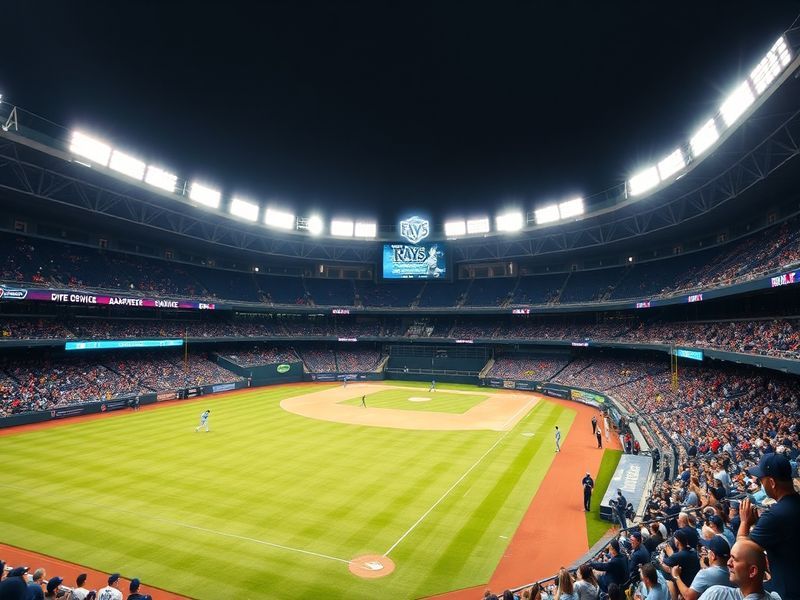
The Tampa Bay Rays have carved out a unique identity in Major League Baseball, blending analytical innovation with on-field success. Since their inception in 1998, the franchise has defied expectations, transforming from an expansion team into a consistent contender. Their approach to the game—prioritizing data, flexibility, and player development—has set them apart in an era where traditional baseball wisdom is constantly challenged.
Their home, Tropicana Field, often criticized for its location and design, has become a symbol of their resilience. Despite playing in one of the smallest markets in MLB, the Rays have built a reputation for maximizing resources, turning limitations into competitive advantages. This philosophy extends beyond the field, influencing how teams across the league operate today.
The Rays’ Formula for Success: Analytics and Adaptability
The Rays’ front office, led by executives like Erik Neander and former GM Matt Silverman, has long championed the use of advanced analytics to identify undervalued talent. While other teams chase marquee free agents, Tampa Bay focuses on drafting and developing players who fit their specific needs. This strategy has allowed them to remain competitive despite a modest payroll—typically ranking near the bottom in MLB spending.
A key example is their bullpen management. The Rays were early adopters of the “opener” concept, using relief pitchers to start games before transitioning to starting pitchers in high-leverage situations. This approach disrupted traditional baseball norms and proved effective, helping them secure playoff berths in multiple seasons.
Their farm system has also thrived under this model. Players like Randy Arozarena, Wander Franco, and Shane McClanahan emerged from Tampa Bay’s developmental pipeline, becoming cornerstones of the team’s recent success. The Rays’ ability to nurture talent while maintaining financial flexibility has made them a model franchise for small-market teams.
For fans interested in how the Rays compare to other analytical-driven teams, a deeper look at Sports on Dave’s Locker provides additional context on how modern baseball strategies evolve.
Tropicana Field: A Venue of Contradictions
Tropicana Field is one of the most polarizing stadiums in professional sports. Opened in 1990 as a multi-purpose venue, it was retrofitted for baseball in 1998 when the Rays joined MLB. Its fixed roof, artificial turf, and cavernous outfield dimensions have made it a challenging place to play, yet the Rays have thrived within its confines.
The stadium’s location in St. Petersburg, Florida—a city known more for its beaches than its baseball culture—has long been a point of contention. Attendance figures often rank among the lowest in MLB, forcing the Rays to find creative ways to engage fans. Initiatives like “Rays Tank” promotions and community-focused events have helped bridge the gap between the team and its local supporters.
Despite its flaws, Tropicana Field has seen upgrades in recent years. The Rays have invested in improved fan experiences, including better food options and interactive in-stadium features. Still, discussions about a potential new stadium persist, as the team explores options to enhance its long-term viability in the Tampa Bay area.
The Rays’ Playoff Pursuits: Near-Misses and Breakthroughs
The Rays’ playoff history is a mix of heartbreak and hope. They reached the postseason for the first time in 2008, ultimately falling to the Philadelphia Phillies in the World Series. The following years saw near-misses, including a 2019 American League pennant loss to the Houston Astros, which was marred by the sign-stealing scandal.
In 2020, Tampa Bay made history by winning the AL East during a pandemic-shortened season and advancing to the World Series, where they faced the Los Angeles Dodgers. Though they fell short in six games, their deep postseason run showcased their ability to compete with baseball’s elite. The Rays’ resilience was on full display, proving that small-market teams can thrive when given the right opportunities.
Their 2021 season was another strong showing, finishing with 100 wins and a division title. However, they were eliminated in the AL Division Series by the Boston Red Sox. Despite the setback, the Rays’ consistency over multiple seasons reinforced their status as a perennial contender.
For a closer look at how the Rays stack up against other AL East rivals, check out Dave’s Locker’s News section for in-depth analysis and updates on the division’s competitive landscape.
The Future of the Rays: Challenges and Opportunities
The Rays’ future hinges on several key factors. First, their ability to retain top talent is critical. Wander Franco, the team’s 22-year-old superstar, is under contract through 2027, but securing long-term deals for other core players like McClanahan and Yandy Díaz will be essential. Balancing financial commitments with competitive success remains a delicate task.
Second, the stadium situation looms large. The Rays have explored various relocation options, including potential sites in Tampa and Hillsborough County. A new stadium could revitalize fan engagement and provide the revenue needed to sustain a championship-caliber team. However, securing public funding and navigating political complexities will be challenging.
Third, the Rays must continue innovating on the field. Their reliance on young talent and creative strategies has worked thus far, but MLB is constantly evolving. The introduction of the pitch clock and other rule changes in 2023 could impact how the Rays build their roster and approach the game.
One thing is certain: the Rays’ commitment to their core principles will guide their decisions. Whether it’s through analytics, player development, or fan engagement, Tampa Bay remains a franchise that punches above its weight.
Key Takeaways from the Rays’ Journey
- Analytical Edge: The Rays’ front office prioritizes data-driven decisions, allowing them to compete despite limited financial resources.
- Player Development: Their farm system consistently produces major league talent, reducing reliance on expensive free agents.
- Stadium Challenges: Tropicana Field’s limitations have forced the team to innovate in fan engagement and revenue generation.
- Playoff Consistency: Despite small-market constraints, the Rays have become a perennial postseason contender.
The Tampa Bay Rays’ story is one of adaptability and ingenuity in a league that often favors tradition over innovation. As they navigate the challenges ahead, their ability to evolve while staying true to their identity will determine their long-term success. For baseball fans, the Rays offer a compelling case study in how to build and sustain a competitive franchise in the modern era.