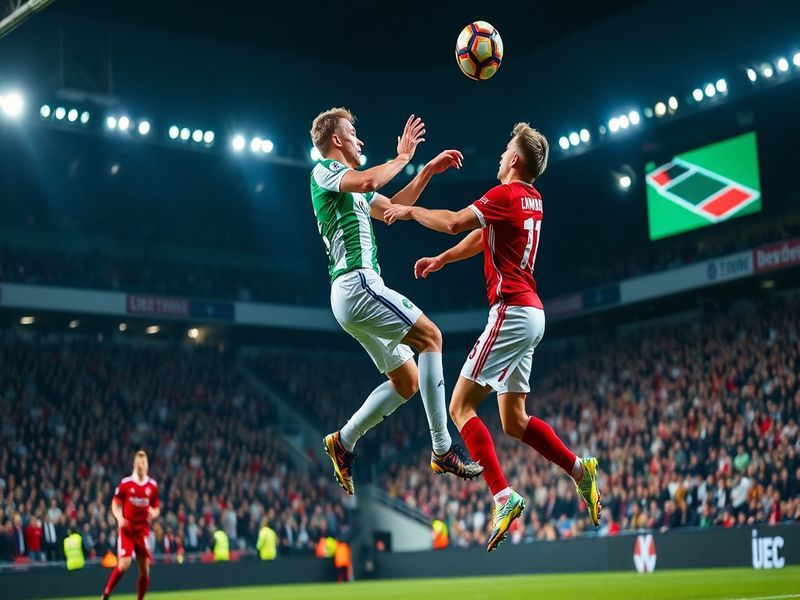
Bayer Leverkusen vs Wolfsburg: Tactical Rivalry in German Football
The clash between Bayer 04 Leverkusen and VfL Wolfsburg in the Bundesliga often flies under the radar compared to the league’s traditional giants, yet these matches carry weight far beyond the confines of Germany’s football landscape. While Bayern Munich and Borussia Dortmund dominate headlines, encounters between Leverkusen and Wolfsburg offer a unique narrative—one that blends tactical innovation, regional pride, and the broader evolution of European football.
Leverkusen, historically a club without a strong local identity, has transformed into a tactical powerhouse under managers like Xabi Alonso. Wolfsburg, meanwhile, represents the ambitions of a club that rose from modest beginnings to challenge for Europe’s top honors. Their meetings provide more than just three points; they reflect the shifting dynamics of German football in an era where financial disparity and sporting ambition collide.
The Tactical Battlefield: Alonso’s System vs. Wolfsburg’s Flexibility
When Leverkusen line up under Xabi Alonso, the team operates as a well-oiled machine built on positional play, high pressing, and positional interchange. Alonso’s philosophy borrows heavily from the Spanish school of football, emphasizing ball circulation, numerical superiority in midfield, and defensive transitions that minimize risk. This approach has not only made Leverkusen a consistent top-four side but has also turned them into a model of modern football development.
Wolfsburg, under managers like Niko Kovač and now Ralf Kellermann, has adopted a more pragmatic approach. While not as ideologically rigid as Leverkusen, Wolfsburg’s strength lies in its adaptability. They often switch between a 4-2-3-1 and a 3-5-2 formation, using wing-backs to stretch play and exploiting transitions with direct passing. Their midfield, anchored by players like Maximilian Arnold, serves as both a shield and a springboard for counterattacks.
- Leverkusen’s Strengths: Structured pressing triggers, full-backs who double as wingers, and a midfield that controls tempo through short passing.
- Wolfsburg’s Strengths: Quick transitions, physicality in midfield, and a knack for exploiting spaces left by high-pressing teams.
The tactical duel between these two sides is a microcosm of modern football’s evolution. Leverkusen represents the future—structured, possession-based, and analytically driven—while Wolfsburg embodies the transitional phase, where pragmatism and flexibility can still yield success. This contrast makes their matches compelling not just for neutrals but for coaches and analysts worldwide.
From Underdogs to Contenders: The Rise of Two German Clubs
Bayer Leverkusen’s journey from a pharmaceutical company-backed side to a Bundesliga title contender is a testament to long-term planning. Founded in 1904 by employees of the Bayer AG conglomerate, the club spent decades in the shadow of Germany’s football elite. Financial constraints and a lack of a distinct identity kept them from achieving sustained success. That changed with the appointment of Roger Schmidt in 2014, who introduced a high-intensity, vertical style of play that laid the foundation for future success.
Wolfsburg’s rise is equally remarkable but rooted in different circumstances. Founded in 1945 by workers at Volkswagen, the club’s fortunes changed dramatically in 2007 when they secured their first and only Bundesliga title under Felix Magath. This triumph was fueled by heavy investment, including the signing of stars like Edin Džeko and Grafite. Though they have struggled to replicate that success consistently, Wolfsburg remains a club with ambition and financial backing, capable of challenging for European spots on any given day.
Their rivalry, therefore, is not just about points but about contrasting models of club development. Leverkusen’s success is built on organic growth, youth development, and tactical sophistication, while Wolfsburg’s path has been more reliant on financial investment and star power. This duality reflects broader trends in European football, where clubs must balance sustainability with ambition in an era of financial fair play and superclubs.
Cultural and Regional Significance: Beyond the Pitch
Football in Germany is deeply tied to regional identity, yet Leverkusen stands out as a club without a strong local following. Located in the Rhineland, Leverkusen is a company town dominated by Bayer AG, and the club has historically struggled to foster a passionate fanbase. Their stadium, the BayArena, often feels more like a corporate venue than a cauldron of fanaticism. This disconnect has led to debates about the future of football in company towns, where corporate influence can overshadow traditional fan culture.
Wolfsburg, on the other hand, is a city built around the Volkswagen Group, and its football club serves as a point of civic pride. The Volkswagen Arena, with its modern design and family-friendly atmosphere, reflects the city’s identity as a hub of German industry. The club’s fanbase is more geographically and emotionally rooted, making matches against Leverkusen feel like a clash of two distinct footballing cultures.
From a global perspective, these matches offer insights into how football clubs navigate their roles within broader economic and social structures. Leverkusen’s model appeals to clubs seeking sustainable success without the need for vast financial resources, while Wolfsburg’s approach highlights the potential—and pitfalls—of rapid growth fueled by corporate investment.
Global Implications: What These Matches Mean for European Football
The Leverkusen vs. Wolfsburg fixture may not attract the same global attention as Bayern Munich’s matches, but it holds significance in the context of European football’s shifting dynamics. Clubs like Leverkusen are proving that success can be achieved without the financial might of Europe’s superclubs. Their style of play, rooted in positional football and tactical discipline, aligns with the philosophies of clubs like Manchester City and Liverpool, who prioritize structure over raw athleticism.
For Wolfsburg, their matches against Leverkusen serve as a reminder of the challenges faced by mid-table clubs aiming for European competition. Financial fair play regulations have made it harder for clubs to rely on unsustainable spending, forcing them to adopt smarter, more sustainable models. Wolfsburg’s ability to remain competitive despite these constraints is a case study in balancing ambition with fiscal responsibility.
Moreover, these matches highlight the importance of the Bundesliga as a league that nurtures tactical innovation. While leagues like the Premier League and La Liga are often dominated by physicality and individual brilliance, the Bundesliga remains a hotbed for tactical experimentation. The contrast between Leverkusen’s structured approach and Wolfsburg’s adaptability showcases the diversity of thought in German football, a quality that keeps the league relevant on the global stage.
For fans and analysts outside Germany, matches like these offer a glimpse into the future of football. They demonstrate that success is not solely dependent on financial power but on vision, planning, and adaptability. In an era where football is increasingly dominated by a handful of elite clubs, Leverkusen and Wolfsburg represent the hope that the beautiful game remains accessible to those who are willing to innovate.
A Glimpse into the Future
As the Bundesliga continues to evolve, the Leverkusen vs. Wolfsburg rivalry will likely gain more prominence. Leverkusen’s recent title challenge and Wolfsburg’s consistent European aspirations mean that these matches will no longer be relegated to the back pages. Instead, they will be viewed as critical encounters that shape the league’s narrative.
For younger clubs and those outside the traditional footballing powerhouses, Leverkusen and Wolfsburg serve as models of what is possible. Their stories reinforce the idea that football is not just a game of money but of ideas, planning, and resilience. As the global football community continues to debate the future of the sport, these two clubs offer a compelling case study in sustainable success.
In the grand tapestry of European football, matches between Leverkusen and Wolfsburg may seem like minor threads, but they weave a narrative of innovation, ambition, and the enduring power of the beautiful game.
For more insights into German football and tactical analysis, visit our Sports and Analysis sections.