Tour of Flanders 2026: Route, Legacy & Global Impact Explored
The Tour of Flanders 2026: A Race Rooted in History and Global Appeal
The Tour of Flanders, or Ronde van Vlaanderen, stands as one of cycling’s most iconic monuments. First held in 1913, it has grown from a local Flemish contest into a global sporting spectacle, blending tradition with modern spectacle. The 2026 edition will continue this legacy, weaving together Flanders’ cultural identity, cycling’s competitive edge, and a worldwide audience’s passion.
Unlike races that drift between continents, the Tour of Flanders remains anchored in Belgium. Its route through the cobblestone hills of the Flemish Ardennes tells a story older than professional cycling itself. This connection to place—its cafés, dialects, and landscapes—gives the race a soul that transcends mere competition. It is both a sporting event and a cultural festival, celebrated not just by sports fans but by entire communities.
The 2026 Route: Tradition Meets Innovation
The 2026 parcours has been announced, and it follows a familiar rhythm with fresh energy. The race will still start and finish in Antwerp, the vibrant port city that embodies Flanders’ dynamic blend of history and modernity. From there, the peloton will head southwest into the rolling hills, where the real drama unfolds.
The key climbs remain unchanged—Oude Kwaremont, Paterberg, Koppenberg—each steeped in legend. But organizers have introduced subtle tweaks to the sequence, aiming to challenge riders in new ways while preserving the race’s unpredictable character. These changes reflect cycling’s evolving tactics, where teams now prepare with data-driven precision, yet the terrain still dictates the rhythm of the day.
- Antwerp to Oudenaarde: A scenic introduction through Flanders’ lowlands, a brief calm before the storm.
- Early climbs: Wolvenberg and Molenberg test early breakaways and set the tone.
- Mid-race crescendo: The Oude Kwaremont and Paterberg appear twice, often deciding the race before the final 100km.
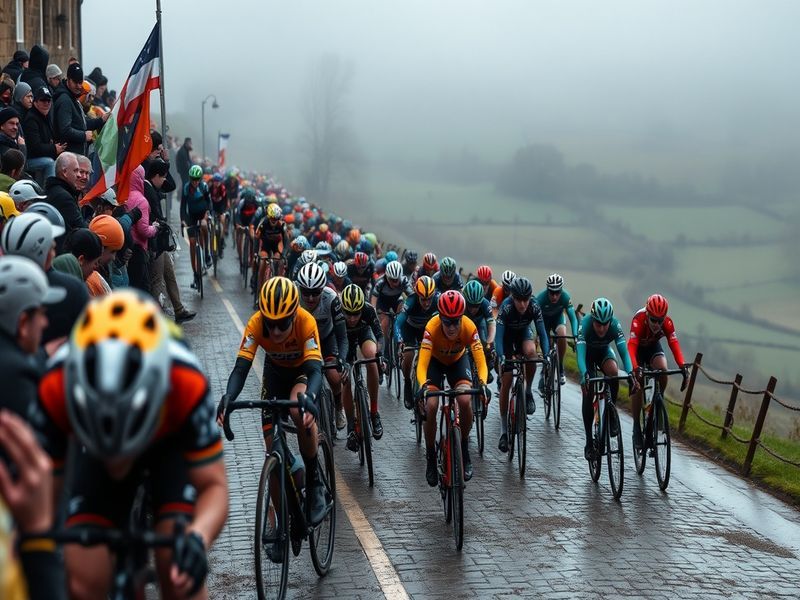
- Final act: The Koppenberg, steep and brutal, with spectators packed so tightly that bikes nearly graze the crowd.
- Finish in Oudenaarde: A ceremonial last lap through the town center, where fans wave flags and children run alongside riders.
This structure ensures that while the race honors tradition, it remains relevant in an era where global audiences demand spectacle. The 2026 route balances accessibility for broadcasters with authenticity for purists, a delicate equilibrium that has kept the Ronde relevant for over a century.
Global Reach and Cultural Resonance
The Tour of Flanders is more than a bike race. It is a cultural export—a window into Flanders’ identity. While races like the Tour de France or Giro d’Italia traverse entire countries or continents, the Ronde remains deeply local. Yet, through high-definition broadcasts and digital streaming, it reaches millions across Europe, North America, and Asia. In countries like Italy, Spain, and Australia, cycling clubs organize viewing parties, turning the race into a communal event.
Flanders’ identity is inseparable from the race. The Flemish flag, with its black, yellow, and red stripes, flies alongside race banners. Local dialects blend with commentary in French, Dutch, and English. The cafés in Oudenaarde and Ronse serve beer named after the race’s heroes. This fusion of sport and culture is rare in global sports, where commercialization often dilutes tradition.
But the race’s global appeal is expanding. In Japan, where cycling is growing rapidly, the Ronde has become a bucket-list event. Riders and fans travel from Tokyo and Osaka to stand along the Koppenberg. In the United States, gravel and road cycling communities increasingly tune in, drawn by the race’s raw, unscripted nature. The 2026 edition will likely see even greater international participation, with teams from Africa and South America sending squads to test themselves on Flanders’ brutal slopes.
Challenges and Controversies in Modern Cycling
No major sporting event escapes scrutiny, and the Tour of Flanders is no exception. Doping allegations have occasionally cast shadows over the race’s history. While the sport has made progress in anti-doping measures, skepticism lingers. Teams and riders now face intense scrutiny, not just for performance but for their sustainability efforts and social responsibility.
Environmental concerns have also emerged. The race’s reliance on roads through rural Flanders raises questions about carbon footprints, especially as global sporting events face pressure to reduce emissions. Organizers have responded by promoting public transport for spectators and offsetting travel emissions, but the challenge remains: how to preserve a race rooted in place while acknowledging planetary limits.
Safety is another concern. The Koppenberg, with its 22% gradient and narrow path, remains a focal point. Spectators often cross barriers to get closer, risking collisions. While stewards work to maintain order, the race’s intimacy—its closeness to the crowd—demands constant vigilance.
What to Watch in 2026: Rising Stars and Veteran Rivalries
The 2026 field will feature a mix of established champions and emerging talents. Mathieu van der Poel and Wout van Aert, if they continue competing, will likely be favorites, their rivalry already etched into Ronde history. But younger riders like Cian Uijtdebroeks and Laurence Pithie are rising fast, each capable of springing a surprise on the Paterberg.
Teams from outside Europe are also making their presence felt. In 2025, African teams began competing at the highest level, and their inclusion in 2026 would mark a significant step forward. Meanwhile, Belgian teams like Soudal-QuickStep and Lotto-Dstny will be under immense pressure to deliver at home.
The women’s race, now a fixture on the same weekend, continues to gain prominence. With stars like Lotte Kopecky and Lorena Wiebes, the women’s Ronde is no longer a supporting act but a headline event in its own right. The 2026 edition will likely see even larger crowds and broadcast deals, reflecting the growing recognition of women’s cycling.
A Race That Endures
The Tour of Flanders endures because it is more than a competition. It is a living archive of cycling’s past, a stage for its present, and a canvas for its future. In an era of algorithm-driven sports and virtual experiences, the Ronde remains tangible—a physical, emotional journey through hills, history, and human effort.
As the 2026 edition approaches, fans will gather along the same roads, wearing the same colors, chanting the same songs. They will witness not just a race, but a tradition renewed. And in a sport often criticized for its detachment from reality, the Ronde offers something rare: authenticity.
For cycling fans and cultural observers alike, the Tour of Flanders remains a touchstone—a reminder that sport can be both spectacle and soul. Sports enthusiasts and cultural historians will find common ground here, in the rhythm of pedals and the roar of the crowd.
The 2026 race will not rewrite the rulebook. It will not redefine cycling. But it will remind the world why this race matters—why, after more than a century, it still feels essential.