Who Is Ali Vaez? The Diplomat Shaping Global Nuclear Policy
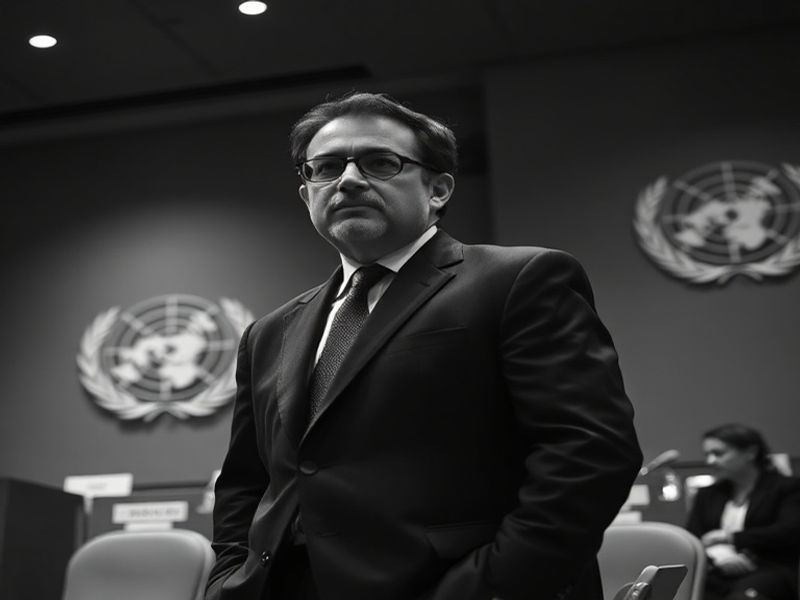
Ali Vaez is not a household name outside diplomatic circles, yet his influence on international nuclear negotiations has been profound. As the Iran Project Director at the International Crisis Group, Vaez has spent over a decade at the intersection of geopolitics, sanctions, and non-proliferation. His work has shaped how governments, analysts, and activists perceive Iran’s nuclear ambitions and the broader risks of escalation in the Middle East.
Born in Iran and educated in Europe and the United States, Vaez brings a rare blend of academic rigor and real-world negotiation experience to some of the world’s most intractable conflicts. His career spans roles at think tanks, universities, and multilateral organizations, where he has advised policymakers on the consequences of military action versus diplomatic engagement. Few figures have been as consistently present—or as consistently controversial—in the decades-long standoff over Iran’s nuclear program.
The Rise of a Nuclear Policy Expert
Vaez’s rise to prominence began in the early 2010s, a period marked by escalating tensions between Iran and the West. As sanctions tightened and military threats loomed, his analysis provided a counterpoint to the dominant narratives of Iranian intransigence or Western aggression. At the International Crisis Group, he became a go-to source for journalists, diplomats, and lawmakers seeking clarity on Iran’s nuclear calculus.
His influence peaked during the negotiations that led to the 2015 Joint Comprehensive Plan of Action (JCPOA), commonly known as the Iran nuclear deal. Vaez was among the few analysts who argued publicly—and persistently—that diplomacy could work, even as skepticism ran high. While the deal eventually unraveled after the U.S. withdrawal in 2018, his advocacy highlighted the fragility of multilateral agreements in an era of shifting political winds.
- 2008: Begins research on Iran’s nuclear program at the International Institute for Strategic Studies (IISS).
- 2010: Joins the International Crisis Group as Senior Iran Analyst.
- 2013: Publishes influential reports warning of the risks of military strikes on Iran.
- 2015: Contributes to the JCPOA negotiations as a technical advisor.
- 2018: Warns of the consequences of the U.S. withdrawal from the JCPOA.
Vaez’s perspective is rooted in a deep understanding of both Iranian domestic politics and the geopolitical maneuvering of global powers. He has consistently argued that sanctions, while effective in pressuring Iran, often fail to achieve their stated goals of altering nuclear policy without risking unintended consequences. His work underscores a fundamental tension in international relations: the challenge of balancing coercion with diplomacy in an increasingly multipolar world.
Global Perspectives on Iran’s Nuclear Ambitions
Iran’s nuclear program cannot be understood in isolation. It is the product of decades of regional rivalry, historical grievances, and shifting alliances. Vaez’s analysis situates Iran’s actions within this broader context, emphasizing how perceptions of threat—and responses to those perceptions—are shaped by more than just technical capabilities.
For instance, Saudi Arabia and Israel have long viewed Iran’s nuclear program as an existential threat, driving their opposition to the JCPOA. Vaez has highlighted how this regional dynamic complicates efforts to reach a sustainable agreement. His research suggests that even temporary diplomatic successes, like the JCPOA, may struggle to survive without addressing the underlying security concerns of Iran’s neighbors.
Vaez’s work also extends beyond Iran. He has examined the broader implications of nuclear proliferation in the Middle East, including the risks posed by Saudi Arabia’s potential pursuit of nuclear weapons in response to Iran’s program. His analysis serves as a reminder that nuclear policy is not just about technology—it is about power, prestige, and the delicate balance of deterrence in a volatile region.
In a 2021 report, Vaez warned that the collapse of the JCPOA had set a dangerous precedent: “Once a deal is broken, trust is shattered, and rebuilding it becomes exponentially harder.” His words resonate in an era where multilateral agreements are increasingly fragile, and where the lessons of past diplomatic failures are often ignored in the rush to assert national interests.
Cultural and Political Impact of Vaez’s Work
Vaez’s influence extends beyond policy circles. His public commentary has shaped how journalists, activists, and the general public perceive Iran and its nuclear ambitions. By emphasizing the human and economic costs of sanctions and military threats, he has humanized a debate often dominated by technical jargon and geopolitical abstractions.
His perspective has also sparked debate among Iranians both at home and in the diaspora. For some, Vaez represents a voice of reason, advocating for engagement over confrontation. For others, particularly hardliners in Iran and their supporters abroad, his work is seen as an attempt to normalize what they view as an unjust and coercive regime. This duality reflects the broader polarization around Iran’s nuclear program, where facts are often secondary to political agendas.
The cultural impact of Vaez’s work is perhaps most visible in the media landscape. He has been quoted in outlets ranging from The New York Times to Al Jazeera, and his reports have been cited by policymakers from Brussels to Beijing. His ability to translate complex technical and political issues into accessible analysis has made him a rare bridge between the ivory tower and the real world.
What’s Next for Ali Vaez and Nuclear Diplomacy?
As of 2024, Vaez remains a central figure in debates over Iran’s nuclear program and the future of non-proliferation. With Iran enriching uranium to levels closer to weapons-grade than ever before, and regional tensions simmering, his insights are in high demand. Yet the landscape he operates in has grown more treacherous. The rise of populist leaders, the erosion of trust in international institutions, and the increasing militarization of diplomacy have all complicated his work.
Vaez has warned that the window for diplomacy is closing. In a 2023 interview, he noted, “The risk of miscalculation is higher now than at any point since the 1979 revolution.” His calls for renewed diplomatic efforts are not just policy recommendations—they are urgent appeals to prevent a crisis that could engulf the Middle East and beyond.
Looking ahead, Vaez’s focus appears to be on two critical areas. First, he is likely to continue advocating for a return to the negotiating table, even as the political will for such efforts seems to wane. Second, he is expected to expand his research into the broader implications of nuclear proliferation in the Middle East, including the role of emerging technologies like hypersonic missiles and cyber warfare in regional security dynamics.
For those who follow global affairs closely, Ali Vaez is a reminder that expertise matters—and that in a world where diplomacy is often sidelined in favor of confrontation, the voices of reason are more vital than ever. His career underscores a simple truth: the most effective policies are those that prioritize dialogue over division, understanding over assumption.
Conclusion: The Enduring Relevance of Diplomacy
Ali Vaez’s work is a testament to the power of persistent, principled diplomacy in an era of short-term thinking and zero-sum politics. His analysis challenges the notion that nuclear programs can be resolved through sanctions or threats alone. Instead, he champions a holistic approach that addresses the security concerns of all parties, from Tehran to Riyadh to Washington.
As the world grapples with new nuclear challenges—from North Korea’s expanding arsenal to Russia’s nuclear saber-rattling—Vaez’s insights offer a roadmap for avoiding catastrophe. His career is a reminder that the most consequential battles are not fought on battlefields, but in the halls of power, where ideas can either avert disaster or hasten it.
For readers interested in the intersection of diplomacy, nuclear policy, and Middle Eastern geopolitics, Vaez’s body of work provides both a warning and a guide. The stakes could not be higher—and the need for voices like his has never been more urgent.