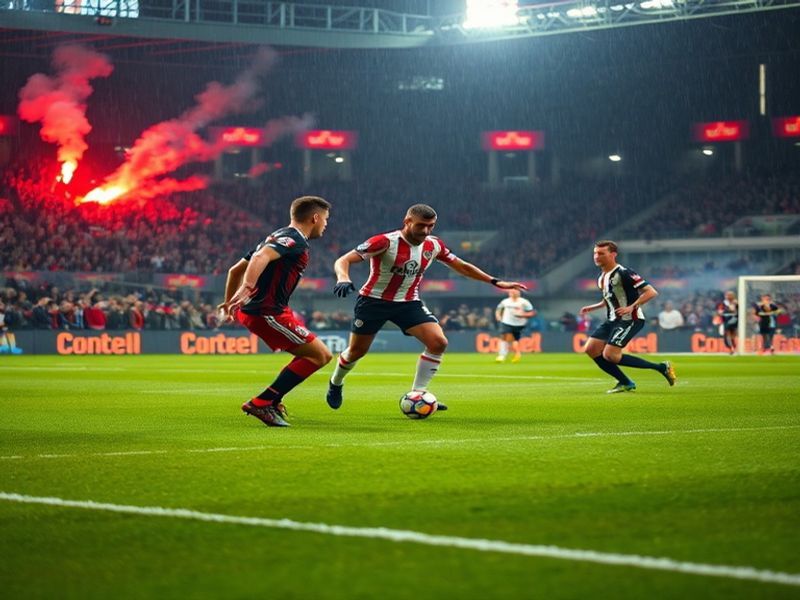
When Union Berlin and FC St. Pauli step onto the pitch, they don’t just play a football match—they stage a cultural showdown. These two clubs represent more than just points on a table; they embody distinct identities rooted in history, politics, and community. Their encounters are charged with a raw energy that transcends the 90 minutes of play.
The rivalry between Union Berlin and St. Pauli is one of the most compelling in German football. While Union has risen from the depths of the DDR-Oberliga to Bundesliga prominence, St. Pauli has carved out a reputation as a beacon of progressive values in the football world. Their meetings are as much about ideology as they are about tactics.
The Origins and Identities of Two Iconic Clubs
FC Union Berlin was founded in 1966, but its roots stretch back to the working-class districts of East Berlin. The club’s fanbase has long been associated with left-wing politics and anti-establishment sentiment. After German reunification, Union struggled financially before experiencing a remarkable resurgence in the 2010s, culminating in promotion to the Bundesliga in 2019. Today, the Stadion An der Alten Försterei remains one of Europe’s most atmospheric grounds, known for its standing terraces and passionate supporters.
St. Pauli, on the other hand, emerged from Hamburg’s docklands in 1910. The club’s Millerntor-Stadion sits in the heart of the city’s red-light district, a symbol of its unapologetic identity. St. Pauli’s fanbase is famously progressive, advocating for social justice, anti-racism, and LGBTQ+ rights. The club’s skull-and-crossbones crest has become a global emblem of resistance in football.
These contrasting backgrounds make their clashes more than just football matches. They are cultural collisions where working-class grit meets countercultural defiance. The fans of both clubs share a deep loyalty to their principles, creating an atmosphere that is as politically charged as it is passionate.
Key Matches and Memorable Encounters
Union Berlin and St. Pauli have faced off in various competitions, but their meetings in the 2. Bundesliga and DFB-Pokal have produced some of the most unforgettable moments in recent years. Below is a look at some of their most notable encounters:
- 2019 DFB-Pokal First Round: St. Pauli hosted Union Berlin in a tightly contested match that ended 2-2 after extra time. Union prevailed 5-4 on penalties, with goalkeeper Rafal Gikiewicz becoming a hero for his saves. The game showcased the resilience of both teams and set the tone for future battles.
- 2020 2. Bundesliga Season: In a dramatic 3-3 draw, Union Berlin came from 3-1 down to salvage a point. St. Pauli’s Florian Carstens scored twice, while Union’s Taiwo Awoniyi and Christopher Trimmel netted late goals. The match highlighted the unpredictable nature of this rivalry.
- 2022 DFB-Pokal Second Round: Union Berlin eliminated St. Pauli 2-0, with goals from Marcus Ingvartsen and Danilho Doekhi. The victory was significant as it eliminated a team with a strong ideological connection to Union’s own fanbase.
These matches often feature high stakes, intense emotions, and moments of individual brilliance. The physicality and competitive spirit of both teams make their encounters unpredictable, which is why fans eagerly anticipate each meeting.
Tactical Approaches: How the Teams Set Up to Win
Union Berlin and St. Pauli approach football differently, reflecting their distinct philosophies. Union, under managers like Urs Fischer and now Marco Gisdol, has built a reputation for pragmatic, direct football. The team excels in pressing high up the pitch and utilizing the physicality of players like Christopher Trimmel and Max Kruskal to dominate midfield battles.
St. Pauli, meanwhile, often deploys a more fluid, possession-based style under managers like Timo Schultz. The club prioritizes technical ability and creativity, with players like Rico Benatelli and Leart Paqarada leading the charge. St. Pauli’s attack is built on quick transitions and exploiting spaces behind the defense, a tactic that has caught many opponents off guard.
When these two styles collide, the result is often a tactical chess match. Union’s physicality clashes with St. Pauli’s technical prowess, creating a dynamic that keeps fans on the edge of their seats. The battles in midfield are particularly intriguing, as players from both sides vie for control in a high-stakes environment.
The Fan Culture: More Than Just Support
The fan cultures of Union Berlin and St. Pauli are integral to their identities. Union’s supporters are known for their unwavering loyalty and vocal opposition to commercialization in football. The club’s fan scene is deeply rooted in the working-class traditions of East Berlin, and its matches are a celebration of community and resistance.
St. Pauli’s fanbase, meanwhile, is a global symbol of progressive football culture. The club’s anti-racism, anti-fascism, and LGBTQ+ advocacy have earned it a dedicated following worldwide. The Millerntor-Stadion’s “Ultra Süd” stand is one of the most vibrant in Europe, known for its choreographed displays and passionate atmosphere.
When these two fanbases come together, the result is electric. The chants, banners, and sheer intensity of the supporters create an environment that is unmatched in German football. For many fans, these matches are not just about the result—they are about upholding the values that define their clubs.
Why This Rivalry Matters in Modern Football
In an era where football is increasingly dominated by financial power and global brands, Union Berlin and St. Pauli represent a refreshing alternative. Their rivalry is a reminder that football can be more than just a business—it can be a platform for social change and community building.
For supporters of both clubs, these matches are a celebration of identity and resistance. They challenge the status quo and demand that football remains rooted in its communities. In a sport often criticized for its commercialization, Union Berlin and St. Pauli offer a compelling vision of what football should be.
Their encounters are a testament to the power of football as a cultural force. Whether it’s the electric atmosphere at the Stadion An der Alten Försterei or the vibrant fan scene at the Millerntor-Stadion, these matches are about more than just points—they are about passion, principle, and the enduring spirit of the game.
As Union Berlin continues to establish itself as a Bundesliga mainstay and St. Pauli fights for promotion back to the top flight, their rivalry will only grow in significance. For fans, these matches are a reminder of why they fell in love with football in the first place—a love that transcends the pitch and speaks to something deeper.
For those looking to explore more about the cultural and historical significance of these clubs, check out Dave’s Locker’s Culture section for deeper insights into football’s role in society. If you’re interested in tactical analysis and match breakdowns, visit Dave’s Locker’s Analysis section for expert commentary on the beautiful game.