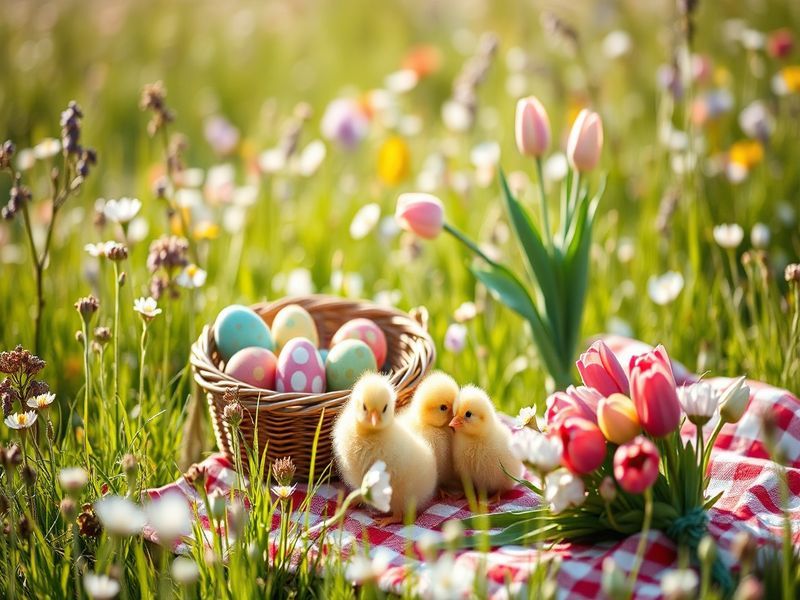
Every spring, billions of people around the world exchange Easter wishes, a tradition that blends ancient customs with contemporary expressions of joy and renewal. While the holiday is deeply rooted in Christian observance, its themes of hope and rebirth resonate universally. From the sunrise services of Eastern Europe to the chocolate hunts of suburban America, Easter represents different things to different cultures. Yet the act of sending wishes—whether in person, through cards, or across digital platforms—remains a unifying ritual.
The timing of Easter shifts annually, tied to the lunar calendar rather than a fixed date. This variability reflects its origins in the Jewish Passover, which also follows a lunar cycle. As cultures adapted these traditions, unique interpretations emerged. In Greece, for example, red eggs cracked against each other symbolize Christ’s resurrection and the triumph of life over death. Meanwhile, in Sweden, children dress as Easter witches, blending folklore with Christian symbolism in a playful ritual that predates modern celebrations.
Historical Roots: From Ancient Festivals to Christian Observance
Long before Easter became associated with Christianity, spring festivals marked the renewal of life. The Babylonians celebrated Ishtar, the goddess of fertility, with eggs and hares as symbols of rebirth. The Phoenicians and Egyptians also revered the egg as a cosmic egg from which the sun god emerged each spring. These pagan traditions were gradually absorbed into Christian practice as the religion spread across Europe.
The Council of Nicaea in 325 CE formalized Easter as a movable feast, setting its date as the first Sunday after the first full moon following the vernal equinox. This decision reflected a compromise between preserving Jewish traditions and establishing Christian identity. Over centuries, local customs evolved to incorporate regional symbols. In Poland, the blessing of food baskets on Holy Saturday remains a cherished tradition, while in Ethiopia, the celebration lasts for two full days with feasts and dancing.
By the Middle Ages, Easter had become the most important Christian holiday after Christmas, second only to the weekly observance of Sunday. The Protestant Reformation brought changes to how the holiday was celebrated, with some traditions—like the Easter bunny—fading in Protestant regions and others, like egg decorating, enduring across denominations. Today, Easter wishes often blend religious reverence with secular customs, reflecting the diverse ways communities celebrate.
Cultural Variations: How the World Exchanges Easter Wishes
Easter’s global reach means its customs vary widely, each shaped by local history and values. In Latin America, processions reenact the Passion of Christ with vivid pageantry, while in the Philippines, some devotees participate in actual crucifixion reenactments as acts of penance. These practices highlight the deep emotional connection many cultures feel toward Easter’s themes of sacrifice and redemption.
In contrast, secular celebrations often focus on springtime renewal. In Japan, Easter is not a national holiday, but chocolate companies market Easter eggs as symbols of spring. Similarly, in Australia, bilbies—native marsupials—have replaced the Easter bunny in some communities to raise awareness about endangered species. Meanwhile, in Russia and Ukraine, pysanky (intricately decorated eggs) carry centuries-old folk motifs that predate Christian influence.
Technology has transformed how Easter wishes are exchanged. Social media platforms allow instant greetings across continents, while video calls connect families separated by distance. In 2020, as lockdowns forced celebrations indoors, many rediscovered handwritten notes and homemade gifts as meaningful alternatives to store-bought treats. This shift underscored the enduring power of personalized gestures in a digital world.
Modern Traditions: Balancing Faith and Fun
Today’s Easter celebrations often walk a fine line between reverence and recreation. For many families, the holiday centers on activities like egg hunts, brunch gatherings, and visits from the Easter bunny. These traditions appeal to children and adults alike, creating shared memories that transcend religious boundaries. Yet commercialization has also crept in, with retailers promoting chocolate bunnies and dyed eggs as must-have items.
In some communities, debates rage over whether secular elements have overshadowed the holiday’s spiritual significance. Churches have responded by emphasizing services like sunrise vigils or passion plays to reclaim the holiday’s original meaning. Meanwhile, interfaith families often blend traditions, such as combining egg decorating with Passover seders or adding resurrection-themed crafts to family gatherings.
Easter also serves as a moment of reflection amid spring’s arrival. In Scandinavia, people often retreat to countryside cabins for quiet contemplation, while in the United States, many use the long weekend for spring cleaning or outdoor activities. These varied approaches reflect Easter’s dual role as both a religious observance and a cultural reset after winter’s end.
Crafting Meaningful Easter Wishes in a Digital Age
Despite the rise of emojis and memes, handwritten Easter wishes remain a powerful way to connect. A study by Hallmark found that 80% of recipients keep greeting cards as keepsakes, underscoring the emotional value of tangible expressions. For those seeking to craft heartfelt messages, consider these approaches:
- Personalize the greeting: Mention shared memories or inside jokes to make the message feel intimate.
- Combine traditions: Blend religious blessings with springtime imagery, such as “May your Easter be as bright as the flowers blooming in your garden.”
- Keep it simple: A short, sincere note often resonates more than a lengthy one. For example, “Wishing you a day filled with joy and love.”
- Add a small gift: A chocolate bunny or spring flower can accompany a handwritten note for extra warmth.
Digital alternatives also offer creative possibilities. Animated Easter cards, personalized videos, or even virtual egg hunts can bridge distances when in-person gatherings aren’t possible. The key is to choose a method that aligns with the recipient’s preferences—whether they cherish handwritten notes or digital surprises.
For those unsure of what to say, traditional Easter phrases can serve as inspiration. “He is risen” remains a powerful greeting in many Christian communities, while phrases like “Happy Easter” or “Spring blessings” work for secular celebrations. In multicultural settings, acknowledging both religious and cultural aspects can foster inclusivity.
Easter Wishes Around the World: A Snapshot
To illustrate the diversity of Easter greetings, consider these regional examples:
- Germany: “Frohe Ostern” (Happy Easter) is often accompanied by egg trees decorated with hand-painted eggs.
- Italy: “Buona Pasqua” is shared alongside feasts featuring lamb and artichokes, symbolizing spring’s bounty.
- Mexico: “¡Feliz Pascua!” is exchanged during vibrant processions featuring floats and music.
- Sweden: “Glad Påsk” is paired with children dressing as witches and trading decorated eggs for candy.
- Ethiopia: “Fasika” greetings are exchanged during a two-day feast with singing, dancing, and fasting followed by feasting.
These variations remind us that Easter wishes are not just greetings—they are windows into cultural identity and shared humanity.
Conclusion: Why Easter Wishes Matter
In an era of rapid change, Easter wishes offer a moment of pause—a chance to reconnect with loved ones and reflect on renewal. Whether through ancient rituals or modern innovations, the act of sharing good wishes transcends borders and beliefs. These gestures, whether grand or simple, carry the power to uplift spirits and strengthen bonds.
As we celebrate Easter in all its forms, let’s remember that the holiday’s greatest gift may not be the chocolate bunnies or dyed eggs, but the connections we nurture through our words and actions. In a world often divided by differences, Easter wishes remind us of what unites us: the shared hope for brighter days ahead.