What Is Pascua? Origins and Global Traditions
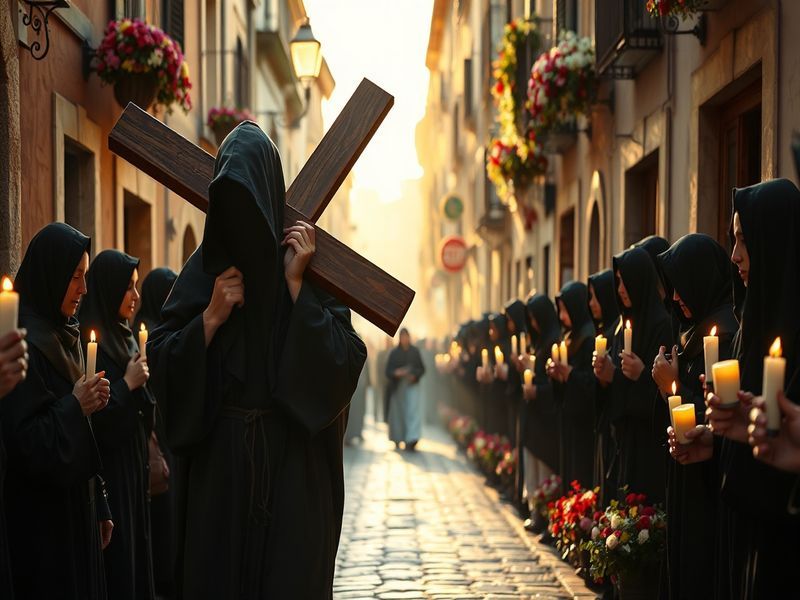
Pascua, often celebrated as the culmination of Holy Week, traces its roots to ancient Christian observances of Easter. While the holiday itself is rooted in religious tradition, its cultural expressions vary widely across continents. In Spain, particularly in Andalusia, the processions of Semana Santa draw millions, blending solemn ritual with artistic grandeur. The floats, or pasos, carry statues of Jesus and the Virgin Mary through cobblestone streets, accompanied by the haunting melodies of saetas—flamenco-style religious songs.
Beyond Europe, Pascua has taken on new meanings. In the Philippines, one of the most deeply religious nations, Holy Week is marked by reenactments of the crucifixion, where some devotees willingly undergo actual flagellation or even nailing to crosses. This stark contrast to Western celebrations highlights the diversity of faith-based traditions. Meanwhile, in Latin America, families gather for large meals featuring dishes like bacalao (salted cod) and capirotada (a bread pudding with cinnamon and piloncillo). These culinary customs reflect both indigenous and colonial influences, creating a unique blend of flavors.
Pascua Around the World: A Comparative Look
The way Pascua is observed depends heavily on local history and religious demographics. In predominantly Catholic countries like Mexico and Colombia, the week leading up to Easter is a public holiday, with towns hosting processions and street markets selling artesanías (handicrafts) and traditional sweets. In Guatemala, the towns of Antigua and Jocotenango become stages for elaborate alfombras—vibrant carpets made from dyed sawdust and flowers that line the streets for processions.
In contrast, countries with smaller Christian populations often adapt Pascua into secular celebrations. In Sweden, children dress as Easter witches, going door-to-door with handmade cards in exchange for candy—a tradition born from old folklore about witches flying to meet the devil before Easter Sunday. In Australia, where Easter falls during autumn, families enjoy outdoor barbecues and chocolate bilby (a native animal) instead of the more common Easter bunny, due to the latter’s association with invasive species.
These variations underscore a broader trend: Pascua is not a monolithic event but a tapestry of cultural adaptations. Whether through religious devotion, community gatherings, or playful reinterpretations, the holiday adapts to its environment while maintaining core themes of renewal and reflection.
The Evolution of Pascua in Modern Times
Like many religious observances, Pascua has evolved in response to globalization and changing social attitudes. One notable shift is the commercialization of the holiday, particularly in Western countries. Chocolate eggs, once a luxury item in 19th-century Europe, are now mass-produced and marketed globally. Brands like Kinder and Lindt have turned Pascua into a multi-billion-dollar industry, with seasonal displays appearing in supermarkets months in advance.
This commercialization has sparked debates about the holiday’s spiritual essence. In response, some communities have revived or introduced alternative traditions. In the United States, for example, “Easter sunrise services” blend Christian worship with the symbolism of spring’s renewal, often held outdoors at dawn. Similarly, in Germany, the Easter fire (Osterfeuer) tradition—lighting large bonfires on Easter Sunday—has seen a resurgence as a way to reconnect with pre-Christian rituals.
Technology has also transformed Pascua observance. Social media platforms now feature Easter egg hunts for digital natives, where children search for virtual eggs hidden in apps or online games. Meanwhile, livestreams of Vatican masses and processions allow global audiences to participate in real time. These digital adaptations reflect a broader trend of blending tradition with modernity, ensuring Pascua remains relevant across generations.
Symbolism and Food: The Heart of Pascua Celebrations
At its core, Pascua is a holiday rich in symbolism, with food playing a central role in many traditions. The breaking of the Lenten fast is often marked by meals that incorporate eggs, a universal symbol of rebirth. In Greece, tsoureki—a sweet, braided bread flavored with orange zest and dyed red eggs—is baked for Easter Sunday. The red eggs, dyed to represent the blood of Christ, are used in a game called tsougrisma, where players tap their eggs against each other; the winner’s egg remains uncracked, symbolizing victory over death.
In Italy, Easter is celebrated with a feast that includes lamb, artichokes, and colomba—a dove-shaped cake symbolizing peace. The meal often begins with antipasti like prosciutto and pecorino cheese, followed by a hearty pasta dish such as lasagna. In Poland, families share a meal after the Easter Vigil, featuring żurek (sour rye soup) and mazurki (sweet cakes with fruit and nuts). These dishes are not merely culinary delights; they are edible narratives that tell the story of faith, history, and community.
For many cultures, the act of preparing and sharing these foods is as important as the meal itself. In Spain, families spend days baking torrijas (a type of French toast) and roscos (ring-shaped pastries), while in Brazil, the preparation of folar—a bread stuffed with meats or eggs—brings generations together in the kitchen. These rituals reinforce social bonds and preserve cultural identity, proving that Pascua is as much about community as it is about faith.
Why Pascua Matters Today
In an era of rapid change and cultural homogenization, Pascua serves as a reminder of the power of tradition to adapt and endure. It is a holiday that bridges the sacred and the secular, the ancient and the modern. For millions, it is a time of reflection and renewal, whether through prayer, community gatherings, or simple moments of togetherness. For others, it is an opportunity to explore new cultures and cuisines, fostering understanding and appreciation.
As societies become increasingly diverse, Pascua offers a lens through which to examine the interplay between religion, culture, and identity. It challenges us to consider how traditions evolve while retaining their essence. Whether celebrated with solemn processions or playful egg hunts, Pascua invites participation in a global narrative of hope and rebirth. In doing so, it reminds us that while the forms of celebration may change, the underlying themes of renewal and connection remain timeless.
For those looking to explore Pascua beyond their own traditions, the holiday presents a chance to engage with the world in a meaningful way. Attend a local procession, try a new recipe, or simply share a meal with loved ones. In these acts, the spirit of Pascua comes alive—not just as a historical event, but as a living tradition that continues to shape communities around the globe.