Ripon Cathedral: A 1,300-Year Legacy of Faith and Architecture
“`html
Ripon Cathedral: A 1,300-Year Legacy of Faith and Architecture
Standing as one of England’s most historically significant cathedrals, Ripon Cathedral has witnessed nearly 1,300 years of religious devotion, architectural evolution, and cultural transformation. Founded in 672 AD by St. Wilfrid, the cathedral remains an active place of worship while serving as a living museum of medieval craftsmanship and ecclesiastical history. Its striking Gothic architecture, tranquil inner sanctums, and centuries-old traditions continue to draw pilgrims, historians, and tourists alike.
The Origins and Storied Past of Ripon Cathedral
Ripon Cathedral traces its roots to the 7th century when St. Wilfrid, a Northumbrian bishop, established a stone church on the site. Wilfrid, a key figure in the Christianization of Anglo-Saxon England, brought skilled masons from France and Italy to construct the first church, which was consecrated in 672 AD. This early structure was later destroyed during Viking raids in the 9th and 10th centuries, but its legacy endured.
By the 12th century, Ripon had become a major religious center under the patronage of Archbishop Thurstan of York. The cathedral’s current form began to take shape in the 13th century with the construction of the Gothic-style nave and choir. The west front, completed in the 16th century, showcases intricate carvings and a distinctive octagonal tower that remains a local landmark.
Unlike many cathedrals that underwent extensive Victorian restorations, Ripon Cathedral retains much of its medieval fabric. The building survived the Dissolution of the Monasteries under Henry VIII and the English Civil War, though it suffered damage during the latter. Restoration efforts in the 17th and 19th centuries preserved its historic character while introducing new elements, such as the Victorian-era organ.
Key Historical Milestones
- 672 AD: St. Wilfrid founds the original stone church.
- 9th–10th centuries: Viking raids destroy earlier structures, but the site remains a religious hub.
- 12th century: Ripon becomes a significant ecclesiastical center under Archbishop Thurstan.
- 13th century: Construction begins on the Gothic nave and choir.
- 16th century: The west front and octagonal tower are completed.
- 17th century: Cathedral survives the English Civil War with minimal damage.
- 19th century: Victorian-era restorations add new features, including the organ.
Architectural Wonders and Hidden Gems
Ripon Cathedral’s architecture is a testament to its long and varied history. The nave, built between 1220 and 1250, exemplifies Early English Gothic style with its pointed arches and ribbed vaults. The choir, added in the 13th century, features delicate lancet windows and a stunning east window depicting the Last Judgment. The chapter house, though now roofless, offers a glimpse into medieval monastic life.
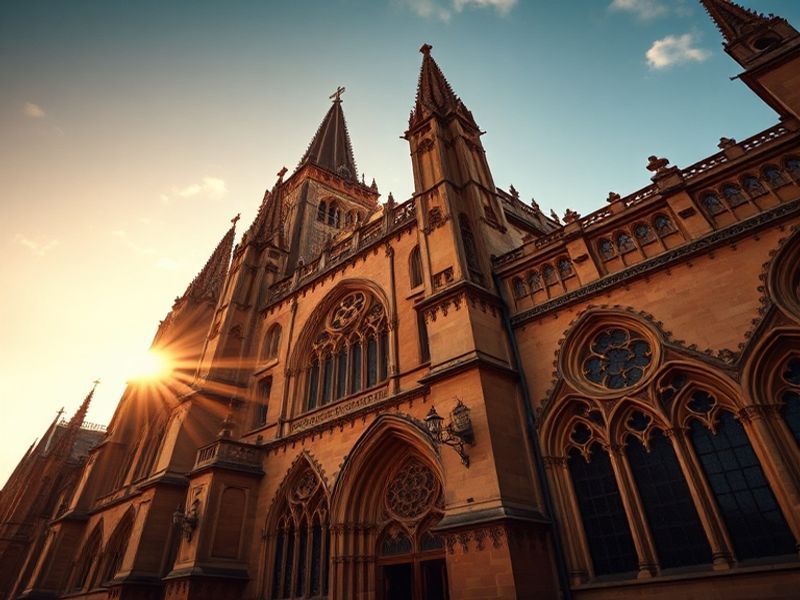
The cathedral’s west front is a masterpiece of 16th-century craftsmanship. The central door is flanked by niches once housing statues, now lost to time. Above the door, a row of carved figures—including kings, bishops, and angels—stretches across the facade. The octagonal tower, added in the 1500s, rises 110 feet and is crowned with a distinctive lantern spire, a rarity in English cathedrals.
Inside, the cathedral’s interior is equally impressive. The misericords in the choir stalls, dating to the 1400s, are among the finest in England. Carved with scenes from daily life, folklore, and biblical tales, they offer a window into medieval artistry. The cathedral also houses a 17th-century communion rail and a font dating to the 1600s, both of which survived the upheavals of the Reformation.
Notable Features to Explore
- Nave and Choir: Early English Gothic architecture with ribbed vaults and lancet windows.
- West Front: Intricate carvings of kings, bishops, and angels from the 16th century.
- Octagonal Tower: A 110-foot-tall landmark with a distinctive lantern spire.
- Misericords: 15th-century choir stalls featuring detailed medieval carvings.
- Chapter House: A roofless medieval structure offering insights into monastic life.
The Cathedral in Modern Times: Worship and Community
Today, Ripon Cathedral is not just a relic of the past but a vibrant center of Christian worship and community life. The cathedral hosts daily services, including choral evensong, which draws visitors from across the region. Its role as a parish church ensures that it remains a living, breathing space of faith rather than a static monument.
Community events play a significant part in the cathedral’s modern identity. The annual Ripon Cathedral Festival features concerts, art exhibitions, and lectures, blending cultural enrichment with spiritual reflection. The cathedral also serves as a venue for weddings, baptisms, and memorial services, cementing its place in the local social fabric.
Educational outreach is another priority. The cathedral’s visitor center offers guided tours that delve into its history, architecture, and role in medieval England. Schools frequently visit, with programs tailored to history and religious studies curricula. The cathedral’s archives, which include medieval manuscripts and historical documents, are a valuable resource for researchers.
Why Ripon Cathedral Matters Today
Ripon Cathedral’s enduring significance lies in its ability to bridge the past and present. It is a tangible link to the early Christianization of England, a masterpiece of medieval architecture, and a living community of faith. Unlike many cathedrals that have been radically altered over the centuries, Ripon retains much of its original character, making it a rare and precious example of medieval ecclesiastical heritage.
For historians, the cathedral offers insights into the evolution of Gothic architecture, the impact of the Reformation, and the resilience of religious institutions during turbulent times. For architects, its blend of styles—from Early English Gothic to 16th-century Renaissance influences—provides a case study in adaptive design. For the faithful, it remains a place of pilgrimage and prayer, where the echoes of 1,300 years of worship still resonate.
Visitors to Ripon Cathedral often leave with a sense of awe—not just for its grandeur, but for its humility. It is a place where history is not confined to plaques or displays but is woven into the very stones and stained glass. Whether one comes for spiritual solace, architectural study, or a quiet moment of reflection, Ripon Cathedral offers something profound.
As England continues to grapple with questions of heritage, identity, and community, Ripon Cathedral stands as a reminder of the enduring power of faith and craftsmanship. It is more than a building; it is a story told in stone, light, and song—a story that began in 672 AD and continues to unfold today.
For those planning a visit, the cathedral is open daily, with guided tours available throughout the year. Check the official website for service times, event schedules, and visitor information. Whether you are a history buff, an architecture enthusiast, or simply seeking a moment of tranquility, Ripon Cathedral is a destination that rewards curiosity and contemplation.