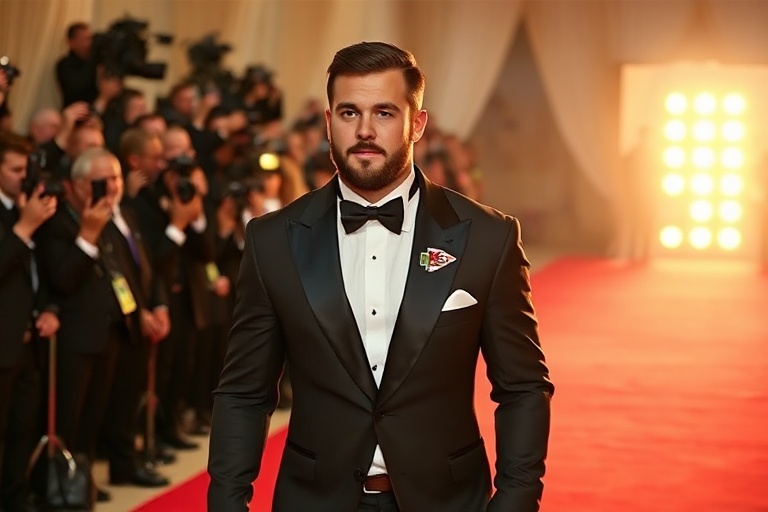
Travis Kelce at the 2026 Met Gala: A Night of Sports, Style, and Cultural Fusion
The Met Gala has long been a stage where fashion meets celebrity, but the 2026 edition took an unexpected turn when NFL star Travis Kelce stepped onto the red carpet. His presence wasn’t just a nod to the growing crossover between sports and high fashion—it was a statement about how athletes are reshaping cultural narratives. While the event has historically celebrated music, film, and art, Kelce’s appearance signaled a shift toward a more inclusive definition of influence.
The tight end, known for his dominance on the football field, brought a different kind of intensity to the Metropolitan Museum of Art’s steps. His arrival wasn’t just about personal style; it was a moment where sports culture collided with the elite world of fashion. This intersection raised questions about who gets to define glamour in the modern era and how athletic icons are increasingly becoming the faces of global trends.
The Red Carpet as a New Arena
For decades, the Met Gala red carpet has been a runway for designers to showcase avant-garde creations. But in 2026, the event became a space where athletic prowess and fashion-forward thinking merged. Kelce’s outfit—a sleek, tailored tuxedo with subtle nods to his Chiefs jersey colors—was a masterclass in blending two seemingly disparate worlds. It wasn’t just about looking polished; it was about proving that sports stars could hold their own in a setting traditionally reserved for A-list actors and musicians.
The fashion industry has been slow to embrace athletes as style icons, often relegating them to casual wear endorsements or streetwear collaborations. Kelce’s Met Gala appearance challenged that norm. His presence wasn’t just a one-off moment; it reflected a broader trend where athletes are being recognized as cultural tastemakers. This shift mirrors how figures like LeBron James and Serena Williams have already made inroads into fashion, but Kelce’s moment was particularly significant because of the Met Gala’s prestige.
Designers are taking notice. The event’s guest list has increasingly included athletes, but Kelce’s inclusion felt different—less about tokenism and more about genuine cultural relevance. His ability to command attention wasn’t just due to his athletic fame; it was his understanding of how to navigate spaces outside his usual domain. This kind of versatility is what makes him a standout figure in today’s celebrity landscape.
The Global Impact of an NFL Star’s Fashion Statement
Kelce’s Met Gala presence wasn’t just a domestic story. The event is broadcast globally, and his appearance resonated far beyond American borders. In countries where American football isn’t the dominant sport, his inclusion sparked curiosity about the NFL and its stars. Social media platforms lit up with reactions from fans in Europe, Asia, and beyond, many of whom were seeing a football player in a new light.
This global reach highlights how sports personalities are becoming ambassadors for culture, not just competition. The Met Gala has always been about setting trends, and Kelce’s outfit became a talking point from Tokyo to Toronto. Designers and fashion critics weighed in on whether his look was a success, but the conversation itself was a win for athletes who have long been overlooked in high fashion circles.
For younger generations, particularly in regions where traditional sports heroes dominate, Kelce’s Met Gala moment was a reminder that influence isn’t limited to the field. It’s about how you present yourself, how you engage with culture, and how you redefine what it means to be a modern icon. This is especially relevant in a world where Gen Z and Millennials are increasingly looking to athletes for inspiration beyond sports.
A Cultural Shift in Celebrity and Influence
The Met Gala has always been a barometer for cultural trends, and Kelce’s presence in 2026 was a clear indicator of where things are headed. The event has traditionally leaned on entertainment and art, but the inclusion of an NFL player reflects a broader democratization of influence. Athletes are no longer just jocks; they’re multidimensional figures who shape music, fashion, and social discourse.
This shift isn’t just about Kelce. It’s part of a larger movement where sports stars are leveraging their platforms to enter spaces traditionally dominated by celebrities from other industries. The rise of athlete-owned fashion lines, their appearances in music videos, and even their forays into acting are all part of this evolution. The Met Gala, with its history of pushing boundaries, was the perfect stage for this kind of crossover.
What makes Kelce’s moment particularly noteworthy is his authenticity. Unlike some athletes who dip into fashion purely for branding, Kelce has shown a genuine interest in style. His collaboration with designers and his attention to detail suggest that this wasn’t just a PR stunt—it was a step into a new realm of self-expression. This kind of sincerity resonates with fans who crave real connections with the figures they admire.
What’s Next for Athletes in High Fashion?
The question now is whether Kelce’s Met Gala appearance will open doors for more athletes to follow in his footsteps. The fashion industry has been slow to embrace sports stars, but the success of this moment could accelerate change. Designers may start actively seeking out athletes for collaborations, and the Met Gala might begin to reflect a more diverse range of cultural influences.
For now, Kelce’s presence at the 2026 Met Gala stands as a symbol of progress—a reminder that influence isn’t confined to a single arena. His ability to navigate the red carpet with the same confidence he brings to the football field is a testament to his evolving role as a cultural figure. Whether this becomes a trend or a one-off anomaly remains to be seen, but one thing is clear: the lines between sports, fashion, and celebrity are blurring faster than ever.
As the world continues to celebrate athletes not just for their physical prowess but for their cultural impact, events like the Met Gala will have to adapt. The red carpet is no longer just for the Hollywood elite; it’s becoming a stage where athletes, musicians, and artists share the spotlight. And if Kelce’s Met Gala moment is any indication, the future of fashion—and influence—is far more inclusive than it once was.
For more on how sports and culture intersect, explore our Sports category, where we break down the latest trends shaping the world of athletics and entertainment.
The Bigger Picture: Why This Moment Matters
The intersection of sports and high fashion isn’t just a passing trend—it’s a reflection of how modern celebrity is evolving. Athletes like Travis Kelce are no longer content to stay within the confines of their respective sports. They’re expanding their influence, using platforms like the Met Gala to challenge perceptions and redefine what it means to be a role model.
This shift also speaks to the changing dynamics of celebrity culture. In the past, fame was often siloed into distinct categories: actors, musicians, athletes, and artists. But today’s celebrities are expected to be multifaceted. They’re musicians who act, athletes who design, and influencers who blur the lines between industries. Kelce’s Met Gala appearance fits perfectly into this new paradigm.
The fashion world, in particular, has been slow to embrace this change. Designers and critics have historically favored traditional celebrities, but the tide is turning. The success of athlete-driven fashion collaborations—from Michael Jordan’s Air Jordans to Serena Williams’ fashion lines—has proven that sports stars have a unique appeal. The Met Gala’s decision to include Kelce suggests that the fashion elite are finally taking notice.