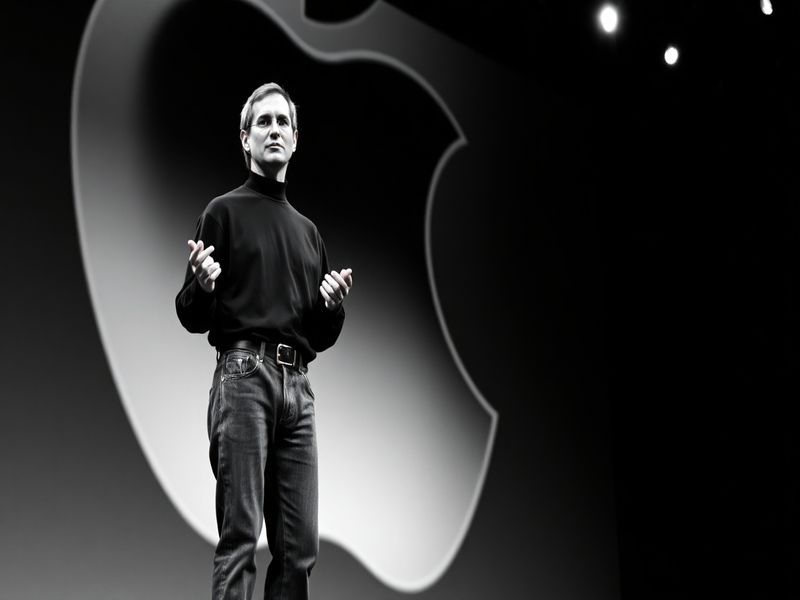
Steve Jobs: The Visionary Who Shaped Modern Technology
“`html
Steve Jobs: The Visionary Who Shaped Modern Technology
Steve Jobs remains one of the most influential figures in the history of technology and business. His relentless pursuit of innovation transformed industries, from personal computing to music, animation, and mobile devices. Jobs wasn’t just a CEO; he was a philosopher of design, a master of persuasion, and a relentless perfectionist whose vision continues to shape the digital world decades after his passing.
Born in 1955, Jobs co-founded Apple in a garage in 1976, launching a company that would redefine how people interact with technology. His leadership style—often described as both inspiring and demanding—helped Apple evolve from a niche computer manufacturer into one of the most valuable corporations in the world. Jobs’ legacy extends beyond Apple, however, as his influence can be seen in Pixar’s animation revolution and the global smartphone industry he helped create.
The Early Years: A Rebellious Genius Finds His Path
Steve Jobs grew up in Silicon Valley during its formative years, a time when the seeds of the tech revolution were just beginning to sprout. Adopted by Paul and Clara Jobs, he developed an early fascination with electronics, tinkering with gadgets in his family’s garage. His rebellious streak led him to drop out of Reed College after just one semester, though he continued auditing classes, including a calligraphy course that would later influence Apple’s typography.
In 1974, Jobs traveled to India in search of spiritual enlightenment, an experience that deepened his introspective nature and influenced his leadership philosophy. Upon returning to the U.S., he reconnected with Steve Wozniak, his childhood friend and engineering prodigy. Their shared vision for accessible personal computers led to the creation of the Apple I in 1976, followed by the Apple II, which became one of the first highly successful mass-market computers.
A Clash of Visions: Jobs’ Firing and Return to Apple
Despite Apple’s early success, internal power struggles led to Jobs being ousted from the company in 1985. The board sided with then-CEO John Sculley, whom Jobs had personally recruited from PepsiCo. The dismissal was a crushing blow, but it freed Jobs to explore new ventures. He founded NeXT Computer, a high-end workstation company, and acquired The Graphics Group from Lucasfilm, which he renamed Pixar.
Pixar became Jobs’ unexpected proving ground. Under his leadership, the studio produced groundbreaking animated films like Toy Story, the first fully computer-animated movie. Meanwhile, NeXT struggled commercially but developed advanced software that would later become the foundation for macOS. Jobs’ time away from Apple was far from a failure—it was a period of reinvention that shaped his leadership for the company’s future.
When Apple acquired NeXT in 1996, Jobs returned to the company he had co-founded. The tech landscape had changed dramatically. Apple was near bankruptcy, and the industry had moved on from its once-dominant position. Jobs, however, saw an opportunity. He streamlined the product lineup, introduced the iMac in 1998, and set Apple on a course to redefine consumer technology.
The iPod, iPhone, and iPad: Redefining How We Live
In 2001, Apple launched the iPod, a portable music player that revolutionized the music industry. Unlike previous MP3 players, the iPod seamlessly integrated with iTunes, creating a closed ecosystem that made it easy for users to purchase, organize, and listen to music. Within a few years, the iPod became the dominant force in digital music, reshaping how people consumed media.
The launch of the iPhone in 2007 was a turning point not just for Apple, but for the entire tech industry. Jobs introduced a device that combined a phone, an iPod, and an internet communicator into a single, intuitive interface. The multi-touch screen and the App Store ecosystem transformed the smartphone into a pocket-sized computer, setting a new standard for mobile technology. Competitors scrambled to catch up, but Apple’s first-mover advantage and brand loyalty kept it ahead for years.
In 2010, Jobs unveiled the iPad, a tablet that redefined portable computing. While skeptics initially questioned its necessity, the iPad created a new category of devices, blending the convenience of a smartphone with the productivity of a laptop. Its success spurred a wave of tablet adoption across the industry, proving that Jobs’ ability to anticipate consumer needs remained unmatched.
The Design Philosophy: Less Is More
Jobs’ obsession with design was not merely aesthetic—it was philosophical. He believed that technology should be intuitive, beautiful, and accessible. This philosophy was embodied in Apple’s minimalist approach, where every detail mattered. From the rounded corners of the iPhone to the typography in macOS, Jobs insisted on perfection down to the smallest element.
One of Jobs’ most famous mantras was “design is how it works.” He prioritized user experience above all else, often rejecting products that didn’t meet his exacting standards. This relentless focus on design extended beyond Apple’s hardware. The company’s retail stores, designed by architect Norman Foster, became architectural marvels that emphasized openness and accessibility.
Jobs’ collaboration with designer Jony Ive was particularly transformative. Together, they created products that felt almost magical in their simplicity. The unibody aluminum construction of the MacBook Air and the seamless integration of hardware and software in the iPhone were testaments to their shared vision.
Legacy: A Lasting Influence on Technology and Business
Steve Jobs passed away on October 5, 2011, after a long battle with pancreatic cancer. His death marked the end of an era, but his influence endures in every corner of the tech industry. Companies like Samsung, Google, and Microsoft have all borrowed elements of Apple’s design language and ecosystem approach, proving that Jobs’ vision was ahead of its time.
Beyond technology, Jobs’ leadership style has been studied and emulated. His ability to inspire teams, his willingness to take bold risks, and his insistence on excellence have become benchmarks for entrepreneurs and executives worldwide. Books like Steve Jobs by Walter Isaacson and documentaries like Steve Jobs: The Man in the Machine continue to explore his complex personality and unorthodox methods.
Jobs’ impact can also be seen in the rise of Silicon Valley as a global innovation hub. His success at Apple, Pixar, and NeXT demonstrated that technology could be both profitable and artistic, paving the way for a new generation of tech visionaries. Today, companies like Tesla, SpaceX, and even startups in Dave’s Locker Technology section owe a debt to Jobs’ pioneering spirit.
The Jobs Effect: How His Vision Shaped Modern Entrepreneurship
Jobs’ career offers several key lessons for modern entrepreneurs and business leaders. First, he demonstrated the power of starting with a clear vision. Whether it was the Apple II, the iPhone, or Pixar’s first film, Jobs always began with a grand idea of what the future could look like. Second, he understood the importance of design and user experience, proving that technology must be accessible and emotionally resonant.
Jobs also showed that failure is not the end—it’s a stepping stone. His firing from Apple in 1985 led to the creation of Pixar and NeXT, both of which played crucial roles in his eventual return to the company. Finally, Jobs’ leadership style was a mix of charisma, intensity, and relentless perfectionism. He held his teams to impossibly high standards but also inspired them to achieve the impossible.
For those looking to emulate his success, Jobs’ career is a masterclass in vision, persistence, and innovation. His story reminds us that true leadership is not about managing the status quo but about imagining—and then building—the future.
Conclusion: The Man Who Changed Everything
Steve Jobs’ life was a study in contradictions: a man of both relentless ambition and deep introspection, a perfectionist who embraced simplicity, and a businessman who believed in the power of art. His contributions to technology, entertainment, and design have left an indelible mark on the world, shaping how we work, communicate, and consume media.
While Jobs’ methods were often polarizing, his results were undeniable. He built companies that not only succeeded financially but also redefined entire industries. More than a decade after his death, his influence continues to shape the products we use every day, proving that true visionaries never really leave us—they just become part of the fabric of our lives.
For those interested in exploring more about the intersection of technology and innovation, visit Dave’s Locker Analysis for in-depth discussions on the latest trends and breakthroughs in the tech world.