Benidorm’s Hidden Gems: Why Spain’s Coastal City Endures
“`html
Benidorm: Spain’s Coastal Gem Beyond the Postcards
Nestled along the Costa Blanca, Benidorm has long been a byword for sun-soaked holidays and high-rise escapism. Yet beneath the postcard-perfect beaches and neon-lit nightlife lies a destination that defies easy categorisation. Far from being just a playground for package tourists, this Spanish city has evolved into a dynamic cultural hub where tradition and modernity collide.
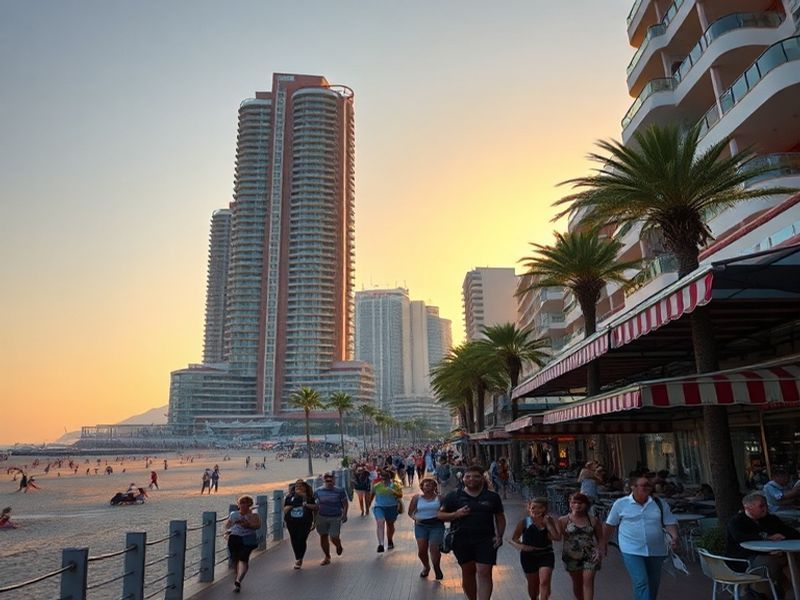
Its skyline, dominated by the iconic Hotel Bali and the towering Gran Hotel Bali, tells a story of ambition and reinvention. Once a modest fishing village, Benidorm transformed in the 1960s into a magnet for European holidaymakers. Today, it remains one of Europe’s most visited coastal cities, drawing over 12 million visitors annually. But what makes Benidorm endure—and how has it adapted to shifting traveler expectations?
The Evolution of a Holiday Hotspot
Benidorm’s rise from a quiet fishing community to a global tourist destination is a case study in urban reinvention. The 1950s marked a turning point when local entrepreneur Pedro Zaragoza orchestrated a visionary plan to rebrand the town. By promoting Benidorm as a year-round destination—rather than just a summer stop—he attracted investors and holidaymakers alike.
This strategy paid off. By the 1970s, the city had become synonymous with family-friendly resorts and lively nightlife. Yet the stereotype of Benidorm as a hedonistic party zone overshadows its quieter charms. Inland, the Sierra Helada Natural Park offers rugged hiking trails with panoramic views over the Mediterranean. Meanwhile, the old town retains narrow streets lined with tapas bars where locals gather.
This dual identity—parties by the beach, tranquility in the hills—has allowed Benidorm to appeal to a broader audience. Today, around 20% of visitors are aged 65 or older, drawn by the mild climate and accessible amenities. The city has also embraced niche tourism, from golf tourism to LGBTQ+-friendly resorts, broadening its appeal beyond the traditional package holiday.
What Drives Benidorm’s Enduring Appeal?
Several factors explain why Benidorm continues to thrive in an era when many coastal destinations struggle with overtourism and climate concerns. Consider these key drivers:
- Year-round climate: With over 3,000 hours of sunshine annually, Benidorm offers predictable weather that extends beyond the summer season.
- Diverse accommodation: From luxury five-star hotels to budget apartments, the city caters to every traveler demographic.
- Accessibility: Just 45 minutes from Alicante-Elche Airport, Benidorm is easily reachable for European travelers.
- Cultural fusion: The city hosts international events like the Benidorm Fest, a music competition that has launched Spanish acts onto the global stage.
- Sustainability efforts: Recent years have seen investments in renewable energy and water conservation to address environmental concerns.
These elements combine to create a destination that feels both timeless and forward-thinking. Unlike many resorts that peak and fade, Benidorm has shown remarkable resilience by continuously diversifying its offerings.
The Broader Impact on Spain’s Tourism Model
Benidorm’s success has had ripple effects across Spain’s tourism industry. Its model—balancing mass tourism with sustainability and diversification—has influenced other coastal destinations. Cities like Torrevieja and Lloret de Mar have sought to emulate Benidorm’s ability to reinvent itself while maintaining high visitor numbers.
Yet this approach is not without controversy. Critics argue that Benidorm’s high-rise development has come at a cost to local character. The rapid construction of apartment blocks in the 1960s and 70s left little room for preserving historic architecture. Today, efforts are underway to restore the old town and promote heritage tourism as a counterbalance to the beachfront glamour.
Economically, Benidorm’s tourism sector supports over 20,000 jobs directly and indirectly. The city’s GDP is heavily reliant on hospitality, making it vulnerable to global shocks like the COVID-19 pandemic. When travel ground to a halt in 2020, Benidorm’s economy contracted sharply. The recovery has been uneven, with some sectors—like luxury tourism—rebounding faster than others.
This vulnerability highlights a broader challenge for destinations that depend on tourism. Benidorm’s story underscores the need for diversification, not just in attractions but in economic resilience. The city’s investment in conferences, digital nomad visas, and cultural festivals reflects a strategic pivot toward a more balanced tourism economy.
What’s Next for Benidorm?
The future of Benidorm hinges on its ability to balance growth with preservation. Several trends are shaping its trajectory:
- Sustainable tourism: Initiatives like the Benidorm Green Plan aim to reduce carbon emissions and improve waste management. The city has pledged to become carbon-neutral by 2050.
- Digital nomads: With Spain introducing a remote work visa, Benidorm is positioning itself as a hub for location-independent professionals seeking sun and stability.
- Cultural and experiential tourism: The city is expanding its festival calendar, including events like the Benidorm International Jazz Festival and food festivals showcasing local cuisine.
- Urban regeneration: Projects to pedestrianise key areas and restore historic buildings are underway to enhance the city’s appeal beyond the beach.
These efforts suggest that Benidorm is not content to rest on its laurels. Instead, it is actively shaping its next chapter. For travelers, this means a destination that continues to evolve—offering new experiences while retaining the charm that has drawn visitors for generations.
A Destination in Transition
Benidorm’s story is one of reinvention and resilience. It is a place where the past and future coexist, where high-rises cast shadows over ancient fishing nets, and where the hum of nightlife blends with the scent of orange blossoms carried on the sea breeze. As the tourism landscape shifts, Benidorm’s ability to adapt will determine whether it remains a model for coastal destinations or becomes a cautionary tale.
What is certain is that Benidorm refuses to be defined by a single narrative. It is more than a party destination or a retirement haven—it is a city in motion, constantly redefining itself for new generations of travelers. In doing so, it offers a blueprint for how destinations can thrive in an ever-changing world.