Brightline Train: How Florida’s High-Speed Rail is Changing U.S. Travel
“`html
Brightline Train: Redefining Intercity Travel in the U.S.
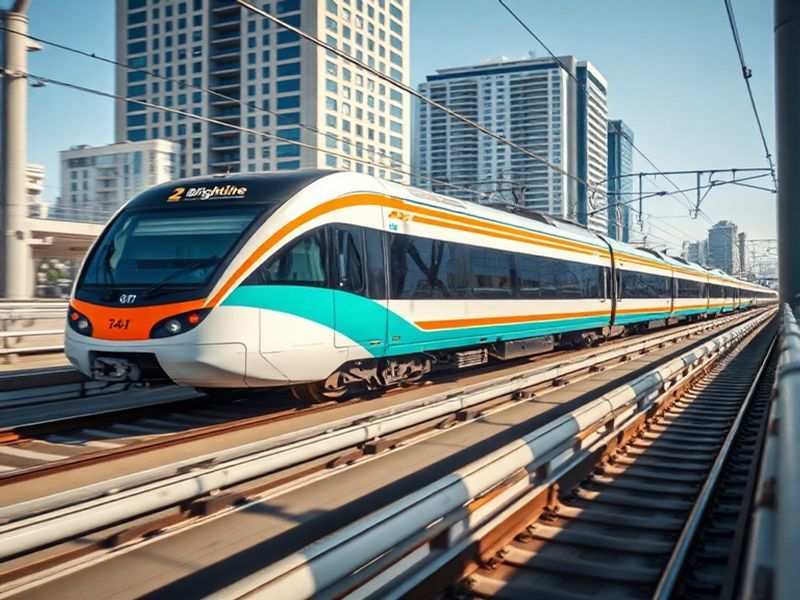
Brightline, Florida’s privately funded passenger rail service, has transformed intercity transportation since its launch in 2018. Connecting Miami, Fort Lauderdale, West Palm Beach, and Orlando, the sleek, modern trains offer a compelling alternative to highways and domestic flights. With speeds reaching up to 125 mph, Brightline has become a symbol of innovation in U.S. rail travel—a sector long overlooked in favor of car culture and air transport.
The service initially launched as All Aboard Florida in 2014 under the leadership of Fortress Investment Group. After years of construction and testing, Brightline debuted its first segment between Miami and West Palm Beach in January 2018. The Orlando extension followed in 2023, solidifying Brightline as the only privately owned and operated intercity passenger railroad in America. Its success has sparked renewed interest in rail infrastructure nationwide, with several states exploring similar models.
The Rise of Private Passenger Rail in the U.S.
Public skepticism about rail travel in the United States runs deep. Decades of underinvestment in passenger rail—compared to Europe, Japan, or even China—left many Americans associating trains with delay, discomfort, and obsolescence. Brightline bucked that trend by prioritizing speed, comfort, and customer experience from the outset.
The service’s design philosophy mirrors high-speed rail systems abroad. Trains feature spacious seating, Wi-Fi, power outlets, and large windows. Business-class and premium options include leather seats, gourmet dining, and dedicated lounge access. This emphasis on luxury and convenience has attracted not only commuters but also tourists and business travelers who value reliability over the unpredictability of highways or airports.
Brightline’s business model relies on real estate development around its stations. By building mixed-use properties near terminals, the company generates additional revenue while promoting transit-oriented growth. This approach has drawn comparisons to international models like Japan’s Shinkansen, where rail lines and urban development are closely integrated.
Brightline’s Expansion: A National Blueprint?
Brightline’s influence extends beyond Florida. The company has announced plans to expand into Nevada, with a proposed route connecting Las Vegas and Southern California. This $12 billion project, known as Brightline West, aims to reduce travel time between Los Angeles and Las Vegas to just two hours—potentially drawing passengers away from the heavily congested I-15 corridor and short-haul flights. Construction began in 2023, with service expected by 2027.
Other states are watching closely. Brightline’s success has revived discussions about high-speed rail in California, Texas, and the Northeast Corridor. Amtrak’s Acela, while popular, operates at slower speeds and faces aging infrastructure challenges. Brightline’s private-sector efficiency offers a template for how rail projects could be executed faster and with greater accountability.
Yet challenges remain. Private rail ventures require significant upfront capital, and regulatory hurdles can delay projects for years. Brightline’s reliance on public-private partnerships—such as the $1.6 billion in tax-exempt private activity bonds issued for the Orlando extension—highlights the need for government support to make such ventures viable.
Cultural Impact: A New Era for American Travel
Brightline has reshaped not just transportation but also cultural attitudes toward rail travel. In a country where driving is often a point of national pride, Brightline has positioned train travel as aspirational. Its marketing emphasizes speed, style, and sustainability—appealing to younger, environmentally conscious travelers who might otherwise default to rideshares or electric vehicles.
The service has also become a draw for events. During Miami Art Week or Super Bowl weekend in Miami Gardens, Brightline offers special packages and extended service hours. By partnering with hotels, sports teams, and cultural institutions, Brightline has embedded itself into the fabric of Florida’s social and economic life.
Globally, Brightline’s model contrasts with the struggles of public rail systems in the U.S. While Amtrak and regional commuter railroads face chronic underfunding, Brightline demonstrates what’s possible when innovation and investment align. It serves as a case study for how private enterprise can fill gaps left by public infrastructure failures.
Challenges and Criticisms
Despite its achievements, Brightline is not without controversy. Critics argue that its private ownership model prioritizes profit over public accessibility. Ticket prices, while competitive with airfare, remain out of reach for many low-income travelers. The service’s focus on premium amenities also risks alienating budget-conscious passengers who might otherwise choose buses or carpooling.
Safety concerns have also emerged. In 2023, a Brightline train collided with a dump truck in Boca Raton, injuring multiple passengers. While investigations cleared the company of fault, the incident reignited debates about rail safety and the need for stricter oversight of private rail operators.
Environmental impact is another point of contention. Brightline markets itself as a sustainable alternative to driving, but its diesel-powered trains emit more carbon per passenger than Amtrak’s electric Acela. The company has pledged to transition to zero-emission locomotives by 2035, but critics question whether such a timeline aligns with urgent climate goals.
Looking Ahead: The Future of American Rail
Brightline’s story is still unfolding, but its impact is already clear. It has proven that passenger rail can be profitable, desirable, and transformative. As the U.S. grapples with climate change, urban sprawl, and infrastructure decay, Brightline offers a viable path forward. Whether it can scale beyond Florida and Nevada remains to be seen, but its success has undeniably shifted the conversation about rail travel in America.
For now, Brightline stands as a rare bright spot in a transportation landscape dominated by cars and planes. Its blend of speed, style, and ambition hints at a future where trains might once again play a central role in how Americans move—and how they see themselves as a nation.
To explore more about the evolution of transportation infrastructure, visit our Technology section. For insights into how rail travel intersects with urban development, check out our Analysis category.
Conclusion
Brightline’s journey from a Florida rail experiment to a national model underscores the potential of private investment in reviving America’s transportation networks. While challenges around affordability, safety, and sustainability persist, its cultural and economic influence is undeniable. As the company expands and new projects emerge, Brightline may well help redefine what it means to travel across the United States—bridging the gap between innovation and tradition.