Hasan al-Habib: The Syrian Poet Redefining Global Verse
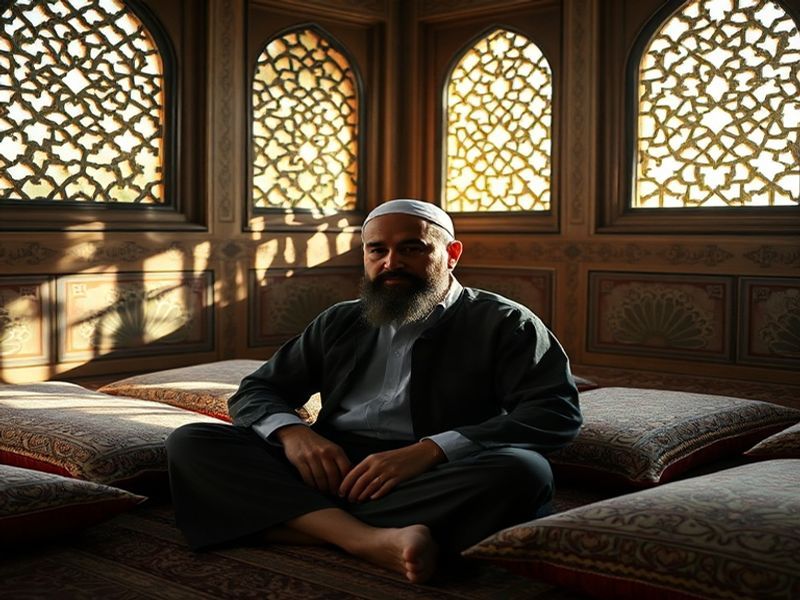
Hasan al-Habib is a name that resonates with quiet intensity in contemporary Arabic poetry. Born in Damascus in 1985, he grew up amid the city’s ancient streets and modern conflicts, experiences that would later shape his poetic voice. His work bridges the gap between classical Arabic traditions and modern experimental forms, earning him recognition across the Middle East and beyond.
Al-Habib’s poetry often reflects the fractured beauty of his homeland. His verses oscillate between nostalgia for Syria’s pre-war past and a stark confrontation with its present realities. This duality has made his work a touchstone for a generation grappling with displacement, memory, and resilience. Critics have praised his ability to distill complex emotions into vivid, accessible language, a skill that has broadened his appeal far beyond literary circles.
The Evolution of a Poetic Voice
Al-Habib’s journey as a writer began in the early 2000s, when he contributed to Damascus’s burgeoning underground literary scene. Unlike many of his contemporaries, he avoided overtly political themes in his early work, instead focusing on personal and metaphysical explorations. This approach allowed his poetry to transcend immediate contexts, speaking to universal human experiences.
His breakthrough came with the 2010 collection Shadows on the Threshold, which critics hailed as a masterclass in lyrical restraint. The book’s title poem, a meditation on thresholds—both literal and metaphorical—became an instant classic. It captured the liminal spaces where memory and reality intersect, a theme that would define much of his later work.
Following the outbreak of Syria’s civil war in 2011, al-Habib’s poetry took a more urgent tone. His 2015 collection Letters from a Fractured City documented the disintegration of Damascus with haunting precision. The poems in this volume are less about political slogans and more about the psychological toll of living in a city under siege. This shift in focus broadened his readership among those who saw their own struggles reflected in his words.
Cultural Impact and Global Reach
Al-Habib’s influence extends well beyond Syria’s borders. His works have been translated into English, French, German, and Spanish, introducing his lyrical voice to new audiences. In 2018, he was invited to the International Poetry Festival in Medellín, Colombia, where his readings drew standing ovations. Such international recognition underscores the universal appeal of his themes—exile, loss, and the search for meaning amid chaos.
His poetry has also found a home in digital spaces. Platforms like Culture have featured his work, bringing his verses to younger, digitally native readers. Social media has played a surprising role in his popularity, with fans sharing translated excerpts that resonate with their own experiences of displacement or longing. This digital dissemination has turned al-Habib into a kind of poetic ambassador, bridging cultural divides through shared emotional landscapes.
Al-Habib’s impact is particularly notable in diaspora communities. Syrian refugees across Europe and North America have embraced his poetry as a form of emotional sustenance. Anthologies of contemporary Arabic poetry often include his work, cementing his status as a defining voice of his generation. His ability to articulate the inexpressible—the grief of leaving home, the weight of memory—has made him a literary figure of profound significance.
A Legacy in the Making
At 39, al-Habib is still in the prime of his creative life. His most recent collection, The Weight of Light (2022), explores themes of hope and resilience in the face of adversity. The title poem, a long-form meditation on light as both a literal and metaphorical force, has been described as a “testament to the human spirit.” Critics have noted a shift in his work toward more overtly hopeful imagery, a reflection of his personal journey and the broader Syrian experience.
Looking ahead, al-Habib shows no signs of slowing down. He is currently working on a novel, a departure from poetry that has intrigued his followers. In interviews, he has spoken about the challenges of adapting his lyrical sensibility to prose, but also the excitement of exploring new forms. His fans, both old and new, eagerly await what comes next.
Al-Habib’s work serves as a reminder of the power of poetry to transcend borders and conflicts. In an era where global crises often feel overwhelming, his verses offer a moment of clarity and connection. Whether read in Damascus, Berlin, or Buenos Aires, his words resonate with a shared humanity that defies geography.
Why Hasan al-Habib Matters
In a literary landscape often dominated by commercial or overtly political works, al-Habib’s poetry stands out for its depth and restraint. He belongs to a tradition of poets who believe in the transformative power of language, who see verse not as a tool for propaganda but as a means of illumination. His ability to capture the intangible—the weight of a memory, the texture of silence—sets him apart.
For readers new to Arabic poetry, al-Habib offers an accessible entry point. His work avoids the obscurity that sometimes alienates casual readers of contemporary verse. Instead, he crafts poems that are both intricate and immediate, rewarding close reading while also inviting emotional engagement.
Al-Habib’s story is also one of cultural preservation. In an era where traditional forms are often overshadowed by digital creativity, he has found ways to honor classical Arabic poetic structures while infusing them with modern sensibilities. This balance ensures that his work remains rooted in heritage even as it speaks to contemporary concerns.
Ultimately, Hasan al-Habib’s significance lies in his ability to articulate the human condition with unflinching honesty and lyrical beauty. His poetry doesn’t just reflect the world; it offers a way to understand it, to find meaning in its fractures and fractures alike. As long as there are readers who seek connection through words, his work will continue to matter.