NCAA Men’s Division III Basketball: Where Small Schools Make Big History
“`html
NCAA Men’s Division III Basketball Championship: Where Small Schools Make Big History
The NCAA Men’s Division III Basketball Championship represents more than just a postseason tournament—it embodies the enduring spirit of amateur athletics in the United States. Unlike its high-profile Division I counterpart, which often overshadows smaller programs, Division III places the focus squarely on student-athletes whose love for the game transcends commercial interests. This championship, contested annually since 1975, has become a cultural touchstone for colleges and universities committed to balancing academic excellence with competitive sportsmanship.
What makes Division III basketball unique is not just the level of play, but the philosophy behind it. Institutions like Amherst, Williams, and Middlebury—frequent contenders in the tournament—have built programs that emphasize holistic development. These schools are known for their rigorous academic standards and commitment to athletes who pursue excellence both in the classroom and on the court. The championship, therefore, serves as a celebration of institutions that prioritize education over entertainment, creating a model that resonates globally in an era where elite sports often overshadow academics.
The Evolution of Division III Basketball: From Humble Beginnings to National Prominence
When the NCAA first introduced the Division III men’s basketball championship in 1975, it was a modest affair with only 32 teams participating. The format mirrored the structure of Division I, but the stakes were entirely different. There were no athletic scholarships, no million-dollar TV deals, and no pressure to prioritize basketball over studies. Instead, the tournament was a proving ground for student-athletes who played for the love of the game.
Over the decades, Division III basketball has grown in both scope and prestige. Today, the tournament features 64 teams, selected through a combination of automatic qualifiers and at-large bids. The competition has become fiercely competitive, with schools from across the country—ranging from small liberal arts colleges in the Northeast to large universities in the Midwest—vying for the national title. The growth of the tournament reflects broader trends in college sports, where Division III has carved out a distinct identity in the shadow of the NCAA’s commercial juggernauts.
One of the most significant milestones in the tournament’s history came in 2007, when the championship game was broadcast live on ESPN for the first time. While the viewership paled in comparison to Division I’s Final Four, the exposure brought unprecedented attention to Division III basketball. It also highlighted the talent and dedication of student-athletes who, in many cases, could have pursued careers in professional leagues but chose instead to prioritize their education.
Global Influences and the Growing Appeal of Division III Basketball
While Division III basketball remains predominantly a U.S.-based phenomenon, its influence has extended beyond American borders. International student-athletes have increasingly found a home in Division III programs, drawn by the opportunity to compete at a high level while earning a degree from a prestigious institution. Countries like Canada, Australia, and parts of Europe have seen a rise in players who view Division III as an ideal pathway to both athletic and academic success.
This global appeal is not just a matter of convenience but a reflection of the values that Division III represents. In an era where college sports are often criticized for their commercialization and exploitation of athletes, Division III offers an alternative model. Student-athletes from abroad are attracted to the balance between academics and athletics, as well as the emphasis on personal growth and community engagement. For many, playing in the Division III tournament becomes a defining experience of their college careers, regardless of whether they go on to play professionally.
Moreover, Division III basketball has begun to foster cultural exchanges that extend beyond the court. Teams traveling to tournaments often participate in community service projects, cultural events, and educational exchanges with local schools. These initiatives have helped to build bridges between American institutions and their international counterparts, creating a network of goodwill and collaboration that transcends sports.
The Road to the Championship: What It Takes to Compete at the Highest Level
Reaching the NCAA Men’s Division III Basketball Championship is no small feat. The journey begins long before the opening tip-off of the tournament, with years of preparation, recruitment, and development. Coaches at Division III schools must be adept at identifying talent that aligns with their program’s philosophy, often prioritizing character and work ethic over raw athleticism. This approach has led to the emergence of unique playing styles and strategies that distinguish Division III basketball from other levels of competition.
For student-athletes, the path to the championship is equally demanding. Balancing a full course load with rigorous training schedules requires exceptional time management and discipline. Many players arrive on campus with little or no prior experience in high-level basketball, having focused instead on academics in high school. The transition to Division III competition is often a steep learning curve, but one that fosters resilience and adaptability.
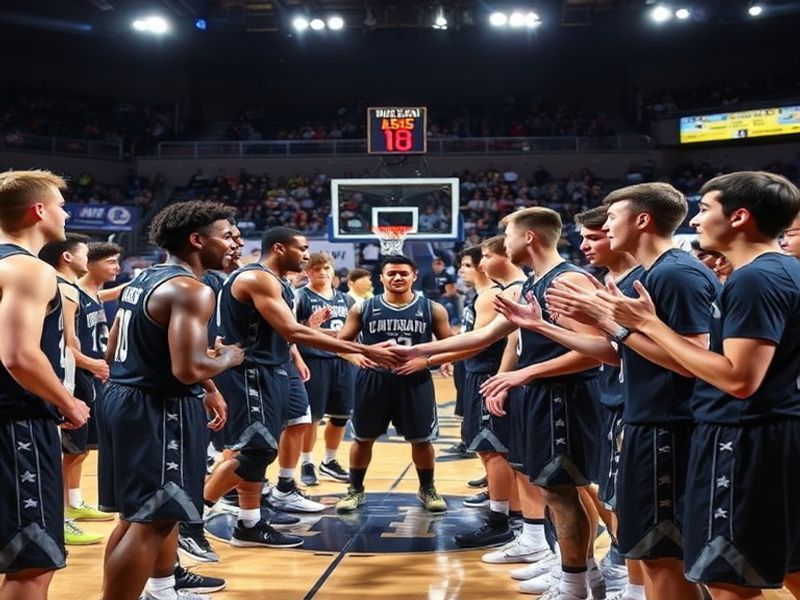
Once the tournament begins, the intensity of the competition becomes apparent. Games are fast-paced, with an emphasis on fundamentals such as ball movement, defense, and free-throw shooting. The physicality of Division III basketball is often underestimated, but the level of play is undeniably high. Teams that advance deep into the tournament are typically those that have mastered the intangibles—team chemistry, leadership, and mental toughness.
To illustrate the caliber of play in Division III basketball, consider the following aspects that set it apart:
- Academic Rigor: Players must maintain a minimum GPA to remain eligible, and many programs have academic support systems in place to ensure their success.
- Limited Resources: Unlike Division I programs with lavish facilities and large coaching staffs, Division III teams often operate on shoestring budgets, requiring creativity and resourcefulness.
- Community Support: Local fans and alumni play a crucial role in the success of Division III programs, creating an intimate and passionate atmosphere at games.
- Long-Term Development: The focus on player development extends beyond the college years, with many alumni going on to careers in coaching, sports administration, and other fields.
A Legacy of Excellence: Notable Teams and Moments in Division III History
The NCAA Men’s Division III Basketball Championship has produced countless memorable moments and legendary teams. Some of the most storied programs in Division III history include Amherst College, which has won multiple national titles, and the University of Wisconsin-Whitewater, a perennial powerhouse that has dominated the tournament in recent years. These programs have set the standard for excellence in Division III basketball, inspiring generations of student-athletes and coaches.
One of the most iconic moments in tournament history came in 2014, when the University of Wisconsin-Stevens Point defeated Wittenberg University to win the national title. The game was a showcase of clutch performances, with Stevens Point’s Ben Jacobson hitting a game-winning three-pointer in the final seconds. The victory cemented Stevens Point’s reputation as a dynasty in Division III basketball and provided a moment of glory for a program that had long been a contender but had never claimed the top prize.
Another standout moment occurred in 2019, when the University of Nebraska Wesleyan defeated the University of Wisconsin-Oshkosh in a thrilling overtime victory. The game was a testament to the resilience and determination of Division III athletes, with both teams leaving everything on the court. The championship run by Nebraska Wesleyan highlighted the unpredictable nature of Division III basketball, where underdogs can rise to the occasion and create lasting memories.
These moments, along with countless others, have contributed to the rich tapestry of Division III basketball. The tournament is not just a competition; it is a celebration of the values that define college sports at their best—hard work, perseverance, and the pursuit of excellence in all aspects of life.
Looking Ahead: The Future of Division III Basketball
As Division III basketball continues to evolve, its future appears bright. The tournament’s emphasis on amateurism and academic achievement has garnered attention from educators, parents, and athletes alike, who are increasingly seeking alternatives to the commercialized landscape of elite college sports. With the rise of name, image, and likeness (NIL) deals in Division I, the contrast between the two divisions has become even more pronounced, further solidifying Division III’s unique appeal.
Looking ahead, several trends are likely to shape the future of Division III basketball. One is the continued globalization of the sport, with international student-athletes playing an increasingly prominent role in programs across the country. Another is the growing emphasis on player development, as coaches seek to cultivate well-rounded athletes who can excel both on and off the court. Additionally, the use of technology and analytics is becoming more prevalent in Division III programs, helping teams gain a competitive edge while maintaining their focus on academics.
For fans of college basketball, Division III offers a refreshing alternative to the high-stakes, high-pressure world of Division I. The tournament is a reminder that the essence of sports lies not in fame or fortune, but in the pursuit of excellence and the joy of competition. As the NCAA Men’s Division III Basketball Championship continues to grow in stature, it will undoubtedly inspire future generations of student-athletes to strive for greatness while staying true to their academic and personal values.
For those interested in exploring more about college basketball or other sports, visit our Sports section for additional articles and insights.