Junior dos Santos: How Brazil’s MMA Pioneer Changed Heavyweight Fighting
From Humble Beginnings to Global Recognition
Junior dos Santos, born on January 30, 1984, in Caçador, Brazil, emerged from modest circumstances to become one of the most recognizable names in mixed martial arts. His journey mirrors the rise of MMA in Brazil, a nation predominantly known for its football culture. Dos Santos’ introduction to combat sports began with judo at age 14, a discipline that taught him discipline and balance. By his late teens, he transitioned to Muay Thai and Brazilian jiu-jitsu, laying the groundwork for his future in the octagon.
The Brazilian’s early career was marked by relentless training and participation in local circuits. His first professional MMA fight took place in 2006, and within four years, he had captured the attention of the UFC, the premier organization in the sport. Dos Santos’ ascent was not just about raw talent but also his ability to adapt and evolve. His striking, particularly his boxing, combined with a surprisingly technical grappling game, set him apart from contemporaries. This versatility would later define his legacy in the sport.
A Style That Redefined Heavyweight Competition
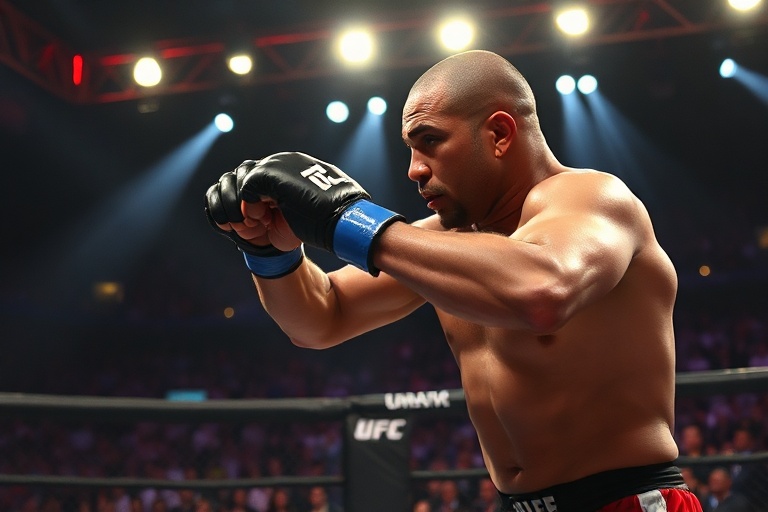
Dos Santos’ fighting style was a blend of precision and power. Standing at 6’4” with a reach of 77 inches, he possessed the physical attributes of a classic heavyweight striker. However, what made him unique was his footwork and head movement, traits more commonly associated with lighter weight classes. His jab was one of the most effective in heavyweight history, often used to control distance and set up devastating combinations. Opponents struggled to close the gap, and when they did, Dos Santos’ counter-striking proved lethal.
His 2011 knockout of Cain Velasquez at UFC on Fox 1 is often cited as one of the most iconic moments in heavyweight MMA. The fight lasted just over a minute, showcasing Dos Santos’ ability to capitalize on a single mistake. This victory earned him the UFC Heavyweight Championship and cemented his status as a global star. Unlike many heavyweight champions who relied solely on brute force, Dos Santos’ technical mastery brought a new dimension to the division. His fights became must-watch events, drawing casual fans who appreciated the artistry of his striking.
The Cultural Impact of a Brazilian Champion
Dos Santos’ success resonated deeply within Brazil, a country where football dominates the sporting landscape. His achievements provided a counter-narrative to the idea that Brazil’s athletic prowess was limited to soccer. In interviews, he often spoke about representing his country with pride, and his fights were broadcast widely across Brazilian media. Dos Santos became a symbol of national pride, inspiring a generation of young athletes to explore MMA as a viable career path.
Beyond Brazil, Dos Santos’ global appeal grew through his participation in international events and his charismatic personality. He was known for his humility and respect for opponents, traits that endeared him to fans worldwide. His rivalry with Velasquez and later with Stipe Miocic added layers to his legacy, as he faced some of the division’s most formidable competitors. These battles were not just athletic contests but cultural exchanges, with each fighter bringing their unique background to the forefront of the sport.
The Challenges and Comebacks
Dos Santos’ career was not without setbacks. After losing the title to Velasquez in a rematch, he faced a period of decline marked by injuries and inconsistent performances. Critics questioned whether his prime had passed, and in 2014, he was knocked out by Miocic in a fight that many believed signaled the end of his title hopes. However, Dos Santos’ resilience became a defining trait. He took time to refine his game, focusing on improving his grappling and cardio, and made a remarkable comeback in 2017 with a knockout win over Ben Rothwell.
His later years in the UFC showcased a fighter who refused to accept obsolescence. Dos Santos’ final UFC bout, a split decision loss to Francis Ngannou in 2020, was a testament to his enduring skill and determination. Though he never regained the title, his journey highlighted the unpredictable nature of combat sports and the importance of perseverance. Dos Santos retired with a record of 21 wins and 10 losses, leaving behind a legacy that transcends his statistical achievements.
Legacy and Influence on Modern MMA
Junior dos Santos’ impact on MMA extends beyond his in-cage accomplishments. He played a pivotal role in popularizing the sport in Brazil, paving the way for future Brazilian fighters like Amanda Nunes and Charles Oliveira. His technical approach to heavyweight fighting influenced a generation of strikers, proving that size and power alone were not enough to succeed at the highest level. Dos Santos’ fights remain studied by aspiring fighters, who analyze his footwork, timing, and fight IQ.
In an era where knockout artists dominate highlight reels, Dos Santos’ career serves as a reminder of the importance of fundamentals. His ability to adapt, learn, and reinvent himself is a blueprint for longevity in a sport known for its physical toll. While he may not be the most decorated heavyweight champion in history, his contributions to MMA are undeniable. Dos Santos’ story is one of perseverance, innovation, and cultural significance, making him a figure worthy of recognition in the broader narrative of combat sports.
For those interested in exploring more about the evolution of MMA and its global stars, visit our Sports section for additional insights and analysis. The sport continues to evolve, but figures like Dos Santos remain foundational to its growth and appeal.
A Final Reflection
Junior dos Santos’ journey from a small town in Brazil to the pinnacle of MMA is a story of determination and adaptability. His technical prowess redefined what it meant to be a heavyweight striker, and his cultural impact extended the reach of the sport beyond its traditional boundaries. While his career had its share of highs and lows, Dos Santos’ legacy is secure as one of the sport’s most influential figures.
As MMA continues to grow globally, the lessons from Dos Santos’ career—resilience, innovation, and humility—remain relevant. He proved that greatness is not just about physical dominance but also about mental fortitude and the ability to evolve. In the pantheon of MMA legends, Junior dos Santos stands tall, not just for his accomplishments but for the inspiration he provided to fighters and fans around the world.