Lincoln Memorial Reflecting Pool: A Monumental Icon on the National Mall
The Lincoln Memorial Reflecting Pool stands as one of Washington, D.C.’s most recognizable landmarks, stretching 2,029 feet in length and spanning 167 feet at its widest point. Designed by architect Henry Bacon and completed in 1922, this rectangular basin of water serves as a serene foreground to the towering marble statue of Abraham Lincoln. Its reflective surface mirrors the monument’s grandeur, creating a visual symmetry that has drawn millions of visitors over the past century. More than just a scenic backdrop, the pool is a vital piece of the National Mall’s ceremonial landscape, hosting events that range from presidential inaugurations to civil rights gatherings.
The Reflecting Pool was part of the original 1901 McMillan Plan, which envisioned a grand axis for the capital’s monumental core. Construction began in 1919 and was completed three years later, just in time for the dedication of the Lincoln Memorial. Filled with water from the Potomac River, the pool was designed to remain clear and clean through a system of filtration and circulation. Over the decades, it has weathered seasons of use, maintenance challenges, and even restoration projects to preserve its reflective beauty and structural integrity.
The Design and Symbolism Behind the Reflecting Pool
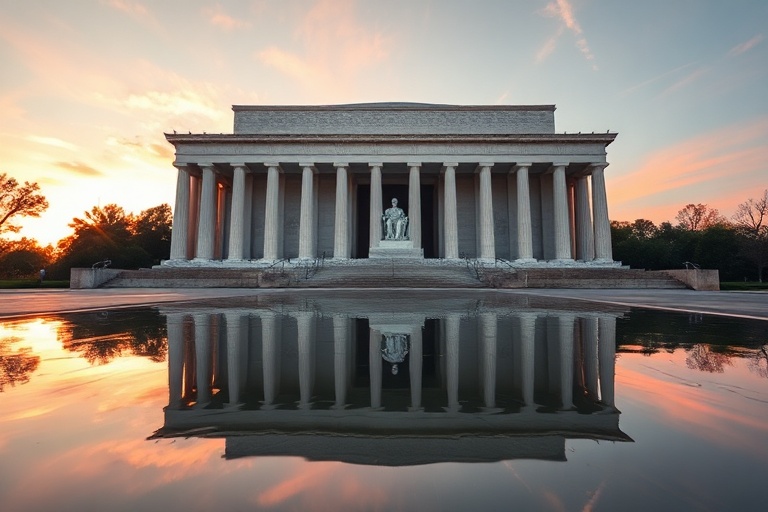
The Reflecting Pool’s design reflects a blend of classical aesthetics and democratic symbolism. Its long, narrow form is reminiscent of ancient Egyptian sacred pools, evoking themes of eternity and reflection. The water’s surface acts as a mirror, doubling the impact of Lincoln’s seated figure and creating a sense of continuity between past and present. This visual effect underscores the memorial’s purpose: to honor a leader who preserved the Union and redefined freedom.
Architect Henry Bacon drew inspiration from the Parthenon in Athens, using white Colorado marble for the Lincoln Memorial to evoke purity and permanence. The Reflecting Pool, lined with granite and fed by a recirculating water system, complements this aesthetic. The pool’s alignment with the Washington Monument and the U.S. Capitol further reinforces the axial design of the National Mall, guiding the eye toward key symbols of American governance and history.
While the pool itself is relatively shallow—averaging just 18 inches in depth—its scale is monumental. The reflections it produces can stretch across the water’s entire surface, creating an optical illusion that magnifies the Lincoln Memorial’s presence. This effect is especially powerful at sunrise and sunset, when the warm light enhances the marble’s glow and the pool’s surface shimmers with color.
Events and Cultural Moments at the Reflecting Pool
The Lincoln Memorial Reflecting Pool has been witness to some of the most pivotal moments in American history. In 1963, it served as the stage for Martin Luther King Jr.’s “I Have a Dream” speech during the March on Washington for Jobs and Freedom. Standing before the Lincoln Memorial, King addressed a crowd of over 250,000 people, linking the unfinished work of the Civil War to the ongoing struggle for civil rights. The pool’s still waters became a silent witness to a defining chapter in the nation’s journey.
Beyond civil rights, the Reflecting Pool has hosted presidential inaugurations, memorial services, and large-scale protests. During the 2009 inauguration of President Barack Obama, the pool’s reflection captured the sea of faces gathered on the National Mall, symbolizing unity and shared purpose. More recently, it has become a gathering place for demonstrations on issues ranging from immigration to gun control, reinforcing its role as a civic forum where citizens can voice their concerns against the backdrop of national memory.
Musical performances have also left their mark on the Reflecting Pool. In 1994, the pool hosted a concert by the National Symphony Orchestra as part of the “A Capitol Fourth” celebration, blending patriotic music with the memorial’s solemn architecture. Such events highlight the pool’s dual identity: a place of quiet reflection and a stage for collective expression.
Maintenance and Environmental Challenges
Keeping the Reflecting Pool pristine has proven an ongoing challenge. Over the years, algae blooms, sediment buildup, and water quality issues have required periodic closures and extensive cleanings. In 2013, a $34 million restoration project addressed decades of wear, including the replacement of the pool’s granite coping and the installation of a modern recirculation system. These upgrades aimed to restore clarity and reduce maintenance demands, ensuring the pool remains a clear mirror for future generations.
The pool’s location on the National Mall also subjects it to environmental stressors. Runoff from rain and melting snow carries pollutants into the water, while seasonal temperature swings can promote bacterial growth. The National Park Service, which manages the site, conducts regular monitoring and employs eco-friendly treatments to maintain water quality without harming the surrounding vegetation or wildlife.
Despite these efforts, the pool remains vulnerable to climate change. Rising temperatures and extreme weather events threaten its long-term stability. In response, planners are exploring sustainable design solutions, such as permeable paving and native plant buffers, to reduce runoff and improve resilience. These adaptations reflect a broader shift in how historic landscapes are preserved in an era of environmental uncertainty.
Visiting the Reflecting Pool: What to Know
For visitors, the Lincoln Memorial Reflecting Pool offers more than just a photo opportunity—it provides a moment of pause in the heart of the nation’s capital. The pool is open year-round, free of charge, and accessible to all. Walking its length takes about 15 minutes at a leisurely pace, offering unbroken views of the Lincoln Memorial, the Washington Monument, and the Lincoln Memorial Reflecting Pool itself.
Visitors can access the pool from several points along the National Mall, including near the World War II Memorial and the Vietnam Veterans Memorial. The surrounding area is ideal for picnics, sketching, or simply sitting by the water. Early mornings and weekdays tend to be less crowded, making them ideal times for a reflective visit.
While the pool is generally safe, visitors should be mindful of uneven surfaces near the edges and avoid wading in the water, which is not designed for swimming. The National Park Service provides seasonal ranger talks and Junior Ranger programs for children, adding educational value to the visit.
For those interested in exploring nearby landmarks, the Lincoln Memorial is just a short walk away, as are the Vietnam Veterans Memorial and the Korean War Veterans Memorial. These sites collectively tell the story of American history, conflict, and reconciliation—each enhanced by the presence of the Reflecting Pool.
A Lasting Symbol of Reflection and Resilience
The Lincoln Memorial Reflecting Pool endures as a testament to both architectural vision and national memory. Its waters do more than reflect light—they mirror the ideals of a democracy constantly striving to live up to its promises. From the footsteps of civil rights leaders to the silent contemplation of tourists, the pool remains a place where history is both honored and interrogated.
As the National Mall evolves with new memorials and changing priorities, the Reflecting Pool retains its original purpose: to invite pause, provoke thought, and connect visitors to the enduring legacy of Abraham Lincoln and the nation he helped define. Whether viewed from the steps of the memorial or from the grassy expanse of the Mall, it remains a powerful reminder of the relationship between reflection and action in public life.
Looking ahead, the challenge will be preserving this symbol for future generations while adapting to environmental and cultural shifts. Yet, as long as the water flows and the reflections hold, the Lincoln Memorial Reflecting Pool will continue to serve its timeless role—as a mirror, a stage, and a sanctuary in the heart of Washington, D.C.