Lyrids Meteor Shower 2024: How to Watch the April Sky Show
“`html
Lyrids Meteor Shower: When and How to Watch the Celestial Display
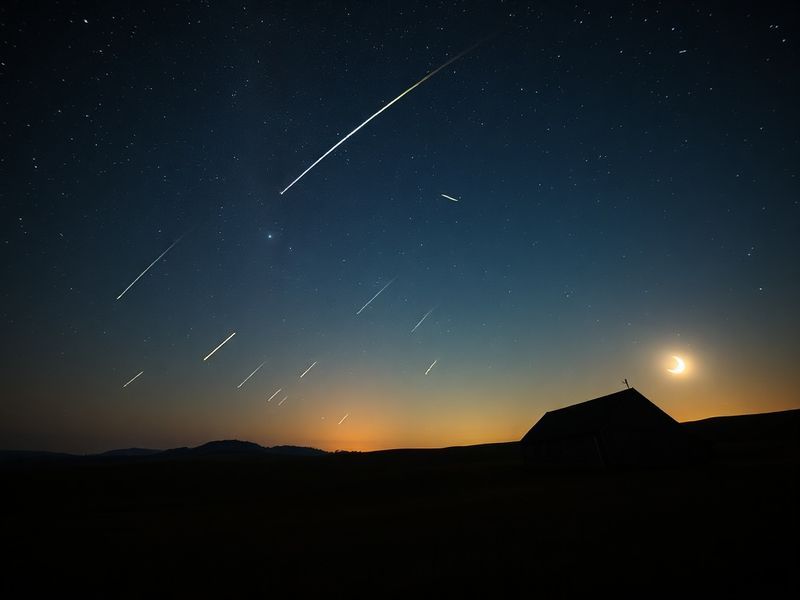
The Lyrids meteor shower is one of the oldest known annual meteor showers, with records dating back to ancient China in 687 BCE. Occurring every April, it offers stargazers a reliable opportunity to witness shooting stars streaking across the night sky. Unlike sporadic meteor activity, the Lyrids provide a predictable and visually striking show, making them a favorite among both amateur astronomers and casual observers.
The shower peaks around April 22-23, though meteors can often be seen a few nights before and after the peak. Under ideal conditions, observers may see between 10 to 20 meteors per hour, though occasionally stronger outbursts have produced up to 100 meteors per hour. These meteors are fast and bright, often leaving behind glowing trails that linger for several seconds.
What Causes the Lyrids Meteor Shower?
The Lyrids originate from the debris trail of Comet C/1861 G1 Thatcher, a long-period comet that orbits the sun once every 415 years. As Earth passes through the comet’s dusty wake each April, tiny particles—some no larger than a grain of sand—enter our atmosphere at speeds of about 30 miles per second. These particles burn up due to friction, creating the luminous streaks we recognize as meteors.
Unlike some meteor showers associated with short-period comets, the Lyrids have a well-documented history. The shower was first formally identified in 1835 by astronomer Adolphe Quetelet, though ancient civilizations had already noted its occurrence. The radiant point—the area of the sky from which the meteors appear to originate—lies near the constellation Lyra, hence the name “Lyrids.”
The Lyrids are known for producing occasional fireballs—exceptionally bright meteors that can even cast shadows. While not as intense as the Perseids or Geminids, the Lyrids offer a consistent and accessible display, particularly for those in mid-northern latitudes.
Best Times and Locations to View the Lyrids
Timing is crucial when observing the Lyrids. The shower typically becomes visible after midnight and reaches its peak activity in the predawn hours. The best viewing window lasts from around 11:00 PM local time until sunrise, with optimal conditions occurring between 2:00 AM and 4:00 AM.
Location plays a significant role in visibility. Urban areas with light pollution can obscure all but the brightest meteors. For the best experience, observers should travel to dark-sky sites—locations far from city lights where the Milky Way is clearly visible. National parks, rural areas, and designated dark-sky preserves are ideal. The Science section on Dave’s Locker offers guides on finding stargazing spots across the country.
Weather conditions are another critical factor. Clear skies are essential, and even thin cloud cover can significantly reduce visibility. Meteorologists recommend checking local forecasts a day or two in advance. Tools like the Clear Sky Chart provide hourly forecasts specifically tailored for astronomers, showing cloud cover, transparency, and seeing conditions.
- Peak Dates: April 22–23 (best viewing around 2–4 AM local time)
- Expected Rate: 10–20 meteors per hour (can occasionally spike higher)
- Speed: Approximately 30 miles per second
- Radiant Point: Near the constellation Lyra, close to the bright star Vega
Tips for Maximizing Your Lyrids Experience
Preparation can greatly enhance your meteor-watching experience. Begin by allowing your eyes at least 20–30 minutes to adapt to the darkness—this process, called dark adaptation, significantly improves your ability to see faint meteors. Avoid using phones or flashlights with bright screens, as even brief exposure can reset your night vision. If light is necessary, use a red flashlight, which has minimal impact on night vision.
Comfort is also key. Bring a reclining chair or a blanket to lie on, along with warm clothing—temperatures can drop significantly after midnight, even in spring. A thermos of hot coffee or tea can make the experience more enjoyable. Consider bringing a star map or a stargazing app to help locate the radiant point, though meteors can appear anywhere in the sky.
Photography enthusiasts often attempt to capture the Lyrids. While a basic DSLR camera with a wide-angle lens can work, success requires a tripod, a fast lens (f/2.8 or wider), and a high ISO setting. Long exposure times—between 15 and 30 seconds—help accumulate enough light. However, patience is essential, as meteors are unpredictable and may only appear once every few minutes.
For those unable to travel to a dark-sky site, some observatories and astronomy clubs host public viewing events. These gatherings often include telescopes and expert commentary, making them a great option for families or first-time observers. Check local astronomy clubs or planetariums for scheduled events, or visit the Education category on Dave’s Locker for resources on stargazing communities.
The Science Behind the Lyrids and Their Long-Term Future
The Lyrids are more than just a visual spectacle—they provide valuable data for astronomers studying cometary debris and the dynamics of meteor streams. By tracking the density and distribution of particles, researchers can refine models of comet orbits and atmospheric entry processes.
Over the long term, the Lyrids may evolve. As Comet Thatcher continues its journey through the solar system, gravitational influences from planets like Jupiter could slightly alter the debris trail. This could lead to subtle changes in the shower’s intensity or timing over the coming centuries. However, for now, the Lyrids remain a reliable and predictable event in the annual astronomical calendar.
The Lyrids also serve as a reminder of humanity’s enduring connection to the cosmos. For thousands of years, people have looked up at the same sky, finding wonder in the fleeting trails of light. In an age dominated by digital distractions, meteor showers like the Lyrids offer a rare opportunity to disconnect and reconnect with the natural world.
As we prepare for the next peak, consider sharing the experience with others. Whether through social media, local events, or simple backyard gatherings, the Lyrids provide a chance to inspire curiosity and appreciation for the universe beyond our planet.