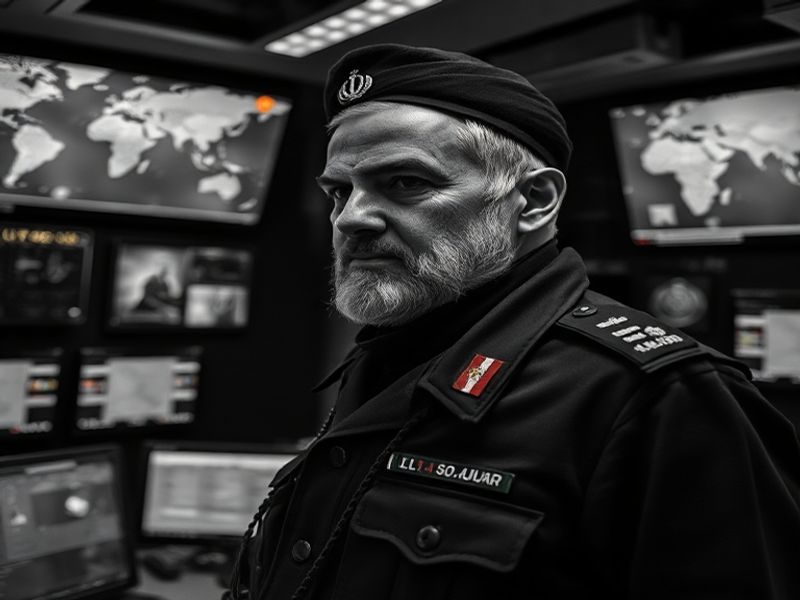
Qasem Soleimani was more than a military commander. For over two decades, he operated in the shadows, orchestrating Iran’s regional influence through a network of proxies and allies. His death in a 2020 U.S. drone strike in Baghdad marked a turning point in Middle Eastern geopolitics, but his legacy extends far beyond that single moment. To understand Soleimani’s impact, we must examine his rise, his strategies, and the lasting consequences of his actions.
The Rise of a Shadow Commander
Born in 1957 in a small village in Kerman Province, Soleimani joined the Islamic Revolutionary Guard Corps (IRGC) in 1979, shortly after the Iranian Revolution. His early years were defined by the Iran-Iraq War (1980-1988), where he earned a reputation for tactical brilliance and unyielding loyalty to the Islamic Republic. By the war’s end, he had emerged as a key figure in the IRGC’s elite Quds Force, the branch responsible for extraterritorial operations.
Soleimani’s ascent coincided with Iran’s post-war strategy of exporting its revolutionary ideology. Unlike traditional military leaders, he operated in a gray zone, blending military strategy with covert diplomacy. His ability to cultivate relationships with non-state actors—from Hezbollah in Lebanon to the Houthis in Yemen—positioned him as Iran’s most effective envoy in the region. By the 2000s, he was widely regarded as the architect of Iran’s “forward defense” policy, which prioritized projecting power beyond its borders to counter perceived threats.
Key Influences on Soleimani’s Approach
- Iran-Iraq War Experience: His formative years in the trenches shaped his pragmatic yet ruthless military mindset.
- Post-Revolutionary Ideology: Soleimani’s worldview was rooted in the principles of the Islamic Republic, particularly the belief in resistance against perceived Western and Israeli aggression.
- Cultivation of Proxy Networks: He invested heavily in building alliances with Shiite militias, political factions, and armed groups across the Middle East.
Soleimani’s Military and Strategic Doctrine
Soleimani’s leadership style was unconventional for a high-ranking military officer. He operated with minimal bureaucracy, relying on personal relationships and a deep understanding of local dynamics. His strategies often involved indirect warfare—arming and training proxy forces rather than deploying Iranian troops directly. This approach allowed Iran to exert influence without the political and financial costs of conventional occupation.
In Iraq, Soleimani played a pivotal role in shaping post-Saddam Hussein’s political landscape. He supported Shiite militias like Kata’ib Hezbollah and Asa’ib Ahl al-Haq, which later became key players in the fight against ISIS. His efforts ensured that Iraq’s government remained aligned with Tehran, even as the U.S. sought to establish a more independent political order.
In Syria, Soleimani’s intervention was decisive in preserving Bashar al-Assad’s regime. By deploying IRGC advisors, Hezbollah fighters, and Shiite militias from Iraq and Afghanistan, he helped turn the tide of the civil war in Assad’s favor. This intervention solidified Iran’s presence in Syria, creating a land corridor from Tehran to Beirut—a strategic asset that remains controversial to this day.
The Controversies and Consequences of Soleimani’s Actions
Soleimani’s operations were not without controversy. Critics accuse him of destabilizing the region by fueling sectarian conflicts and enabling human rights abuses. His support for groups like the Taliban in Afghanistan and the Houthis in Yemen further complicated Iran’s relationships with its neighbors. In Iraq, his influence contributed to the rise of Shiite militias that have been accused of sectarian violence and corruption.
Yet, Soleimani also had his defenders. Supporters argue that his actions were a response to decades of Western intervention and aggression. They point to his role in combating ISIS as evidence of his commitment to regional stability. For many in the Middle East, Soleimani was a symbol of resistance against what they perceived as foreign domination.
Major Controversies Linked to Soleimani
- U.S. Embassy Attack in Baghdad (2019): Soleimani’s Quds Force was accused of orchestrating the storming of the U.S. embassy in Baghdad, a move that escalated tensions between Iran and the U.S.
- Support for the Assad Regime: His role in Syria’s civil war drew international condemnation, with critics accusing him of enabling Assad’s brutal crackdown on civilians.
- Iraqi Militia Violence: Shiite militias backed by Soleimani were linked to attacks on U.S. forces and civilians in Iraq, leading to retaliatory strikes.
- Regional Arms Smuggling: Soleimani was implicated in smuggling weapons to proxies across the region, including ballistic missiles to the Houthis in Yemen.
Soleimani’s Legacy and the Future of Iran’s Regional Strategy
Soleimani’s death in January 2020 was a symbolic blow to Iran’s regional ambitions. His replacement, Esmail Qaani, has struggled to maintain the same level of influence and coordination. Yet, Iran’s strategy of supporting proxies and allied governments remains intact. The question now is whether Iran can sustain its regional presence without Soleimani’s guiding hand.
For the U.S. and its allies, Soleimani’s legacy is a cautionary tale. His ability to operate in the shadows and achieve strategic objectives without direct military confrontation forced Western powers to rethink their approach to the Middle East. His death did not end Iran’s regional ambitions; it merely forced its leaders to adapt.
The future of Iran’s foreign policy will likely continue to be shaped by the networks and relationships Soleimani cultivated. Whether this strategy will succeed in the long term remains uncertain, but his impact on the region is undeniable. Soleimani’s story is a testament to the power of asymmetric warfare and the enduring influence of non-state actors in modern geopolitics.
For those seeking to understand the complexities of Middle Eastern geopolitics, Soleimani’s career offers valuable insights. His rise from a humble background to one of the most influential figures in the region is a story of ambition, strategy, and the enduring power of ideology. It is a legacy that will continue to shape the region for years to come.
To explore more about Iran’s regional influence and military strategies, visit our Analysis and Politics sections for in-depth coverage.