Bobby Hurley: Duke Legend and Point Guard Pioneer in Basketball
“`html
Bobby Hurley: The Point Guard Who Redefined the Game
Bobby Hurley’s name resonates deeply within basketball circles, not merely as a former player but as a figure who reshaped the role of the point guard in the late 1980s and early 1990s. His career, spanning college stardom at Duke University and a brief but impactful tenure in the NBA, left an indelible mark on the sport. More than three decades after his last professional game, Hurley’s influence persists in how point guards are perceived and developed.
Born on August 28, 1971, in Jersey City, New Jersey, Hurley grew up in a city deeply embedded in basketball culture. His journey from the courts of St. Anthony High School—where he played alongside his brother Dan—to becoming one of the most decorated college point guards in history is a story of precision, leadership, and resilience. At Duke, under the guidance of coach Mike Krzyzewski, Hurley didn’t just play the game; he orchestrated it, setting records that would stand for decades.
Duke Dominance: A Legacy of Assists and Championships
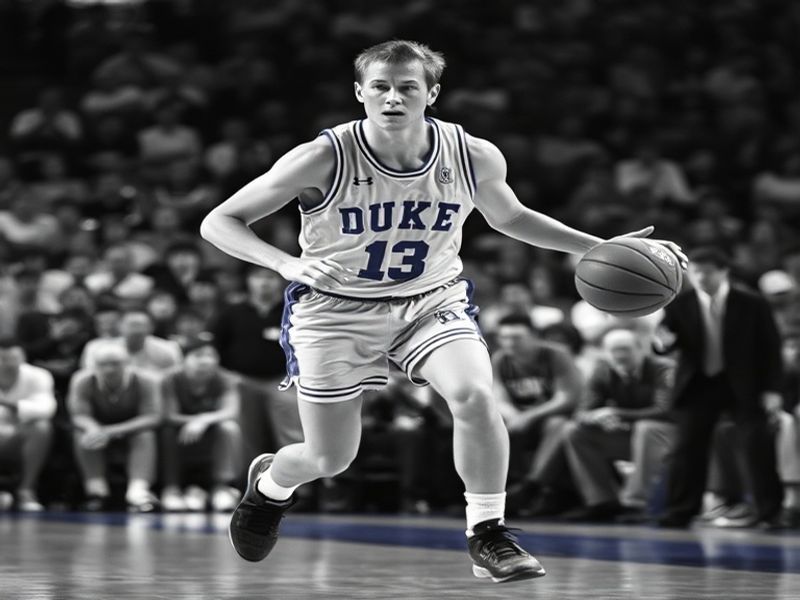
Hurley arrived at Duke University in 1989, fresh off a high school career that saw him average 23 points and 10 assists per game. His freshman season was nothing short of spectacular. He quickly became the engine of the Blue Devils’ offense, leading the nation in assists as a first-year player with 9.6 per contest. That year, Duke reached the NCAA championship game, where they fell just short to the University of Nevada, Las Vegas. Still, Hurley’s poise and playmaking announced his arrival on the national stage.
The following season, Hurley and Duke returned to the title game, this time defeating Kansas 72–65 to claim the championship. Hurley’s performance in that game—14 assists and a mere three turnovers—exemplified his ability to control tempo and distribute the ball with surgical precision. Over his four-year collegiate career, he set an NCAA record with 1,076 assists, a mark that remained unbroken for nearly two decades. His 2,720 career points also placed him among Duke’s all-time scoring leaders.
Hurley’s impact extended beyond statistics. His partnership with Christian Laettner and Grant Hill formed the core of one of the most dominant teams in college basketball history. The 1991–92 squad, often regarded as one of the greatest in NCAA history, won another national championship, with Hurley serving as the floor general who could elevate the play of his teammates through his vision and leadership. His ability to read defenses and deliver pinpoint passes redefined what it meant to be a point guard.
From College to the NBA: A Career Cut Short by Tragedy
Selected 7th overall by the Sacramento Kings in the 1993 NBA Draft, Hurley entered the league with high expectations. His rookie season was promising, as he averaged 7.6 points and 5.9 assists per game, showing flashes of the brilliance he displayed in college. However, his NBA career would be tragically brief. In December 1993, just months into his professional journey, Hurley was involved in a devastating car accident that nearly cost him his life.
The crash left him with multiple fractures, internal injuries, and a long road to recovery. While he eventually returned to play, the physical toll and lingering effects prevented him from regaining his college form. He played parts of four seasons with the Kings, New Jersey Nets, and Vancouver Grizzlies, but the injury had fundamentally altered his trajectory. By 1998, his NBA career was over, a stark contrast to the trajectory he had once seemed destined for.
In many ways, Hurley’s NBA experience mirrored the fragility of athletic careers. His story became a cautionary tale about the unpredictability of sports and the thin line between greatness and misfortune. Yet, it also underscored his resilience—a quality that defined both his playing days and his life beyond basketball.
The Global Influence of a Point Guard Pioneer
While Hurley’s NBA career was cut short, his influence transcended American basketball. His style of play—characterized by quick decision-making, court vision, and an emphasis on team success over individual glory—helped shape the evolution of the point guard position worldwide. In Europe, where basketball has grown dramatically since the 1990s, coaches often cite Hurley as a model for how point guards should operate. His ability to control the game without dominating the ball became a blueprint for international point guards who valued efficiency over volume.
In the Philippines, a country with a deep basketball culture, Hurley’s name is still mentioned in coaching clinics. His emphasis on fundamentals, such as proper footwork and passing angles, aligns with the teaching methods used in Filipino basketball development programs. Similarly, in Australia’s National Basketball League (NBL), where the point guard role has increasingly emphasized playmaking, Hurley’s legacy is referenced as a standard of excellence.
The global game has seen point guards evolve into primary scorers—think Allen Iverson or Derrick Rose—but Hurley’s approach remains relevant in systems that prioritize ball movement and collective play. Modern European leagues, such as Spain’s Liga ACB or Greece’s Basket League, often employ point guards who prioritize assists and court awareness, attributes Hurley exemplified. His career serves as a reminder that the point guard is not merely a scorer but the conductor of the entire orchestra.
Life After the Court: Coaching and Legacy
Following his playing career, Hurley transitioned into coaching, a natural progression for a player who spent his life studying the game. He began as an assistant coach at the University of Rhode Island before joining his alma mater, Duke, in 2010. Working alongside Krzyzewski, Hurley honed his coaching philosophy, which emphasized discipline, preparation, and the importance of role clarity within a team.
In 2015, Hurley was named the head coach at the University of Pittsburgh, becoming the first Black head coach in the university’s basketball history. His tenure in Pittsburgh was marked by challenges, including roster transitions and the competitive landscape of the ACC. Yet, Hurley’s ability to connect with players and instill a culture of accountability became defining traits of his coaching style. In 2021, he led Pittsburgh to the NCAA Tournament for the first time in a decade, a testament to his rebuilding efforts.
Off the court, Hurley has become an advocate for player safety and mental health awareness in sports. He has spoken openly about the pressures athletes face, particularly in high-stakes environments, and the importance of support systems beyond the game. His advocacy aligns with a growing global conversation about athlete well-being, a topic that resonates across sports disciplines.
Key Contributions to Basketball Culture
- Redefining the Point Guard Role: Hurley’s court vision and decision-making set a standard for future generations of point guards.
- Global Influence: His playing style influenced point guard development in international leagues, particularly in Europe and Asia.
- Coaching Philosophy: Emphasis on discipline, role clarity, and player development in both collegiate and professional settings.
- Advocacy: Championing athlete safety and mental health in sports.
A Lasting Legacy
Bobby Hurley’s career may have been shorter than many anticipated, but its impact is immeasurable. He was not just a player who set records; he was a thinker who understood the game at a level that transcended statistics. His ability to elevate those around him, whether teammates at Duke or players under his coaching, speaks to a rare combination of talent and leadership.
Today, as basketball continues to evolve globally, Hurley’s legacy endures in the fundamentals he embodied. The point guard position has diversified, with players now blending scoring prowess with playmaking. Yet, the core principles Hurley exemplified—vision, precision, and unselfishness—remain timeless. In a sport where individualism often overshadows teamwork, Hurley’s career is a reminder of the beauty that comes from orchestrating success.
For younger players studying the game, Hurley’s story is one of both inspiration and caution. It shows what can be achieved through dedication and intelligence, but also the fragility of athletic careers. His journey from the courts of Jersey City to the helm of a major college program reflects a life fully committed to basketball—not as a fleeting moment of glory, but as a lifelong pursuit of excellence.
As basketball continues to expand its global footprint, figures like Hurley serve as bridges between eras and cultures. His influence is felt in gyms from Manila to Madrid, where point guards still strive to replicate the magic of a Hurley assist—a pass that doesn’t just reach a teammate but elevates the entire team.