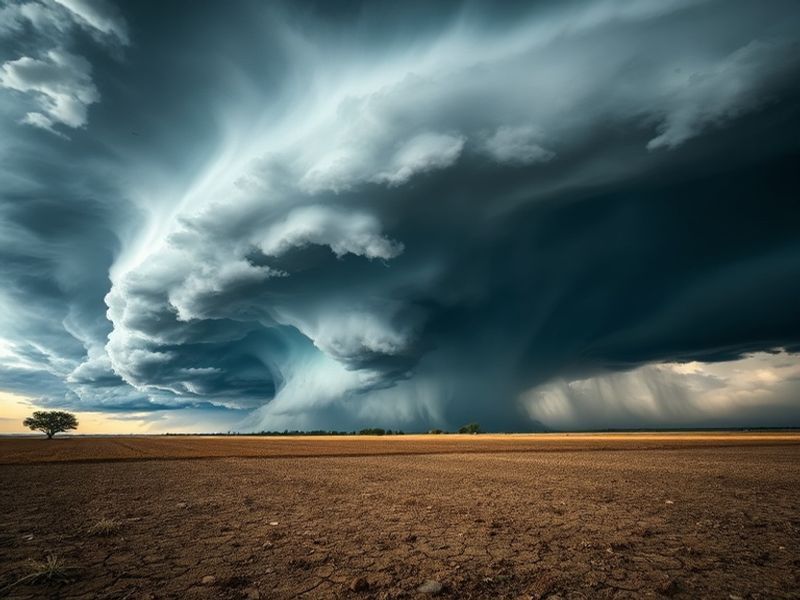
El Niño represents one of Earth’s most influential climate phenomena, reshaping weather patterns across continents with consequences that ripple through economies, cultures, and daily life. While the term originates from Spanish—meaning “the boy” or “Christ child,” referring to its tendency to arrive around Christmas—the effects of El Niño extend far beyond holiday disruptions. This cyclical warming of the central and eastern tropical Pacific Ocean triggers a cascade of atmospheric changes, altering precipitation, temperatures, and storm systems worldwide.
The Science Behind El Niño
At its core, El Niño is part of the El Niño-Southern Oscillation (ENSO) cycle, a natural climate pattern that alternates between warm (El Niño), cool (La Niña), and neutral phases. Typically, trade winds blow westward across the Pacific, pushing warm surface water toward Asia and allowing cooler water to rise near South America. During an El Niño event, these winds weaken or even reverse direction, causing warm water to slosh eastward and suppress the usual upwelling of nutrient-rich cold water along the Peruvian coast. The result is a dramatic shift in global weather systems.
The National Oceanic and Atmospheric Administration (NOAA) classifies El Niño events based on sea surface temperature anomalies in the central-eastern Pacific. A moderate El Niño might see temperatures rise 1.0–1.5°C above average, while strong events can exceed 2.0°C. These anomalies may seem minor, but they disrupt jet streams and atmospheric circulation patterns, leading to predictable—and often severe—weather consequences.
Global Weather Impacts: A Pattern of Extremes
El Niño’s influence is both widespread and uneven. Some regions experience devastating floods, while others suffer prolonged droughts. The 2015–2016 El Niño, one of the strongest on record, offers a stark illustration of its global reach:
- South America: Peru and Ecuador faced catastrophic flooding and landslides, displacing hundreds of thousands. Meanwhile, northeastern Brazil endured severe drought, devastating agriculture in a region already vulnerable to water scarcity.
- Southeast Asia and Australia: Indonesia and Australia grappled with intense heatwaves and wildfires, as reduced rainfall parched ecosystems already stressed by land-use changes. The 2019–2020 Australian bushfires, amplified by El Niño-like conditions, burned over 18 million hectares.
- North America: The southern United States, particularly California, experienced heavy rainfall and flooding, while the northern Plains and Pacific Northwest saw milder winters and reduced snowpack, impacting water supplies and winter sports industries.
- Africa: Southern Africa faced drought, threatening food security, while East Africa received excessive rainfall, leading to flooding and cholera outbreaks in displacement camps.
These patterns are not isolated incidents but part of a recurring cycle. Historical records, including tree rings and coral samples, suggest El Niño events have occurred for millennia, though their frequency and intensity may be shifting due to climate change. Research published in Nature Climate Change indicates that extreme El Niño events could double in frequency by the end of the 21st century under high-emission scenarios.
Cultural and Economic Ripples
Beyond meteorology, El Niño reshapes societies in ways both subtle and profound. Agriculture, a sector deeply tied to weather stability, often bears the brunt of its effects. Coffee and cocoa production in West Africa and Southeast Asia, for example, can plummet during El Niño years, driving up global prices and squeezing smallholder farmers. The 2015–2016 event contributed to a 15% spike in cocoa prices, straining economies reliant on the crop.
Cultural practices also adapt to El Niño’s rhythms. In Peru, where the phenomenon was first scientifically documented in the 19th century, indigenous communities historically viewed heavy rains as a sign of divine displeasure. Today, Peruvian meteorologists collaborate with local farmers to integrate traditional knowledge with modern forecasting, blending empirical data with ancestral wisdom to mitigate risks.
Tourism, too, feels the pinch. Ski resorts in the western U.S. and Canada often struggle during El Niño winters, as warmer temperatures reduce snowfall. Conversely, regions like Patagonia or New Zealand may see a surge in visitors seeking milder climates. The hospitality industry in these areas must pivot quickly, marketing off-season attractions or adjusting pricing to offset losses.
Preparation and Adaptation: Can We Outmaneuver El Niño?
Forecasting El Niño has improved dramatically since the 1980s, thanks to advances in satellite technology and ocean buoys. Agencies like NOAA and the World Meteorological Organization (WMO) now issue seasonal outlooks months in advance, giving governments and businesses critical lead time. However, preparedness varies widely by region. Developing nations, often hardest hit by El Niño’s extremes, frequently lack the infrastructure to respond effectively. International aid organizations, such as the Red Cross, have developed early warning systems and cash-transfer programs to support vulnerable populations during El Niño events.
Innovation also plays a role. In California, water districts invest in groundwater recharge projects and recycled water systems to counteract El Niño-driven droughts. Farmers in Australia’s Murray-Darling Basin use soil moisture sensors and precision irrigation to conserve water during dry El Niño phases. These adaptations highlight a broader truth: while El Niño is a natural phenomenon, human ingenuity can mitigate its worst impacts.
Yet, the long-term outlook remains uncertain. Climate models project that El Niño’s effects may intensify as global temperatures rise, creating a feedback loop where warmer oceans fuel stronger events. This raises pressing questions about the future of coastal communities, marine ecosystems, and global food systems. The 2023–2024 El Niño, though moderate, serves as a reminder of nature’s unpredictability—and humanity’s need to prepare.
A Call for Resilience
El Niño is more than a weather event; it is a mirror reflecting the fragility of human systems in the face of natural variability. Its impacts underscore the interconnectedness of global climate, economies, and cultures. As we brace for more frequent and severe El Niño events, the challenge lies not in predicting the next one, but in building resilience across borders. From Peruvian farmers to Californian water managers, communities worldwide are learning to adapt—but the pace of change must quicken.
Ultimately, El Niño challenges us to rethink our relationship with the environment. It demands collaboration between scientists, policymakers, and local leaders to develop strategies that are both innovative and inclusive. Whether through improved forecasting, sustainable agriculture, or equitable resource distribution, the goal is clear: to turn the tide of El Niño’s extremes into an opportunity for growth and resilience.