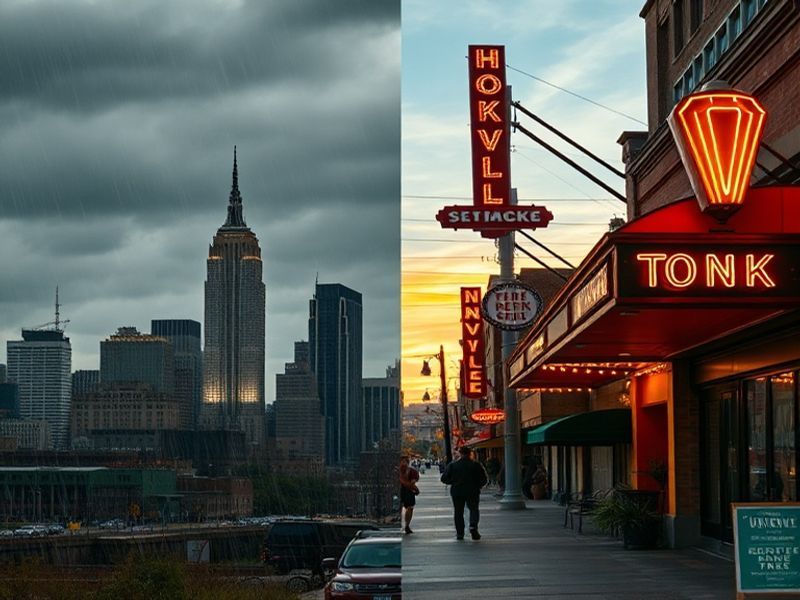
Nashville, Tennessee, has long been a city of contrasts—where honky-tonk bars share sidewalks with gleaming skyscrapers, and country music’s twang echoes through corridors of corporate power. But in recent years, Nashville has transformed from a regional hub into a national symbol of urban growth, cultural friction, and economic tension. The city’s rapid evolution raises a critical question: How does Nashville reflect—or reject—the broader forces shaping America today?
The Rise of a Southern Powerhouse
Nashville’s growth over the past two decades has been meteoric. Once known primarily for its music scene and low cost of living, the city now ranks among the fastest-growing metropolitan areas in the United States. Between 2010 and 2023, Nashville’s population swelled by nearly 20%, driven by an influx of young professionals, corporate relocations, and remote workers seeking affordability and opportunity.
This expansion has not come without consequences. The city’s skyline is now dotted with cranes, and neighborhoods once defined by tight-knit communities have seen property values skyrocket. While developers and investors celebrate the boom, longtime residents grapple with displacement and the erosion of local identity. The tension between progress and preservation has become a microcosm of America’s urban crises.
Key Factors Behind Nashville’s Boom
- Corporate Migration: Major companies like Amazon, Oracle, and HCA Healthcare have established or expanded operations in Nashville, luring talent with promises of Southern charm and modern amenities.
- Music and Media Influence: The city’s reputation as “Music City” has expanded beyond country to include hip-hop, rock, and pop, while its film and TV industry—bolstered by tax incentives—has drawn productions from across the country.
- Affordability (Until Recently): Compared to coastal metros, Nashville offered relatively low housing costs, making it a magnet for transplants. That advantage is fading as prices rise.
- Quality of Life Perks: A vibrant food scene, strong job market, and outdoor recreation options have made Nashville a top destination for millennials and Gen Z.
Culture Clash: Tradition vs. Transformation
Nashville’s identity has always been rooted in music, but the city’s cultural narrative is being rewritten. The honky-tonks of Broadway still draw tourists, but the rise of luxury lofts and rooftop bars suggests a shift toward a more homogenized, experience-driven economy. This evolution has sparked debates about authenticity and who Nashville is truly for.
On one side are preservationists who argue that the city’s soul lies in its working-class roots and artistic legacy. On the other are developers and newcomers who see Nashville as a blank canvas for innovation. The conflict plays out in city council meetings, on social media, and in the lyrics of local musicians who feel their stories are being overshadowed by corporate interests.
Consider the controversy surrounding the demolition of historic buildings to make way for condos or the backlash against rising rents that push out long-term residents. These aren’t just Nashville problems—they’re American problems. Cities across the country are wrestling with the same questions: How do we balance growth with identity? Who gets to decide what a city becomes?
Economic Disparities: Who Benefits from Nashville’s Growth?
Nashville’s economic success hasn’t been evenly distributed. While the city’s GDP has grown, so too have income inequality and racial disparities. A 2022 study by the Nashville Area Chamber of Commerce found that while the median household income rose by 15% between 2010 and 2020, the poverty rate remained stagnant in many neighborhoods. For Black and Latino residents, the gap is even wider.
This divide is visible in the stark contrast between neighborhoods like Germantown, with its trendy cafes and high-end real estate, and North Nashville, where decades of disinvestment have left residents with fewer resources. The city’s rapid gentrification has only deepened these inequities, raising concerns about systemic exclusion.
Local leaders have attempted to address these issues through initiatives like affordable housing mandates and workforce development programs. Yet critics argue that these efforts are too little, too late. The question remains: Can Nashville grow without leaving its most vulnerable residents behind?
Broader Implications: What Nashville Reveals About America
Nashville’s story is not unique. Cities like Austin, Denver, and Atlanta have experienced similar transformations, each grappling with the tension between progress and preservation. What makes Nashville a compelling case study is its symbolic power. As a Southern city with a global brand, it embodies the contradictions of modern America: a place where tradition and innovation collide, where opportunity and displacement walk hand in hand.
For policymakers, Nashville offers a cautionary tale. Unchecked growth can erode community fabric and exacerbate inequality. For artists and activists, it’s a call to action—to reclaim the narrative of the city and ensure that its future reflects the diversity of its people. And for the rest of America, Nashville serves as a mirror, reflecting the challenges and opportunities of urban life in the 21st century.
Looking Ahead: Can Nashville Find a Balanced Path?
- Community-Led Development: Projects like the Nations, a historically working-class neighborhood, show how inclusive planning can preserve affordability while allowing growth.
- Cultural Investment: Supporting local artists and musicians—not just as tourist attractions but as essential voices in the city’s identity—could help maintain Nashville’s creative edge.
- Economic Equity: Expanding access to education, healthcare, and homeownership in underserved communities is critical to preventing further division.
- Sustainable Growth: Balancing development with green spaces, public transit, and historic preservation can create a city that works for everyone.
Nashville’s future is still unwritten. The choices made today will determine whether it becomes a model of inclusive urbanism or a cautionary tale of unchecked ambition. One thing is clear: the city’s journey offers lessons for every American metropolis.
For those interested in the intersection of culture and economics, Dave’s Locker News covers similar trends in cities across the country. To explore how music shapes identity, visit our Music section for deeper analysis.
Nashville’s story is still being told. The question is who gets to write the next chapter.