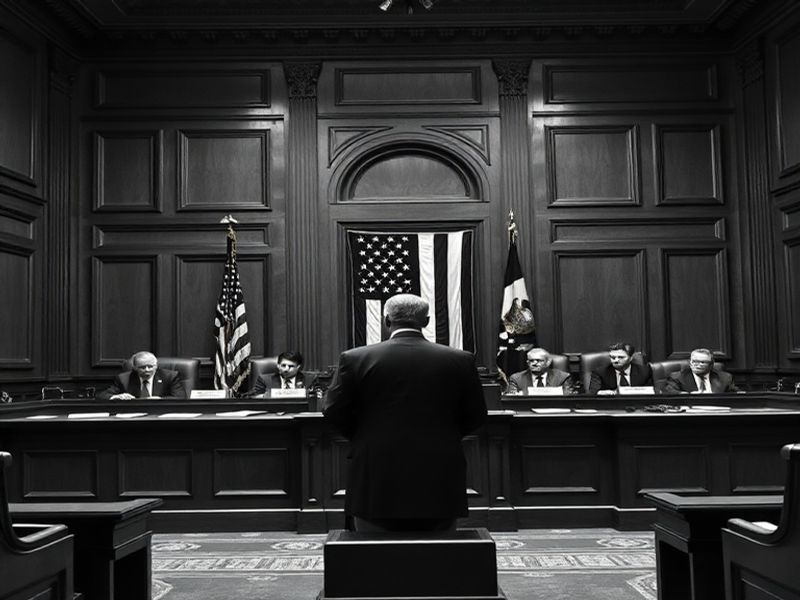
impeachment
“`html
Impeachment Explained: From Constitutional Roots to Modern Controversies
The impeachment process is one of the most consequential mechanisms in the U.S. Constitution—a tool designed to hold the highest officials accountable when they commit serious abuses of power. Yet despite its constitutional clarity, impeachment remains one of the most misunderstood and politically charged processes in American governance. Its rare invocation has made it a flashpoint in moments of national crisis, often sparking intense public debate and constitutional reflection.
Unlike a criminal trial, impeachment is a political process, not a legal one. It serves as Congress’s primary constitutional check on the executive and judicial branches, allowing lawmakers to remove officials for “Treason, Bribery, or other high Crimes and Misdemeanors.” This broad phrasing has led to both historic convictions and partisan disputes over what qualifies as an impeachable offense. Understanding impeachment requires examining its constitutional origins, historical precedents, and the evolving standards that shape its use today.
The Constitutional Framework: Origins and Intent
The framers of the U.S. Constitution included impeachment as a safeguard against tyranny and corruption. At the 1787 Constitutional Convention, delegates debated whether to include such a mechanism and, if so, which branch should wield it. James Madison argued that impeachment was essential to prevent the accumulation of unchecked power in any one official. Alexander Hamilton, writing in The Federalist Papers, described impeachment as a way to “defend the community against the incapacity, negligence, or perfidy of the chief Magistrate.”
Article II, Section 4 of the Constitution states: “The President, Vice President, and all civil Officers of the United States shall be removed from Office on Impeachment for, and Conviction of, Treason, Bribery, or other high Crimes and Misdemeanors.” Notably, impeachment is not limited to criminal acts. The phrase “high Crimes and Misdemeanors” derives from English parliamentary practice and encompasses abuses of power, dereliction of duty, and unfitness for office—even if those actions do not violate statutory law.
The process involves two distinct stages: impeachment by the House of Representatives and trial by the Senate. The House acts as a grand jury, voting on whether to formally accuse an official of wrongdoing. If a majority votes in favor, the official is “impeached.” The Senate then conducts a trial, presided over by the Chief Justice of the Supreme Court in the case of a president. A two-thirds majority is required to convict and remove the official from office. This structure reflects a compromise between accountability and stability—ensuring that removal is rare but possible in extreme cases.
A Brief History: Impeachments in Practice
Since the Constitution’s ratification, only three U.S. presidents have been impeached by the House: Andrew Johnson in 1868, Bill Clinton in 1998, and Donald Trump twice—in 2019 and 2021. Richard Nixon resigned in 1974 before the House could vote on impeachment, following the Watergate scandal and the release of the “smoking gun” tape. No president has ever been convicted and removed from office by the Senate.
The outcomes of these impeachments reveal much about the political and constitutional dynamics at play:
- Andrew Johnson (1868): Johnson was impeached for violating the Tenure of Office Act by attempting to remove Secretary of War Edwin Stanton. The Senate acquitted him by one vote, a decision influenced by concerns over destabilizing Reconstruction and the broad interpretation of impeachable offenses.
- Bill Clinton (1998): Clinton faced impeachment for perjury and obstruction of justice related to the Monica Lewinsky scandal. The Senate acquitted him along party lines, with Republicans arguing for accountability and Democrats emphasizing the personal nature of the allegations.
- Donald Trump (2019): Trump was impeached for abuse of power and obstruction of Congress after pressuring Ukraine to investigate his political rival, Joe Biden. The Senate acquitted him, with all but one Republican voting to dismiss the charges.
- Donald Trump (2021): Impeached for incitement of insurrection following the January 6 Capitol riot, Trump became the only president to be impeached twice. The Senate trial concluded after he left office, with seven Republicans joining Democrats in voting to convict—though the vote fell short of the required two-thirds majority.
Beyond the presidency, several federal judges have been impeached and removed from office, including Alcee Hastings in 1989 and Samuel B. Kent in 2009. These cases often involve allegations of bribery, perjury, or sexual misconduct, demonstrating that impeachment is not reserved solely for executive branch officials.
What Qualifies as an Impeachable Offense?
The ambiguity of “high Crimes and Misdemeanors” has sparked significant debate. Unlike criminal offenses, which are clearly defined in statutes, impeachable offenses are often contextual and politically charged. This ambiguity allows Congress to adapt the process to contemporary crises but also invites accusations of partisan misuse.
Legal scholars and historians generally agree that impeachable offenses fall into three broad categories:
- Abuse of Power: Using official authority for personal gain, to obstruct justice, or to undermine democratic institutions. Examples include Nixon’s Watergate cover-up and Trump’s pressure on Ukraine.
- Violations of Public Trust: Actions that erode confidence in government, such as perjury, obstruction of Congress, or gross negligence. Clinton’s perjury and Johnson’s violation of the Tenure of Office Act fall into this category.
- Unfitness for Office: Conduct that demonstrates a lack of integrity, judgment, or fitness, even if not criminal. This could include personal misconduct, conflicts of interest, or behavior that undermines the office’s dignity.
The House Judiciary Committee has historically played a crucial role in defining what constitutes an impeachable offense. In 1974, during the Nixon impeachment inquiry, the committee outlined three tests for impeachment: whether the offense is serious, whether it violates public trust, and whether it undermines the system of government. These criteria remain influential today.
Critics of expansive interpretations of impeachment argue that it risks turning a constitutional safeguard into a tool for political retaliation. Supporters counter that a narrow definition could leave officials unaccountable for serious abuses of power that fall short of traditional crimes. This tension underscores the inherently political nature of impeachment—a process that blends constitutional law with partisan strategy.
Broader Implications: Impeachment in the Modern Era
The impeachment process has far-reaching consequences beyond the fate of individual officials. It shapes public trust in institutions, influences electoral outcomes, and sets precedents for future accountability. The modern era, marked by intense polarization and rapid information cycles, has intensified these effects.
One of the most significant implications is the erosion of bipartisan consensus on what constitutes an impeachable offense. In earlier eras, impeachment was a rare and sober process, pursued only in cases of clear wrongdoing. Today, impeachments are often initiated along party lines, with accusations of partisanship overshadowing constitutional arguments. This trend was evident in both Trump impeachments, where nearly all votes fell along party lines.
Impeachment also has a chilling effect on political behavior. Officials may hesitate to make unpopular decisions or challenge powerful figures for fear of retaliation through impeachment. Conversely, the threat of impeachment can serve as a check on executive overreach, particularly in divided government. The mere possibility of impeachment can force officials to consider the ramifications of their actions more carefully.
Public perception plays a crucial role in the success or failure of impeachment efforts. Polls consistently show that partisan affiliation heavily influences whether Americans support or oppose impeachment. This polarization complicates the process’s legitimacy, as a tool designed to uphold democratic norms is increasingly seen through the lens of partisan warfare.
Another consequence is the precedent set by acquittals. When the Senate acquits an impeached official, it sends a message about the boundaries of acceptable conduct. For example, Trump’s acquittal in 2020 may have emboldened some officials to push the limits of their authority, knowing that political loyalty could shield them from removal. Conversely, the House’s decision to impeach Trump a second time, even after he left office, expanded the understanding of who can be impeached and for what reasons.
Impeachment also highlights the role of the media and public opinion in shaping the process. The 24-hour news cycle and social media amplify allegations, creating pressure on lawmakers to act. While this can increase transparency, it can also lead to rushed or politically motivated decisions.
Conclusion: A Tool of Last Resort
Impeachment remains one of the most powerful and contentious tools in American democracy. It is a constitutional provision designed to protect the republic from abuse, yet its use is constrained by political realities and evolving standards of accountability. While the framers intended it as a safeguard against tyranny, its modern application often reflects the deep divisions of contemporary politics.
Ultimately, impeachment is not just about removing an official from office. It is about reaffirming the principles of checks and balances, public trust, and the rule of law. Its effectiveness depends not only on the clarity of the charges but also on the willingness of lawmakers to prioritize constitutional duty over partisan loyalty. As the nation continues to grapple with issues of accountability and governance, the impeachment process will remain a critical—and often contentious—part of the American political landscape.
For further reading on constitutional processes and political accountability, visit our Politics and Analysis sections on Dave’s Locker.
—METADATA—
{
“title”: “Impeachment Explained: Process, History, and Political Impact”,
“metaDescription”: “A clear breakdown of the impeachment process, its historical use, and its implications in modern U.S. politics.”,
“categories”: [“Politics”, “Analysis”],
“tags”: [“impeachment”, “U.S. Constitution”, “presidential accountability”, “political process”, “Congress”],
“imageDescription”: “A split-image illustration: the left side shows the U.S. Capitol building with a gavel in the foreground, symbolizing legislative authority