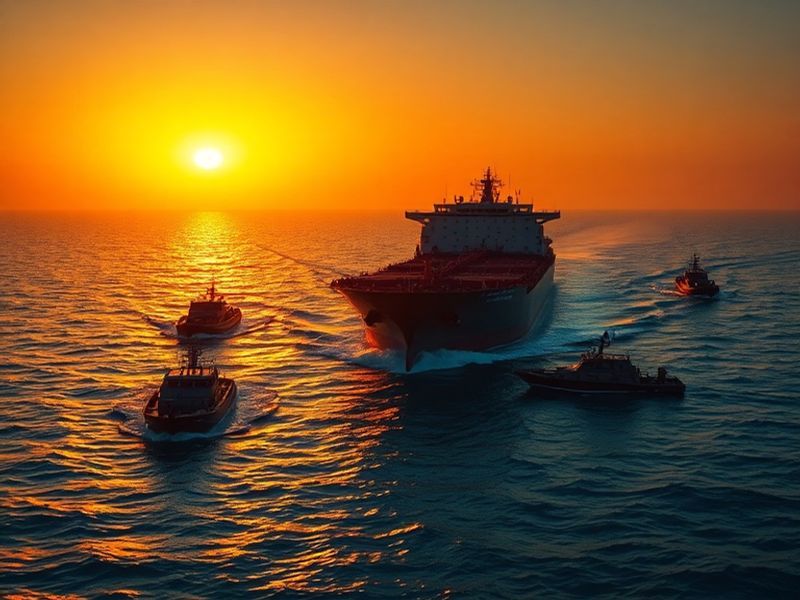
Strait of Hormuz: The Oil Chokepoint Shaking Global Markets
“`html
Strait of Hormuz: Why This Narrow Waterway Dominates Global Oil Markets
The Strait of Hormuz has long been a flashpoint in global geopolitics, but recent tensions have catapulted it back into the headlines. This narrow waterway between Oman and Iran connects the Persian Gulf to the Gulf of Oman and, crucially, the Arabian Sea. It’s not just a strategic chokepoint—it’s the world’s most important oil transit route, handling nearly a third of the planet’s seaborne crude oil shipments each day.
With Iran repeatedly threatening to disrupt shipping in the strait amid its ongoing standoff with Western powers over its nuclear program, the implications are immediate and far-reaching. The Strait of Hormuz isn’t just a regional concern; it’s a global pressure point that could send shockwaves through energy markets, supply chains, and even military alliances.
Why the Strait of Hormuz Matters More Than Ever
The strait’s significance lies in its chokehold on oil flows. On a typical day, about 21 million barrels of oil pass through the Strait of Hormuz—roughly 20% of the world’s daily oil consumption. For countries like China, India, and Japan, which rely heavily on Middle Eastern oil, this route is non-negotiable. Even the U.S., now a net exporter of oil, still watches the strait closely due to its impact on global prices and energy security.
Recent incidents—including drone strikes on tankers, seizures of vessels, and Iran’s naval exercises near the strait—have underscored how vulnerable this corridor is to disruption. In 2019, attacks on Saudi oil facilities temporarily removed 5% of global oil supply from the market. A prolonged closure of the strait could trigger a supply crisis, sending crude prices skyrocketing and destabilizing economies dependent on affordable energy.
- Energy Security: Any disruption in the strait could lead to supply shortages, price spikes, and energy rationing in importing nations.
- Global Trade: The strait is a critical link in the maritime trade network, affecting not just oil but also liquefied natural gas (LNG) shipments.
- Military Posturing: The U.S. and its allies maintain a naval presence in the region to deter aggression, but tensions remain high.
- Economic Ripples: Higher oil prices could stifle economic growth, particularly in emerging markets already grappling with inflation.
The Geopolitical Chessboard: Who Holds the Leverage?
Iran has repeatedly threatened to block the strait if it faces severe sanctions or military action. While such a move would be a high-risk strategy—potentially inviting a devastating response—it remains a credible deterrent in Tehran’s playbook. The Islamic Republic has demonstrated its ability to project power in the region, from supporting proxy groups in Yemen and Iraq to deploying advanced missile systems near the strait.
Meanwhile, the U.S. and its allies have responded with a mix of deterrence and diplomacy. The U.S. Fifth Fleet, based in Bahrain, patrols the strait alongside ships from the UK, France, and other NATO members. Joint military exercises and intelligence-sharing aim to deter Iranian aggression, but the risk of miscalculation looms large.
For Iran, the strait is both a bargaining chip and a vulnerability. While it relies on the strait to export its own oil, it also depends on the revenue to fund its government and military. A prolonged closure would hurt Iran’s economy as much as anyone else’s, but in the short term, it could force concessions from the West.
Economic Fallout: What Happens If the Strait Closes?
The economic consequences of a strait closure would be severe. Oil prices could surge to $150 per barrel or higher, reminiscent of the 1973 oil crisis. Countries like India and China, which import nearly all their oil, would face soaring fuel costs, potentially triggering protests and economic slowdowns. Even the U.S., with its shale reserves, would see gasoline prices rise, squeezing consumers at the pump.
Beyond oil, the strait’s closure would disrupt global shipping. Major oil companies and trading firms would scramble to reroute tankers around Africa or through the Suez Canal, adding weeks to voyages and driving up costs. Insurance premiums for ships passing through the region would skyrocket, further increasing the financial burden on global trade.
In response, nations might tap into strategic petroleum reserves or accelerate investments in alternative energy sources. However, these measures take time, leaving economies vulnerable in the interim. The last time the strait faced serious disruption—in 1984 during the Iran-Iraq War—oil prices nearly doubled, and the global economy took years to recover.
Looking Ahead: Can Diplomacy Avert a Crisis?
The question now is whether diplomacy can de-escalate tensions before a miscalculation leads to conflict. The 2015 nuclear deal (JCPOA) offered a temporary reprieve, but former President Trump’s withdrawal in 2018 and the subsequent reimposition of sanctions have pushed Iran toward a more confrontational stance. Efforts to revive the deal have stalled, leaving the region in a precarious state.
Meanwhile, Iran’s growing ties with Russia and China provide it with some economic resilience. Moscow and Beijing have both signaled support for Iran’s nuclear program and its resistance to Western sanctions, complicating efforts to isolate Tehran diplomatically. This shifting alliance structure adds another layer of complexity to the strait’s security dynamics.
For now, the status quo appears fragile. The U.S. and Iran are engaged in indirect talks, but neither side seems willing to make the concessions necessary for a lasting deal. Until then, the Strait of Hormuz remains a powder keg, with the potential to ignite a global energy crisis.
Key Takeaways for Policymakers and Businesses
- Diversify Supply Chains: Countries and companies should reduce reliance on Middle Eastern oil by investing in renewables, domestic production, and alternative trade routes.
- Monitor Geopolitical Developments: The situation in the Strait of Hormuz can change rapidly. Businesses must stay informed to anticipate disruptions.
- Prepare for Price Volatility: Energy-intensive industries should hedge against oil price spikes by locking in long-term contracts or exploring fuel alternatives.
- Strengthen Military Alliances: The U.S. and its allies must maintain a visible presence in the region to deter aggression while leaving room for diplomatic solutions.
One thing is clear: the Strait of Hormuz is far more than a geographical feature. It’s a linchpin of global stability, a test of diplomatic resolve, and a reminder of how quickly energy markets can spiral out of control. The world may not be able to control the tides of the strait, but it can—and must—prepare for the storms ahead.
For further insights into global energy trends and geopolitical risks, explore our News and Analysis sections.