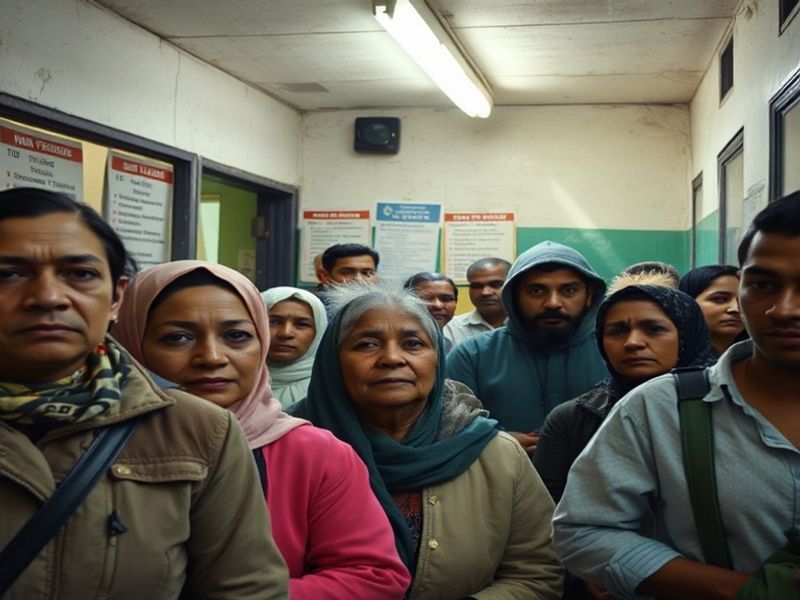
The concept of the welfare state has long been a cornerstone of modern governance, designed to protect citizens from economic hardship while promoting social cohesion. Its origins trace back to late 19th-century Europe, where industrialization and urbanization created new vulnerabilities. Governments responded by implementing policies that provided safety nets for the most vulnerable populations. Today, the welfare state remains a subject of intense debate, praised for its humanitarian goals but scrutinized for its economic sustainability.
At its core, the welfare state is a social system funded by collective taxation to ensure basic living standards for all citizens. This includes healthcare, education, unemployment benefits, and pensions. The model varies across countries, with some nations adopting a more expansive approach while others prioritize targeted assistance. The balance between generosity and fiscal responsibility continues to shape political and economic discourse worldwide.
The Historical Foundations of the Welfare State
The welfare state did not emerge overnight. Its development was shaped by centuries of social, economic, and political evolution. The Industrial Revolution, which displaced countless workers and concentrated wealth in the hands of a few, exposed the need for systemic protections. Early reforms in Germany under Chancellor Otto von Bismarck in the 1880s laid the groundwork with the introduction of social insurance programs for workers.
By the mid-20th century, the welfare state took on a more comprehensive form, particularly in Western Europe and North America. The Beveridge Report of 1942 in the UK, authored by economist William Beveridge, outlined a vision for a society free from the “five giants”: want, disease, ignorance, squalor, and idleness. This report influenced the creation of the National Health Service and other post-war social programs. Similarly, the U.S. Social Security Act of 1935 established a framework for unemployment insurance and old-age pensions during the Great Depression.
The post-World War II era marked the golden age of the welfare state, with many countries expanding their safety nets to include universal healthcare, free education, and robust unemployment benefits. However, the oil crises of the 1970s and the subsequent economic downturns challenged the sustainability of these systems. Critics argued that excessive spending and bureaucratic inefficiencies were straining national budgets. This period saw the rise of neoliberal economic policies, which emphasized market-driven solutions and reduced state intervention.
The Modern Welfare State: Variations and Challenges
Today, welfare states exist in various forms, each reflecting the unique priorities and values of their societies. The Nordic model, exemplified by countries like Sweden and Denmark, is often cited as the most successful. It combines high levels of public spending with strong economic performance, thanks to efficient tax collection and a commitment to full employment. Scandinavian countries invest heavily in education and healthcare, ensuring that all citizens have access to essential services.
In contrast, the liberal welfare model, found in the U.S. and the UK, focuses on means-tested benefits and encourages private sector involvement. This approach aims to reduce dependency on the state but often results in significant gaps in coverage. For example, millions of Americans lack health insurance despite the Affordable Care Act, while the UK has seen a rise in food bank usage amid austerity measures.
The challenges facing modern welfare states are multifaceted. Aging populations strain pension systems and healthcare budgets, while low birth rates in many developed countries reduce the tax base. Globalization and technological advancements have also disrupted traditional labor markets, increasing the need for retraining programs and flexible social safety nets. Additionally, political polarization has made it difficult to reach consensus on reforms, with debates often centering on issues of fairness, efficiency, and individual responsibility.
Key Features of a Welfare State
While no two welfare states are identical, they typically share several core components:
- Universal Healthcare: Access to medical services regardless of income or employment status.
- Social Security: Pensions and disability benefits to support retirees and those unable to work.
- Unemployment Benefits: Financial assistance for workers who lose their jobs, often tied to job-search requirements.
- Public Education: Free or subsidized schooling from primary to higher education.
- Housing Assistance: Programs to ensure affordable housing for low-income individuals and families.
- Childcare Support: Subsidies or direct services to help parents balance work and family life.
The Broader Implications of the Welfare State
Beyond its immediate benefits, the welfare state has far-reaching consequences for society as a whole. Economically, it can act as an automatic stabilizer, cushioning the impact of recessions by maintaining consumer spending and reducing poverty. Studies have shown that countries with strong welfare systems experience lower crime rates and higher levels of social trust, as citizens feel more secure and connected to their communities.
However, the welfare state is not without its critics. Opponents argue that it creates a culture of dependency, discouraging work and innovation. They point to examples like Greece, where unsustainable pension obligations have contributed to economic crises. Others highlight the unintended consequences of generous benefits, such as reduced labor market participation among certain demographics. For instance, some Nordic countries have grappled with the “hammock effect,” where individuals opt for extended periods of unemployment rather than seeking work.
The welfare state also intersects with broader geopolitical trends. Immigration policies, for example, can either complement or strain welfare systems. Countries with inclusive immigration frameworks, like Canada, often see migrants contribute positively to the economy and tax base. Conversely, nations with restrictive policies may face challenges in integrating newcomers, leading to social tensions and economic inefficiencies. The COVID-19 pandemic further exposed the vulnerabilities of welfare states, as governments scrambled to provide emergency support to businesses and individuals affected by lockdowns.
The Future of the Welfare State
As societies evolve, so too must the welfare state. The rise of the gig economy, remote work, and artificial intelligence is reshaping labor markets, requiring innovative solutions. Many experts advocate for a universal basic income (UBI) as a way to address income insecurity in an era of automation. Pilot programs in Finland and California have shown promising results, with participants reporting improved well-being and financial stability. However, the cost and feasibility of implementing UBI on a national scale remain contentious.
Another pressing issue is climate change, which poses new risks to social stability. Extreme weather events, food shortages, and mass displacement could overwhelm existing welfare systems. Governments may need to expand their roles to include environmental protections and disaster relief, integrating climate resilience into social policies. For example, Denmark has already begun incorporating green initiatives into its welfare framework, such as subsidies for electric vehicles and energy-efficient housing.
The future of the welfare state will likely depend on adaptability. Countries that can balance generosity with fiscal responsibility, and innovation with tradition, will be best positioned to navigate the challenges ahead. Public support will also be crucial, as citizens must remain engaged and informed about the trade-offs involved in maintaining or reforming these systems. Ultimately, the welfare state’s success hinges on its ability to evolve in step with the needs of its people.
For those interested in exploring these themes further, Dave’s Locker Politics section offers in-depth analysis on social policies and governance. Additionally, the Economy category provides insights into the fiscal challenges and opportunities facing modern states.
Conclusion
The welfare state stands as one of humanity’s most ambitious attempts to create a fair and just society. From its humble beginnings in 19th-century Europe to its current role in an increasingly complex world, it has demonstrated both the potential and the pitfalls of collective action. While debates over its effectiveness and sustainability will undoubtedly continue, its core mission—to protect the vulnerable and promote opportunity—remains as vital as ever.
As we look to the future, the welfare state must adapt to new realities, from technological disruption to environmental crises. The choices made today will shape the social fabric of generations to come. Whether through incremental reform or bold innovation, the goal remains the same: to build a society where no one is left behind.