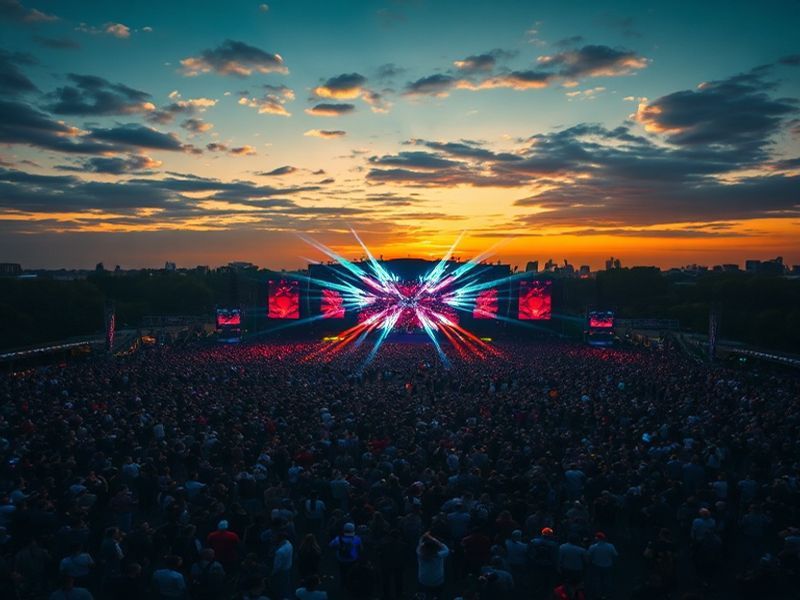
Wireless Festival 2026: The Next Evolution of Global Music Gatherings
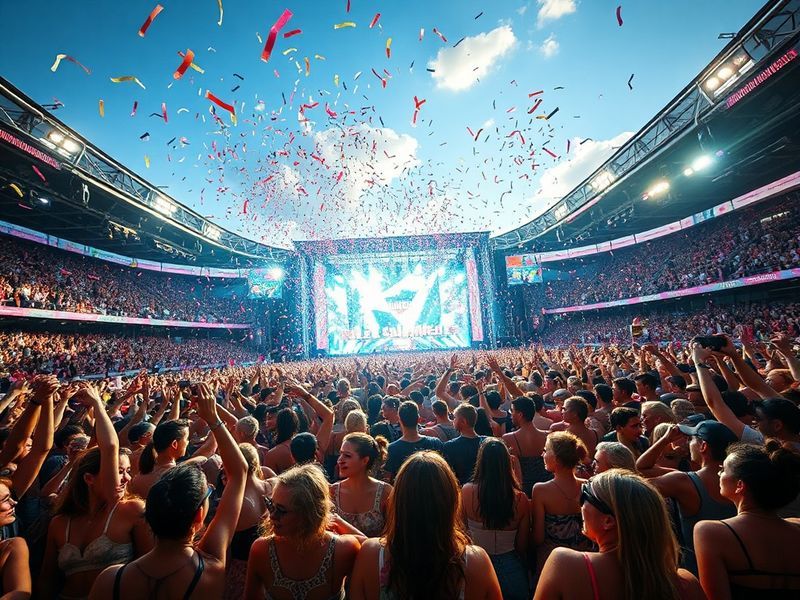
Wireless Festival has long been a cornerstone of the UK’s summer music calendar, but its expansion into 2026 signals something far greater—a transformation into a truly global phenomenon. What began as a London-centric event in 2005 has grown into a multi-city extravaganza, blending electronic beats with cultural exchange on an international scale. As the festival prepares for its next chapter, the question isn’t just about the lineup or the headliners. It’s about how Wireless is redefining the very idea of what a modern music festival can be.
The 2026 edition arrives at a pivotal moment for live music. Post-pandemic recovery has reshaped audience expectations, while climate concerns and technological advancements are forcing organizers to rethink logistics and sustainability. Wireless, under the stewardship of Live Nation, appears poised to address these challenges head-on, with rumors of carbon-neutral stages, AI-driven crowd management, and hybrid virtual experiences for global fans. These innovations aren’t just bells and whistles—they reflect broader shifts in how we experience art, community, and even identity through music.
The Global Expansion: Beyond Finsbury Park
Wireless Festival’s journey from a single London park to a multi-continent tour mirrors the trajectory of electronic music itself. In 2024, the festival debuted in Los Angeles, its first permanent international outpost, followed by a short-lived but impactful run in New York. For 2026, insiders suggest potential expansions into Berlin, Tokyo, and even a temporary “floating festival” on a cruise ship in the Mediterranean. This isn’t merely about exporting a brand—it’s about curating experiences that resonate with local cultures while maintaining a cohesive global identity.
Take Berlin, for instance. The German capital has long been a mecca for underground electronic music, with clubs like Berghain and Watergate setting global standards. A Wireless Festival in Berlin wouldn’t just bring big-name DJs—it would tap into the city’s DIY ethos, blending techno with local subcultures. Similarly, Tokyo’s integration of Wireless could mean a fusion of J-pop, city pop, and global house music, creating a sound uniquely its own. The festival’s ability to adapt while preserving its core DNA will determine whether it becomes a true world tour or remains a series of disconnected events.
Technology and Sustainability: The New Frontiers
Wireless Festival has always been at the intersection of music and technology, but 2026 could take this to unprecedented levels. Reports indicate partnerships with companies specializing in biodegradable wristbands embedded with NFC chips, allowing cashless payments, access control, and even personalized stage recommendations based on your musical preferences. Meanwhile, augmented reality (AR) could transform the festival grounds into an interactive canvas, where attendees use their phones to unlock hidden performances, art installations, or historical tidbits about the venue.
Sustainability, too, is no longer optional. Wireless has already committed to reducing single-use plastics, but 2026 may see the introduction of solar-powered stages, water refill stations every 100 meters, and a “leave no trace” policy enforced by AI-driven drones that monitor waste in real time. Critics argue that these measures are performative, but the festival’s scale means even small changes can have massive ripple effects. If Wireless can prove that large-scale events can operate sustainably without sacrificing spectacle, it could set a new benchmark for the industry.
Another intriguing development is the rise of “phygital” experiences—physical festivals enhanced by digital elements. Imagine attending Wireless in London but being able to “teleport” into a live stream of a secret set in Tokyo, or voting via app to determine the next track played by a DJ. These hybrid models could democratize access, allowing fans who can’t travel to still feel connected to the event’s energy. However, this also raises questions about authenticity and the value of physical presence in an increasingly virtual world.
Cultural Crossroads: Music as a Universal Language
At its heart, Wireless Festival has always been about more than music—it’s about community. In 2026, that community is more diverse and global than ever, reflecting both the festival’s evolution and the changing demographics of electronic music fans. A quick glance at recent lineups shows a deliberate shift toward inclusivity, with rising stars from Africa, Latin America, and Asia sharing stages with established Western acts. This isn’t just tokenism; it’s a recognition that the future of electronic music lies in its ability to transcend borders.
Consider the rise of Amapiano, a South African genre that has taken the world by storm. Wireless’s 2025 inclusion of artists like Uncle Waffles and DBN Gogo was a nod to this global shift, but 2026 could see the genre take center stage. Similarly, the festival’s potential expansion into Latin America might spotlight genres like reggaeton, cumbia, or Brazilian funk, further diversifying its musical palette. This approach aligns with the broader trend in music festivals toward “cultural curation”—curating lineups that tell a story about the world, not just the music industry.
Yet, this global ambition comes with challenges. How does Wireless balance its London roots with its international aspirations? Can it avoid becoming a homogenizing force in a world where local scenes are fighting to preserve their identities? The festival’s success in 2026 may hinge on its ability to act as a bridge—connecting global audiences while amplifying local voices. It’s a delicate balance, but one that could redefine what it means to be a modern festival.
What Fans Can Expect: A Glimpse Into the Future
While the full details of Wireless Festival 2026 remain under wraps, several trends and innovations are likely to shape the experience. Here’s a breakdown of what attendees and online spectators might encounter:
- Immersive Stages: Expect stages designed by architects and artists, incorporating elements of virtual reality, holography, and interactive light displays. The main stage could resemble a living organism, with projections that respond to the crowd’s energy.
- Global Collaborations: DJ sets that blend live instrumentation with electronic production, featuring collaborations between international artists. Think a live orchestra performing alongside a techno producer, or a traditional instrument sampler integrated into a house track.
- Community Zones: Beyond the main stages, Wireless may introduce “cultural hubs” where fans can engage in workshops, discussions, or even collaborative art projects. These zones could highlight themes like mental health, climate action, or digital rights.
- Exclusive Digital Content: For those unable to attend, Wireless could offer a “virtual festival pass” with access to live streams, behind-the-scenes content, and interactive experiences. This could include AR scavenger hunts or virtual meet-and-greets with artists.
- Sustainable Practices: From compostable food containers to bike valet services, every aspect of the festival may prioritize eco-friendliness. Even the wristbands could double as seed paper, encouraging attendees to plant a tree after the event.
Of course, no festival is without its controversies. Ticket prices, accessibility, and the environmental impact of travel remain hot-button issues. Wireless will need to address these head-on, perhaps by offering sliding-scale pricing, free shuttle services from major cities, or carbon offset programs for international travelers. The festival’s ability to navigate these challenges will be as closely watched as its musical lineup.
The Bigger Picture: Festivals in the 21st Century
Wireless Festival 2026 isn’t just another event on the calendar—it’s a microcosm of broader societal shifts. Music festivals have always reflected the times, from the countercultural gatherings of the 1960s to the corporate spectacles of the 2010s. Today, they’re grappling with questions of identity, technology, and sustainability, all while trying to preserve the magic of live performance.
For a generation raised on algorithmically curated playlists and virtual connections, Wireless offers something rare: a space to disconnect from screens and connect with people. In an era where social media often amplifies division, festivals like Wireless remind us of music’s power to unite. The challenge for 2026 will be to maintain that sense of intimacy and spontaneity amid the logistical and technological complexities of a global event.
As Wireless Festival evolves, it invites us to consider what we want from our cultural experiences. Do we crave spectacle or authenticity? Global connectivity or local roots? In many ways, the answers to these questions will define not just the future of Wireless, but the future of live music itself. One thing is certain: the 2026 edition won’t just be a party. It will be a statement.
For those eager to dive deeper into the world of music festivals and their cultural impact, explore our Music category, where we break down trends, lineups, and the stories behind the scenes. And if you’re curious about how technology is reshaping live events, don’t miss our analysis on Technology and its intersection with entertainment.
—
Conclusion: A Festival for the Future
Wireless Festival 2026 stands at the intersection of innovation and tradition, global ambition and local authenticity. As it expands its footprint across continents, the festival must navigate the complexities of cultural exchange, technological integration, and environmental responsibility. Yet, at its core, Wireless remains a celebration of music—a reminder that, in a fragmented world, shared rhythm can still bring people together.
The 2026 edition won’t just be about the artists on stage or the beats in the crowd. It will be about the conversations sparked in between sets, the connections forged through dance, and the collective experience of being part of something larger than ourselves. In that sense, Wireless Festival isn’t just keeping pace with the future. It’s helping to define it.