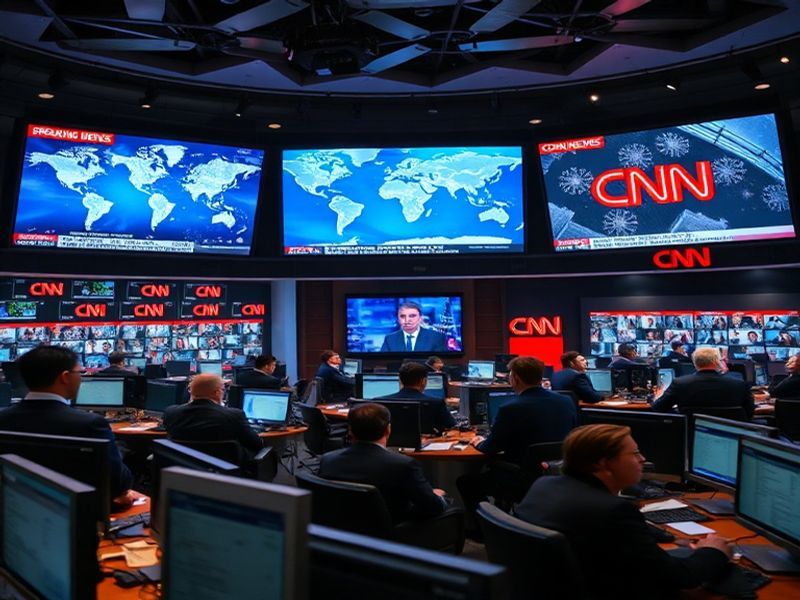
For decades, CNN World News has stood as a cornerstone of international journalism, offering a window into the forces shaping our planet. From the fall of the Berlin Wall to the rise of social movements in distant capitals, the network has documented history as it unfolded. But in an era where information travels at unprecedented speed, its role has evolved beyond traditional reporting. Today, it serves as both a curator and a catalyst for global dialogue, bridging gaps between cultures while navigating the complexities of modern media.
From Cable News Pioneer to Digital Powerhouse
Founded in 1980 by media mogul Ted Turner, CNN revolutionized news delivery by becoming the first 24-hour cable news channel. Its global perspective was a radical departure from the evening-news model, offering real-time coverage of events as they happened. The network’s breakthrough moment came in 1991 with the Gulf War, when its live broadcasts brought the conflict into living rooms worldwide. This established CNN as a trusted source for breaking news, a reputation it has maintained through subsequent crises.
In the decades since, CNN has expanded its reach through digital platforms, adapting to the changing habits of global audiences. Its website and mobile app now serve millions daily, providing on-demand access to reports from correspondents embedded in war zones, financial hubs, and remote villages. The shift to digital hasn’t been without challenges. The rise of social media has democratized news sharing, but it has also amplified misinformation. CNN’s response has been twofold: investing in fact-checking initiatives while leveraging its journalistic credibility to stand apart from unfiltered user-generated content.
Balancing Speed and Depth in Reporting
One of the network’s enduring strengths lies in its ability to balance immediacy with depth. While breaking news demands rapid dissemination, context often requires time to develop. CNN’s approach has been to pair live coverage with in-depth analysis, offering viewers both the “what” and the “why.” This is evident in its coverage of geopolitical shifts, such as the withdrawal of U.S. troops from Afghanistan in 2021. While live footage dominated headlines, CNN’s analysis pieces explored the long-term implications for regional stability and global diplomacy.
The network’s commitment to context is particularly vital in an era where headlines can be sensationalized to fit algorithms. By prioritizing expert commentary and data-driven reporting, CNN provides a counterbalance to the noise of viral content. This editorial strategy has helped it retain a loyal audience amid the fragmentation of the media landscape.
The Cultural Impact of Global News Coverage
Beyond its role as a news provider, CNN World News has influenced how cultures perceive distant events. Its coverage of natural disasters, for example, has not only informed audiences but also inspired global aid efforts. When a 7.0-magnitude earthquake struck Haiti in 2010, CNN’s on-the-ground reporting galvanized international relief efforts, from donations to volunteer deployments. Similarly, its documentation of the Syrian civil war has kept a spotlight on the humanitarian crisis, shaping public opinion and policy responses.
Yet, this influence is not without controversy. Critics argue that Western media, including CNN, often frames global events through a lens that prioritizes certain narratives over others. The portrayal of conflicts in Africa or the Middle East, for instance, has sometimes been criticized for emphasizing violence over the complexities of local societies. In response, CNN has made efforts to diversify its reporting teams, aiming for perspectives that reflect the communities it covers.
Diverse Voices and the Push for Inclusivity
In recent years, CNN has faced pressure to address the lack of diversity in its newsrooms and on-air talent. Studies have shown that news coverage often underrepresents women and people of color, particularly in international reporting. A 2022 report by the Analysis desk highlighted that only 24% of experts quoted in global news segments were women. CNN has since launched initiatives to recruit more diverse journalists and amplify underrepresented voices in its coverage.
This shift is part of a broader trend in global journalism, where audiences increasingly demand representation. For CNN, it’s not just about meeting ethical standards—it’s about maintaining relevance in a world where audiences have more choices than ever. By incorporating diverse perspectives, the network can offer a more nuanced understanding of global events, fostering a sense of shared humanity.
The Future of Global Journalism in a Fragmented World
The media landscape is more fragmented than ever, with audiences splintering across platforms and ideologies. Traditional news outlets like CNN must now compete not only with each other but with algorithm-driven social media feeds. The challenge is to remain a trusted source without succumbing to the echo chambers that define modern discourse. CNN’s strategy has involved a dual approach: investing in high-quality journalism while experimenting with new formats, such as podcasts and interactive documentaries.
One area of growth is its focus on solutions journalism, which highlights responses to global problems rather than just the problems themselves. For example, its series on renewable energy innovations in Africa showcased how local communities are addressing climate change. This approach not only informs but also empowers audiences to see themselves as part of the solution.
Adapting to the Rise of Citizen Journalism
The proliferation of smartphones has turned nearly every individual into a potential journalist. While this has democratized news gathering, it has also raised questions about accountability. CNN has responded by integrating user-generated content into its reporting—but with caution. The network employs verification tools and ethical guidelines to ensure that such content meets journalistic standards. This balancing act reflects a broader tension in modern media: how to harness the power of crowdsourcing while maintaining credibility.
The future of CNN World News will likely hinge on its ability to evolve alongside these changes. Whether through partnerships with local journalists, innovative storytelling techniques, or a renewed commitment to inclusivity, the network’s success will depend on its willingness to adapt without compromising its core mission: to inform, educate, and connect the world.
A Legacy Built on Trust and Adaptation
As CNN World News approaches its fifth decade, its legacy is one of resilience. It has weathered criticism, technological disruption, and shifting audience expectations, yet it remains a vital player in global journalism. Its role is no longer confined to reporting the news—it is also about curating a shared reality in an age of information overload. For millions, CNN is more than a news source; it is a lens through which they understand the world.
In an era where misinformation spreads faster than facts, the need for reliable journalism has never been greater. CNN’s continued relevance will depend on its ability to uphold its founding principles while embracing the tools of the digital age. For those who rely on it, the network’s coverage is not just a reflection of the world—it is a guide through its complexities.