fuel prices
“`html
Why Fuel Prices Fluctuate and How to Navigate Them
Fuel prices remain one of the most visible indicators of economic health, directly affecting household budgets, transportation costs, and even the price of groceries. Unlike many consumer goods, gasoline and diesel costs are shaped by a complex interplay of global events, supply chain dynamics, and policy decisions. Understanding these factors isn’t just academic—it can help drivers make smarter decisions about when and how they fuel up.
Over the past three years, fuel prices have swung dramatically, from historic lows during the early pandemic to record highs following geopolitical conflicts. These shifts have left consumers confused and policymakers scrambling to respond. But what really drives these changes? And more importantly, how can individuals and businesses adapt?
The Global Oil Market: A High-Stakes Balancing Act
The price of gasoline begins with crude oil, which is traded globally like a financial asset. The cost per barrel is set not just by supply and demand, but by speculation, futures contracts, and even weather forecasts that hint at future consumption patterns. When the Organization of the Petroleum Exporting Countries (OPEC) and its allies—collectively known as OPEC+—announce production cuts, prices often surge. Conversely, when member nations increase output, prices tend to soften.
Geopolitical instability adds another layer of unpredictability. Conflicts in oil-rich regions, such as the war in Ukraine or tensions in the Middle East, can disrupt supply chains instantly. Even sanctions on major producers, like those imposed on Iran or Venezuela, can tighten global supply and send prices upward. In early 2022, for example, Brent crude oil prices spiked to over $120 per barrel after Russia’s invasion of Ukraine, pushing U.S. gasoline prices past $5 per gallon in some regions.
Beyond raw supply, refining capacity plays a critical role. Refineries must convert crude oil into usable fuels like gasoline, diesel, and jet fuel. If refineries are damaged by hurricanes or undergo seasonal maintenance, the supply of refined products can shrink, causing regional price spikes even when crude oil prices are stable.
Regional Differences: Why You Pay More—or Less—at the Pump
Not all fuel prices are created equal. Location matters, and several key factors influence regional differences:
- State and local taxes: Gasoline taxes vary widely across the U.S. Pennsylvania, for instance, has one of the highest state taxes on gasoline at 58.2 cents per gallon, while Alaska charges just 8.95 cents. These taxes fund road maintenance and infrastructure projects but can make fuel significantly more expensive in some states.
- Distance from refineries: Areas far from refineries, like California, often face higher prices due to transportation costs. California also has strict environmental regulations that mandate specialized, cleaner-burning fuels, further increasing costs.
- Competition and retail markup: In urban areas with many gas stations, competition can keep prices lower. However, in rural areas or along highways, limited options may lead to higher markups.
- Seasonal demand: Prices typically rise in the summer due to increased driving and the switch to more expensive summer-blend gasoline designed to reduce smog. Conversely, winter blends are cheaper to produce, often leading to lower prices in colder months.
These regional variations mean that a driver in Texas might pay $3.20 per gallon while someone in New York pays $4.10, even when crude oil prices are similar. Understanding these differences can help consumers plan road trips or budget for commutes more effectively.
Policy, Profits, and Public Perception: The Human Side of Fuel Prices
Fuel prices are not just a matter of economics—they are deeply political. Governments often intervene to shield consumers from price shocks, whether through subsidies, strategic petroleum reserves, or temporary tax cuts. In the U.S., the Biden administration has released millions of barrels from the Strategic Petroleum Reserve multiple times in recent years to stabilize prices, most recently in 2022 and 2023.
Corporate profits also come under scrutiny when prices rise. While oil companies argue that high prices reflect supply constraints and investment needs, critics point to record profits during periods of volatility. In 2022, ExxonMobil reported $55.7 billion in profits, nearly double its 2021 total, sparking calls for windfall taxes or increased regulation on price gouging.
Public perception further complicates the issue. Drivers often blame oil companies or politicians for high prices, even when global events are the primary drivers. This frustration fueled protests in Europe during the 2022 energy crisis and led to policy reversals in some countries. In the U.S., the Inflation Reduction Act of 2022 included provisions to expand renewable energy and reduce long-term dependence on fossil fuels, but its impact on fuel prices will take years to materialize.
How Drivers Can Respond to Rising Fuel Costs
While individuals have limited control over global oil markets, there are practical steps to mitigate the impact of high fuel prices:
- Monitor prices and plan ahead: Use apps like GasBuddy or Google Maps to track real-time gas prices and locate the cheapest stations along your route. Avoid filling up near highways or in high-traffic areas where prices are typically higher.
- Adjust driving habits: Aggressive acceleration and speeding reduce fuel efficiency. Driving at 55-65 mph on highways can improve gas mileage by up to 15% compared to speeds over 70 mph. Additionally, reducing idling and using cruise control can save fuel.
- Maintain your vehicle: A well-tuned engine, properly inflated tires, and clean air filters can improve fuel efficiency by 4-10%. Regular oil changes and using the manufacturer-recommended grade of motor oil also help.
- Consider alternative transportation: Carpooling, using public transit, biking, or walking can significantly reduce fuel expenses. For those in urban areas, electric bikes or scooters offer a cost-effective alternative for short trips.
- Explore fuel rewards programs: Many gas stations and credit cards offer rewards or cashback on fuel purchases. These programs can save drivers $0.10 to $0.30 per gallon over time.
For businesses reliant on transportation, such as delivery services or trucking companies, fuel costs can erode profits quickly. Investing in fuel-efficient vehicles, route optimization software, or even alternative fuels like compressed natural gas (CNG) or electricity can provide long-term savings. Some companies have also turned to fuel hedging strategies, locking in prices in advance to avoid volatility.
Longer term, the shift toward electric vehicles (EVs) could reduce dependence on gasoline. While EVs currently account for only about 7% of new car sales in the U.S., their adoption is accelerating due to lower operating costs and government incentives. The Inflation Reduction Act offers up to $7,500 in tax credits for qualifying EVs, making them more accessible to middle-class buyers.
Looking Ahead: What’s Next for Fuel Prices?
The future of fuel prices remains uncertain, but several trends are worth watching:
- OPEC+ production decisions: Any further cuts or expansions by OPEC+ will directly impact global oil supply and prices.
- Renewable energy adoption: As more countries invest in wind, solar, and other renewables, demand for oil may peak sooner than expected, potentially lowering long-term prices.
- Geopolitical stability: Ongoing conflicts, sanctions, or new trade agreements could either tighten or loosen oil supply.
- Electric vehicle growth: If EV adoption accelerates faster than expected, gasoline demand could decline, reducing prices in the long run.
In the short term, however, most analysts expect prices to remain volatile. The U.S. Energy Information Administration (EIA) projects that gasoline prices will average $3.40 per gallon in 2024, with potential spikes during peak driving seasons or geopolitical events.
For consumers, the key takeaway is to stay informed, adapt driving habits, and explore alternatives where possible. While fuel prices are influenced by forces beyond individual control, small changes can add up to meaningful savings over time.
One thing is clear: the era of cheap, stable fuel prices is likely over. The question now is how well society—and drivers—can adapt to a more complex energy landscape.
—
METADATA
{
“title”: “Why Fuel Prices Change and How to Save at the Pump”,
“metaDescription”: “Discover what drives fuel prices and learn practical ways to reduce gas costs amid rising prices.”,
“categories”: [“Business”, “Automotive”],
“tags”: [“gas prices”, “oil market”, “fuel savings”, “energy policy”, “electric vehicles”],
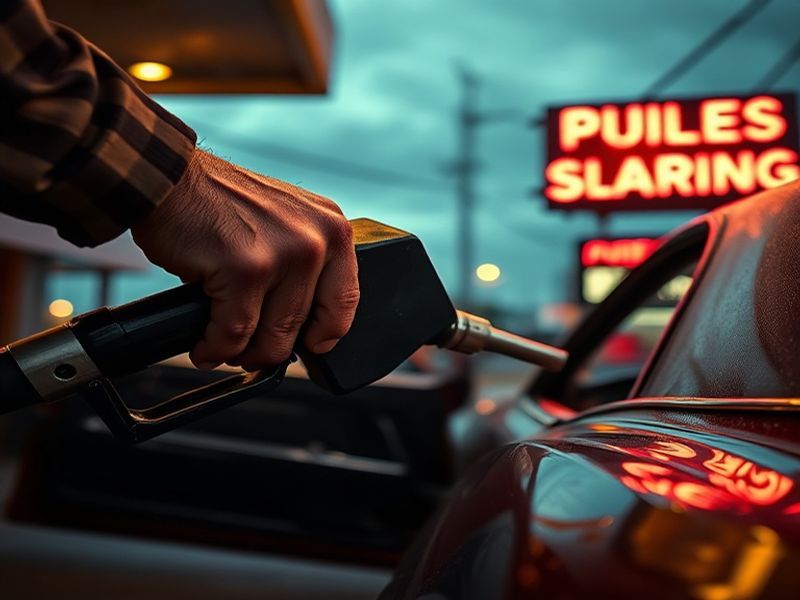
“imageDescription”: “A close-up of a fuel pump nozzle inserting into a car’s gas tank against a backdrop of a gas station sign showing fluctuating prices. The scene is set during dusk, with warm golden lighting casting long shadows, emphasizing both the practicality of fueling up and the broader economic implications.”
}
—END METADATA—
“`