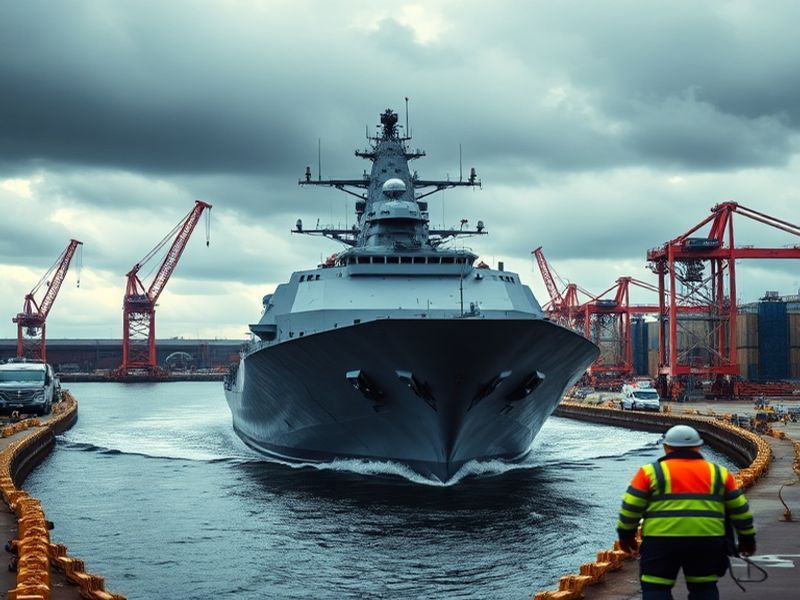
HMS Dragon’s Historic Docking in Portsmouth: A Moment of Maritime Pride
The arrival of HMS Dragon at Portsmouth Naval Base in early May 2024 marked more than just a routine docking. For naval enthusiasts, historians, and local communities, the Type 45 destroyer’s return was a visible reminder of Britain’s enduring maritime strength and the evolving role of the Royal Navy in global security. As the ship glided into its berth under clear skies, it carried the weight of tradition, cutting-edge technology, and the unspoken stories of service that define modern naval operations.
Portsmouth, often called the Home of the Royal Navy, has witnessed centuries of dockings, refits, and departures. But HMS Dragon’s arrival was not just another stop on the calendar. It followed a six-month deployment to the Middle East, where the vessel played a critical role in maritime security and crisis response. This mission underscored the ship’s operational versatility—from counter-piracy patrols to high-stakes escort duties in geopolitically sensitive waters.
The docking itself was a carefully orchestrated event. Tugboats guided the 152-meter-long warship into the basin, while dockyard teams prepared for maintenance, resupply, and crew rotation. For observers lining the harbour walls, the scene was a blend of precision engineering and human endeavour. It also offered a rare public glimpse into the inner workings of a modern warship, one that balances advanced radar systems, missile defence, and a crew of 191 sailors.
The Global Role of Type 45 Destroyers in Modern Naval Strategy
The Type 45 class, to which HMS Dragon belongs, represents a cornerstone of the Royal Navy’s surface fleet. Commissioned between 2009 and 2019, these six destroyers were designed primarily for air defence, equipped with the sophisticated Sea Viper missile system. Their ability to detect and neutralise aerial threats has made them indispensable in joint operations with NATO allies and partners such as the United States and France.
Operationally, the Type 45s have been deployed across the globe. HMS Dragon, for instance, has patrolled the Mediterranean, conducted anti-piracy operations off the Horn of Africa, and participated in exercises in the Baltic Sea. These deployments are not merely symbolic—they reinforce deterrence, support allies, and protect British interests in regions where maritime stability is fragile. In an era of rising tensions in the South China Sea and the Black Sea, the presence of advanced destroyers like HMS Dragon serves as a tangible expression of Western naval commitment.
Yet the Type 45s have also faced challenges. Reports have highlighted issues with propulsion and power generation, prompting upgrades and refits. These setbacks, however, have not diminished their strategic value. In fact, they have spurred innovation, with ongoing programmes to enhance reliability and integrate future technologies such as directed energy weapons and uncrewed systems.
Portsmouth: A Hub of Naval Heritage and Future Innovation
Portsmouth Naval Base is more than a docking facility—it is a living museum of naval history and a crucible of modern maritime technology. The base, home to the oldest continuously operating dockyard in the world, has evolved from a wooden shipbuilding centre in the 15th century to a high-tech hub for nuclear submarines and advanced surface vessels.
The arrival of HMS Dragon added to the base’s dynamic atmosphere. Around the dock, activity was constant: engineers inspected hulls, communication teams updated systems, and sailors prepared for leave or new assignments. The base also hosted families of the crew, who gathered to welcome their loved ones back. These moments of reunion, set against the backdrop of historic warships like HMS Victory, create a powerful sense of continuity between past and present.
Beyond its operational role, Portsmouth Naval Base is a cultural landmark. The nearby National Museum of the Royal Navy draws visitors to explore artefacts, models, and interactive exhibits that tell the story of Britain’s naval dominance and humanitarian missions. Events such as the International Festival of the Sea have celebrated this legacy, blending education with entertainment and reinforcing the public’s connection to maritime heritage.
A Look Inside HMS Dragon: Technology and Daily Life Aboard
Stepping aboard HMS Dragon offers a glimpse into a world where tradition meets innovation. The ship’s bridge, with its digital consoles and panoramic screens, is a far cry from the wooden wheels and brass instruments of Nelson’s era. Yet, the spirit of command remains unchanged—clear communication, strategic thinking, and calm under pressure are still the hallmarks of leadership.
Below deck, life is structured around operational readiness. Crew members rotate through roles in engineering, communications, weapons systems, and logistics. The ship’s galley prepares hundreds of meals daily, while the medical bay stands ready for emergencies at sea. Despite the high-tech environment, camaraderie and morale are built through shared experiences—long watches, training drills, and the occasional moment of respite during port visits.
The ship’s advanced systems include the S1850M long-range radar, capable of tracking multiple targets across vast distances, and the SAMPSON multi-function radar, which guides the Sea Viper missile system. These technologies allow the crew to monitor airspace, detect threats, and respond with precision. Yet, the human element remains central. Reports from the ship’s commanding officer have emphasised the importance of crew training, adaptability, and teamwork in navigating complex operational environments.
Reflections on the Future: What Lies Ahead for HMS Dragon and the Royal Navy
The return of HMS Dragon to Portsmouth is not just a logistical milestone—it is a chapter in a larger narrative about the future of the Royal Navy. With the upcoming Type 83 destroyers on the horizon and increasing investment in autonomous systems, the service is preparing for a new era of naval warfare. These next-generation vessels will incorporate artificial intelligence, enhanced cyber defences, and modular designs to adapt to evolving threats.
Yet, challenges remain. Budget constraints, geopolitical shifts, and the need to modernise infrastructure all demand careful navigation. The Royal Navy’s commitment to maintaining a global presence—evidenced by deployments to the Indo-Pacific and continued patrols in the North Atlantic—signals its resolve to remain a relevant and respected force.
For the sailors aboard HMS Dragon, the docking in Portsmouth is a moment of reflection and renewal. It is a chance to reconnect with family, undergo maintenance, and prepare for the next mission. For the local community, it is a reminder of the vital role the Royal Navy plays in national security and global stability. And for the world watching, it is a symbol of continuity—a fleet that adapts, endures, and protects.
As the sun sets over the harbour, casting long shadows across the hull of HMS Dragon, one thing is clear: the sea remains both a frontier and a frontier force. The docking in Portsmouth is not an endpoint, but a pause—a brief interlude before the next voyage into the vast, unpredictable waters of the 21st century.