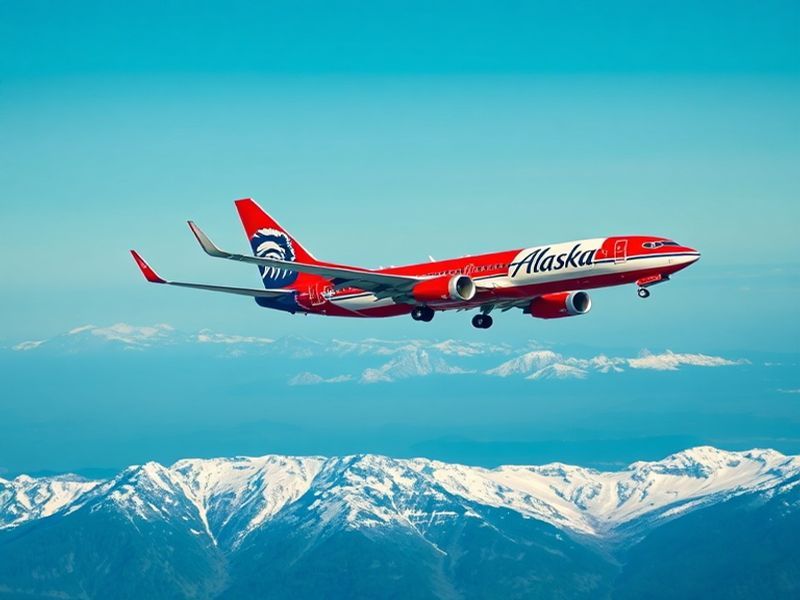
How Alaska Air Group Built a Resilient Airline While Others Struggled
“`html
Alaska Air Group: How One Airline Became a Model for Operational Resilience
By Jane Carter
Alaska Air Group has long stood out in the airline industry—not just for its scenic routes across the Pacific Northwest and beyond, but for its operational discipline. While competitors grappled with delays, cancellations, and labor strife in 2022 and 2023, Alaska Airlines maintained a reputation for reliability and customer satisfaction. This performance isn’t accidental. It reflects years of strategic planning, workforce investment, and a unique corporate culture that prioritizes consistency over short-term gains.
The Rise of Alaska Airlines in a Fragmented Industry
Founded in 1932 as McGee Airways, Alaska Airlines grew from a small bush carrier into one of the most respected names in U.S. aviation. Unlike legacy carriers burdened by complex hub-and-spoke systems, Alaska built its network around point-to-point routes, connecting smaller cities with major hubs like Seattle, Portland, and Anchorage. This approach reduced dependency on single airports and allowed for more predictable operations.
The airline’s geographic focus has been both a strength and a constraint. Its primary markets—Alaska, Washington, Oregon, and California—are prone to weather disruptions, yet Alaska Airlines has consistently outperformed peers in on-time performance. In 2022, according to the U.S. Department of Transportation, Alaska ranked first in on-time departures among major U.S. airlines for the seventh consecutive year. This consistency stems from investments in technology, crew training, and a workforce that views operational excellence as a shared responsibility.
Key Factors Behind Alaska’s Operational Success
The airline’s success can be traced to several strategic choices:
- Fleet Modernization: Alaska was an early adopter of the Boeing 737 MAX, a move that improved fuel efficiency and reduced maintenance costs. While the MAX’s grounding in 2019 was a setback, the airline managed the disruption with minimal long-term impact.
- Employee Engagement: Alaska consistently ranks among the best places to work in aviation. Pilots, flight attendants, and ground crews are incentivized through profit-sharing programs, fostering a culture where operational delays are seen not as management failures but as collective challenges.
- Customer-Centric Technology: The airline’s mobile app and website are frequently praised for usability, allowing travelers to rebook flights quickly when disruptions occur. This reduces call center volume and speeds up recovery during irregular operations.
- Strategic Partnerships: Through partnerships with American Airlines and Qantas, Alaska expanded its reach without the cost of building new hubs. These alliances allow it to feed traffic into larger networks while maintaining its brand identity.
The Labor Equation: Why Happy Employees Mean Fewer Delays
In an industry notorious for labor disputes, Alaska Airlines has maintained unusually harmonious relations with its unions. Pilots, represented by the Air Line Pilots Association (ALPA), have ratified contracts that include profit-sharing and productivity incentives. Flight attendants, organized under the Association of Flight Attendants (AFA), have also secured competitive wages and benefits.
This labor peace is not just a morale booster—it directly impacts operations. When crews are satisfied, absenteeism drops, and crews are more willing to work flexible schedules during peak seasons or weather events. Alaska’s profit-sharing program, which distributes a portion of annual earnings to employees, aligns individual success with company performance. In 2022, eligible employees received checks totaling $1,500 to $3,000, a tangible reminder of the company’s commitment to shared prosperity.
Contrast this with the situation at Southwest Airlines in December 2022, when a winter storm exposed vulnerabilities in scheduling systems and unionized mechanics’ disagreements over staffing levels exacerbated delays. Alaska’s proactive labor strategy has insulated it from such crises.
Beyond the Bottom Line: Environmental and Social Responsibility
Alaska Airlines has also positioned itself as a leader in sustainability, a growing concern for travelers and investors alike. In 2021, the airline committed to achieving net-zero carbon emissions by 2040, one of the most ambitious targets in the industry. To meet this goal, it has invested in sustainable aviation fuel (SAF), electric ground vehicles, and carbon offset programs.
In 2023, Alaska became the first U.S. airline to fly commercial routes using SAF produced from waste-based feedstocks. While SAF remains more expensive than conventional jet fuel, Alaska has leveraged government incentives and customer demand to make it economically viable. This strategy not only reduces emissions but also strengthens the airline’s brand appeal to environmentally conscious travelers.
The airline has also prioritized diversity and inclusion, with initiatives aimed at increasing representation in pilot training programs. In 2022, Alaska launched the Ascend Pilot Academy, a cadet program designed to train new pilots from underrepresented groups. Such efforts are critical in an industry facing a severe pilot shortage—one that threatens to limit growth across the sector.
What Other Airlines Can Learn from Alaska’s Playbook
Alaska Air Group’s success offers several lessons for competitors struggling to regain their footing post-pandemic:
- Invest in people first: Profit-sharing, training, and respectful labor relations reduce turnover and improve performance.
- Simplify operations: Point-to-point networks are less vulnerable to cascading delays than complex hub systems.
- Embrace technology thoughtfully: User-friendly digital tools empower customers to self-service during disruptions, reducing strain on operations teams.
- Lead with purpose: Sustainability and social responsibility are no longer optional—they’re competitive advantages that attract both customers and talent.
The Road Ahead: Challenges and Opportunities
Despite its strengths, Alaska Air Group faces challenges. The airline’s heavy reliance on West Coast markets exposes it to economic downturns in tech-heavy regions like Silicon Valley. Additionally, as fuel prices remain volatile, maintaining profitability while funding sustainability initiatives will require careful balancing.
Yet, the airline’s track record suggests it is well-equipped to navigate these challenges. Its recent acquisition of Hawaiian Airlines, announced in December 2023, expands its footprint into the Pacific, offering new growth opportunities while diversifying its geographic risk. The merger will test Alaska’s ability to integrate another workforce and culture, but early signs indicate a thoughtful approach to assimilation.
For investors, Alaska Air Group represents a rare combination of stability and growth potential. For travelers, it offers a rare promise: that flying can be both pleasant and predictable. In an era of airline industry consolidation and rising consumer expectations, Alaska’s model stands out as a blueprint for what modern aviation can—and should—aspire to be.