Humpback Whales: Migration, Songs, and Conservation Efforts
Understanding the Humpback Whale: A Marine Giant’s Life and Legacy
The humpback whale (Megaptera novaeangliae) stands as one of the ocean’s most recognizable and charismatic species. Known for their acrobatic breaches, haunting songs, and long pectoral fins, these baleen whales captivate scientists and ocean enthusiasts alike. Their annual migrations span thousands of miles, showcasing an endurance that few creatures can match. Yet beyond their spectacle, humpbacks play a crucial role in marine ecosystems, shaping the health of our oceans in ways we are only beginning to understand.
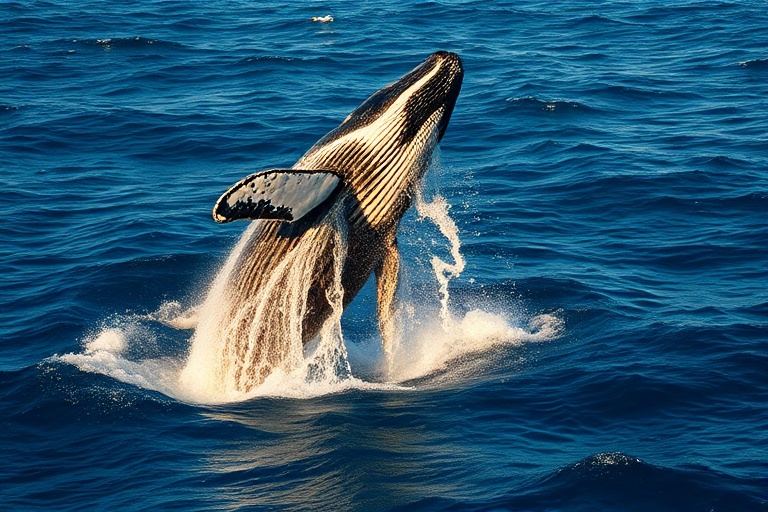
Adult humpbacks can reach lengths of up to 52 feet and weigh as much as 40 tons. Their bodies are streamlined for deep dives, but their most striking feature is their pectoral fins, which can grow up to 15 feet long—longer than those of any other whale species. These fins, combined with their knobbly heads and complex coloration patterns, make each individual humpback visually distinct, much like a human fingerprint. Scientists use these patterns to identify and track individuals over decades, revealing insights into their social structures and lifespans, which can exceed 50 years.
The Science Behind the Song: Communication and Behavior
Humpback whales are perhaps best known for their complex and evolving songs. These vocalizations, produced only by males, travel vast distances underwater and can last for hours. The songs are not random; they follow structured patterns that change subtly over time, suggesting a form of cultural transmission where new “trends” in song spread among whale populations. Researchers believe these songs may play a role in mating rituals, though their exact purpose remains a subject of debate.
Beyond their songs, humpback behavior is equally fascinating. They are avid cooperative feeders, often working in teams to create bubble nets that trap schools of fish or krill. This strategy requires precise coordination, demonstrating a level of intelligence and social complexity rare in the animal kingdom. Their breaching—launching their massive bodies out of the water and crashing back down—may serve multiple purposes, from dislodging parasites to communicating with distant whales or simply playing. Observing these behaviors provides a glimpse into the sophisticated lives of marine mammals.
Migration: A Journey of Thousands of Miles
Humpbacks undertake one of the longest migrations of any mammal, traveling up to 5,000 miles between feeding and breeding grounds. During the summer months, they feed in the cold, nutrient-rich waters of polar regions, where they bulk up on krill and small fish to sustain their massive bodies. As winter approaches, they embark on a journey to warmer tropical or subtropical waters, where they mate, give birth, and nurse their calves. This round-trip journey is not only a feat of endurance but also a critical part of their life cycle.
Their migration routes are well-documented in some regions, such as the North Pacific and North Atlantic, where populations follow predictable paths. For example, humpbacks from Alaska’s waters often travel to Hawaii or Mexico, while those in the Atlantic migrate between New England and the Caribbean. These journeys are not without peril; they must navigate shipping lanes, fishing gear, and changing ocean conditions, all of which pose threats to their survival. Conservation efforts have increasingly focused on protecting these migratory corridors to ensure safe passage for these giants.
Conservation Status: Progress and Persistent Challenges
Once hunted to the brink of extinction, humpback whales have made a remarkable recovery thanks to international moratoriums on commercial whaling. In 2016, the International Union for Conservation of Nature (IUCN) reclassified most humpback populations from “endangered” to “least concern,” a testament to the success of global conservation efforts. However, their recovery is not uniform across all populations. Some groups, particularly those in the western North Pacific, remain classified as endangered due to slower population growth and persistent threats.
The primary threats to humpback whales today are less dramatic than whaling but no less insidious. Entanglement in fishing gear, often leading to injury or drowning, is a leading cause of death for humpbacks. Ship strikes also pose a significant risk, especially in busy coastal waters. Additionally, climate change is altering the distribution of krill and fish, their primary food sources, forcing whales to adapt or face starvation. Noise pollution from shipping and offshore construction further disrupts their ability to communicate and navigate using echolocation.
Efforts to mitigate these threats are underway. In the United States, the National Oceanic and Atmospheric Administration (NOAA) has implemented speed restrictions for ships in key habitats and established whale-safe fishing practices. Internationally, organizations like the World Wildlife Fund (WWF) and Whale and Dolphin Conservation (WDC) work with governments to expand protected areas and reduce bycatch. Citizen science initiatives, where boaters and beachgoers report sightings, also contribute valuable data to conservation efforts.
Cultural and Economic Impact: The Whales That Draw Crowds
Humpback whales are not just ecological marvels; they are economic drivers. Whale-watching tourism generates millions of dollars annually in coastal communities around the world. Places like Maui, Alaska, and the Dominican Republic attract visitors eager to witness humpbacks in their natural habitat. This industry supports local economies, creating jobs in hospitality, guiding, and marine research. It also fosters a sense of stewardship among tourists, many of whom return home as advocates for marine conservation.
Their cultural significance extends beyond tourism. Indigenous communities, particularly in the Pacific Islands and Alaska, have long revered humpback whales in their traditions and folklore. In Hawaiian culture, humpbacks are known as koholā, or “the ones that carry the spirits,” and their annual arrival is celebrated as a time of renewal and connection to the ocean. Similarly, in Alaska, the Tlingit people consider humpbacks sacred, a symbol of strength and resilience. These cultural narratives highlight the deep bonds between humans and marine life, underscoring the need for sustainable coexistence.
A Glimpse into the Future: What’s Next for Humpback Whales?
The future of humpback whales will depend on our ability to address the dual challenges of climate change and human activity. As ocean temperatures rise, the distribution of krill and fish is shifting, forcing whales to travel farther or adapt their diets. Meanwhile, expanding maritime industries continue to encroach on their habitats. The next decade will be critical in determining whether these adaptations are possible or if conservation measures can keep pace with environmental changes.
Researchers are increasingly turning to technology to monitor humpback populations. Satellite tags, drones, and acoustic monitoring devices provide real-time data on whale movements, health, and interactions with human activities. These tools are invaluable for informing policy decisions and conservation strategies. For example, acoustic data has revealed that humpbacks are altering their songs in response to increasing underwater noise, a sign of their resilience but also a call for action to reduce pollution.
Public engagement will also play a vital role. Supporting sustainable seafood choices, reducing plastic use, and advocating for stronger marine protections are actions anyone can take to help humpbacks thrive. Educational programs, such as those offered by aquariums and marine science centers, can inspire the next generation of ocean advocates. By fostering a deeper connection to these animals, we can ensure that their haunting songs and awe-inspiring breaches continue to echo across the world’s oceans for generations to come.
The humpback whale is more than a symbol of the ocean’s majesty; it is a reminder of nature’s resilience and the impact of human actions. Their recovery from the brink of extinction offers hope, but it is a fragile one. By continuing to invest in science, policy, and public awareness, we can secure a future where humpbacks—and the ecosystems they support—flourish. The journey ahead is long, but with collective effort, it is one worth taking.