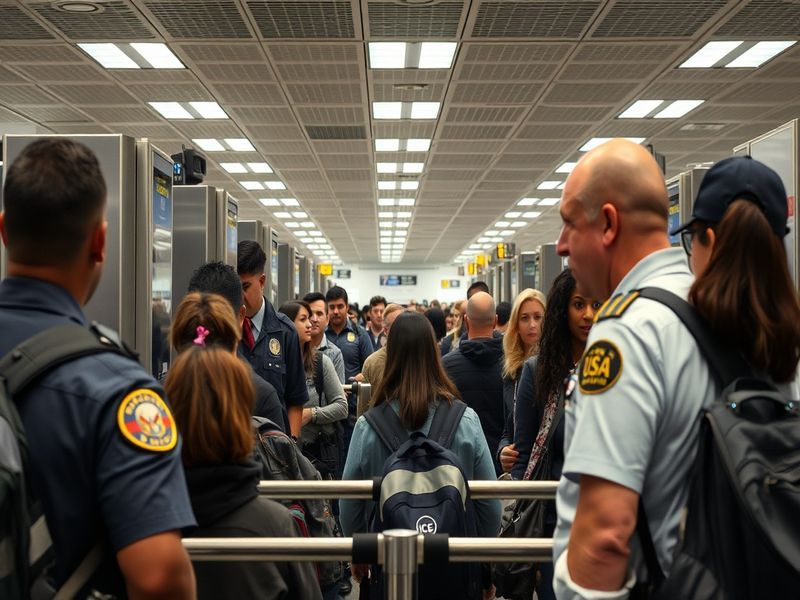
How ICE Agents Work With TSA at Airports: What Travelers Should Know
The Transportation Security Administration (TSA) relies on a complex network of personnel to maintain airport security, including agents who are part of U.S. Immigration and Customs Enforcement (ICE). These agents play a critical but often misunderstood role in the screening process, particularly in high-risk or sensitive situations. Understanding their involvement sheds light on how federal agencies collaborate to protect travelers while enforcing immigration laws.
The Role of ICE Agents in Airport Security
ICE agents are not typically stationed at standard TSA checkpoints. Their presence becomes more apparent in specific scenarios, such as when a traveler triggers secondary screening or when immigration status issues arise. These agents are called in to verify documentation, conduct interviews, or assist with cases involving undocumented individuals or those with questionable legal entry status.
While TSA agents focus primarily on security screening—such as detecting weapons or explosives—ICE agents handle immigration enforcement. Their collaboration ensures that travelers who pose potential security risks or violate immigration laws are identified and addressed appropriately. This division of labor is designed to balance aviation safety with federal immigration policies.
When Are ICE Agents Involved?
ICE agents are most likely to become involved in airport security under the following circumstances:
- Secondary Screening: If a traveler is selected for additional screening and their identity or background raises immigration concerns, ICE may be notified.
- Document Verification: Travelers without proper identification or with suspicious documents may be referred to ICE for further investigation.
- Law Enforcement Alerts: If an individual is flagged in a federal database (e.g., for overstaying a visa or being a fugitive), ICE agents may intervene during the screening process.
- High-Risk Travelers: Passengers arriving from countries with known security threats or those traveling under suspicious circumstances may face enhanced scrutiny by ICE.
The Legal and Ethical Considerations
The presence of ICE agents in airports raises important legal and ethical questions. Critics argue that immigration enforcement should not occur in sensitive environments like airports, where people may be stressed or unaware of their rights. Others contend that federal agencies must work together to uphold both security and immigration laws.
In 2018, a TSA policy clarification emphasized that ICE agents should not conduct immigration enforcement in screening areas unless absolutely necessary. This was intended to prevent the perception of racial profiling or intimidation. However, the exact protocols vary by airport and administration, leading to inconsistencies in enforcement.
Public Perception and Traveler Rights
Travelers often feel uneasy when ICE agents are present, especially if they are not informed about the reason for additional screening. Understanding your rights is crucial in these situations. For example, you are not obligated to answer questions about your immigration status without legal representation. However, refusing to cooperate with TSA or ICE agents during security screening can result in denied boarding or further investigation.
To mitigate confusion, some airports have implemented signage or staff training to clarify when ICE agents are involved and why. Still, many passengers remain unaware of the nuances between TSA and ICE roles, which can lead to frustration or fear.
The Broader Implications for Airport Security
The involvement of ICE agents in airport security reflects broader trends in federal law enforcement integration. As security threats evolve, agencies must adapt by sharing intelligence and collaborating on enforcement. However, this integration also raises concerns about mission creep—where immigration enforcement overshadows security screening.
For instance, during peak travel seasons, the presence of ICE agents could slow down security lines, creating bottlenecks. Airports must balance efficiency with enforcement priorities, ensuring that security remains swift while immigration laws are upheld.
Another consideration is the impact on international travelers. Many visitors to the U.S. are unfamiliar with ICE’s role in airports, leading to misunderstandings or legal complications. Clear communication from TSA and ICE could help alleviate these issues, but progress has been slow.
Future Trends in Airport Security
As technology advances, the need for human intervention in security screening may decrease. Biometric identification, AI-driven threat detection, and automated document verification could reduce the reliance on ICE agents for routine checks. However, immigration enforcement will likely remain a component of airport security, given its legal and political significance.
For now, travelers should remain informed about their rights and the roles of different agencies. If you encounter ICE agents during screening, ask for clarification on why they are involved and whether their assistance is mandatory. Being proactive can help you navigate the process with confidence.
Key Takeaways for Travelers
Understanding the intersection of TSA and ICE operations can help you prepare for airport security more effectively. Here are the most important points to remember:
- ICE agents are not standard TSA personnel. Their involvement is typically limited to specific situations involving immigration status or law enforcement alerts.
- You have rights during screening. While you must comply with TSA security protocols, you are not obligated to answer questions about your immigration status without legal counsel.
- Documentation matters. Ensure your travel documents are valid and up-to-date to avoid unnecessary scrutiny.
- Ask for clarification if needed. If you’re unsure why ICE agents are involved, politely request an explanation from TSA or ICE personnel.
- Stay informed about policy changes. Airport security protocols can shift with new administrations or legislation, so check official sources before traveling.
For further reading on travel security and related topics, visit Dave’s Locker Travel Section or explore our News Section for updates on federal policies affecting travelers.
Conclusion
The collaboration between TSA and ICE agents at airports is a necessary but complex aspect of modern security enforcement. While their combined efforts aim to protect travelers and uphold immigration laws, the process can feel opaque or intrusive to passengers. By understanding the roles of each agency and your rights as a traveler, you can navigate airport security with greater confidence and clarity.
As policies evolve, transparency and communication will be key to balancing security, efficiency, and fairness. For now, travelers should remain vigilant, prepared, and informed—because the next time you pass through security, you might encounter more than just a TSA agent.