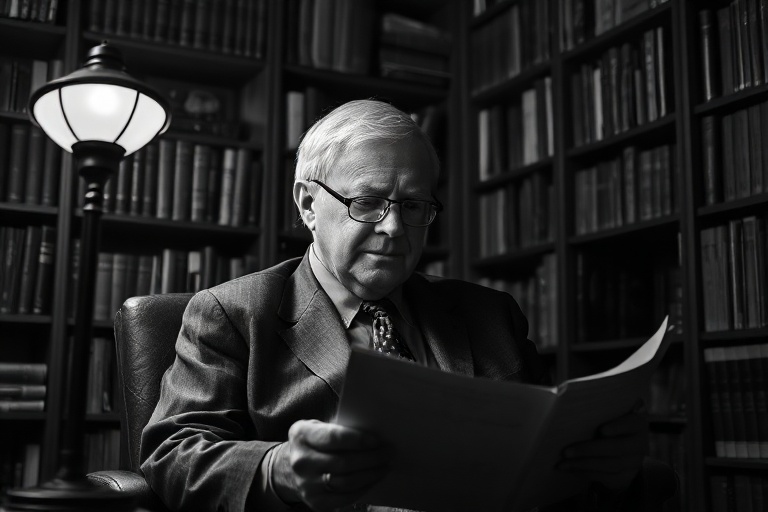
Robert Gates carved a singular path through the corridors of American power, serving as both a defense secretary and a CIA director during some of the most tumultuous periods in modern U.S. history. His career stretched across eight presidential administrations, from Lyndon Johnson to Barack Obama, witnessing and shaping the evolution of American intelligence and military strategy. Gates brought a rare combination of bureaucratic skill and intellectual rigor to his roles, often operating behind the scenes while leaving an indelible mark on the institutions he led.
Born in 1943 in Wichita, Kansas, Gates grew up in modest circumstances before rising through the ranks of the CIA during the Cold War. His ascent was marked by a blend of academic discipline and political acumen, culminating in his appointment as CIA director in 1991 under President George H.W. Bush. Later, as defense secretary under both George W. Bush and Barack Obama, he navigated the challenges of two wars, the rise of counterterrorism, and the shifting priorities of national security. Gates’ legacy is one of pragmatism, resilience, and an unyielding commitment to public service.
The CIA Years: Steering Intelligence Through Turmoil
Gates joined the CIA in 1966 as an analyst, specializing in Soviet affairs during the height of the Cold War. His early years were defined by the agency’s struggles to reconcile its analytical rigor with the political demands of policymakers. By the 1980s, he had risen to the rank of deputy director for intelligence, where he played a key role in shaping the CIA’s assessments of Soviet capabilities and intentions.
His tenure as CIA director from 1991 to 1993 was brief but consequential. Gates took over just as the Soviet Union was collapsing, a moment that redefined the agency’s mission. The post-Cold War era demanded a shift from traditional espionage to a focus on emerging threats, including rogue states and transnational terrorism. Gates recognized early that the agency’s future would depend on adapting to these new challenges, though the transition was far from seamless.
During his confirmation hearings, Gates faced scrutiny over his role in the Iran-Contra affair, a controversy that dogged his early years at the agency. While he was never directly implicated in the scandal, the episode underscored the complexities of intelligence work during an era of intense political polarization. Gates’ ability to weather these challenges demonstrated his capacity to navigate Washington’s treacherous waters without losing sight of his long-term objectives.
Defense Secretary: From Iraq to Afghanistan and Beyond
Gates’ most visible role came as secretary of defense, a position he held from 2006 to 2011. Appointed by President George W. Bush during the Iraq War’s darkest hours, he inherited a military stretched thin by two conflicts and a public weary of prolonged engagements. His appointment signaled a shift in strategy, emphasizing counterinsurgency tactics and a more measured approach to warfare.
One of Gates’ first major moves was the 2007 Iraq surge, a controversial decision that sent an additional 30,000 troops to Baghdad. The policy was met with skepticism from both military leaders and the public, but Gates’ steadfast advocacy for the strategy was instrumental in stabilizing Iraq’s security situation. The surge’s success ultimately paved the way for the withdrawal of U.S. combat troops in 2011, though the long-term stability of Iraq remained uncertain.
Under President Obama, Gates continued to shape defense policy, overseeing the escalation in Afghanistan and the operation that killed Osama bin Laden. His tenure was marked by a pragmatic approach to military engagement, balancing the demands of war with the need to redefine America’s global role in an era of fiscal constraint. Gates’ memoir, Duty: Memoirs of a Secretary at War, offers a rare glimpse into the tensions between civilian leaders and the military brass during these pivotal years.
Key Contributions as Defense Secretary
- Counterinsurgency Focus: Advocated for a shift from conventional warfare to counterinsurgency tactics, as outlined in the Army’s 2006 Field Manual.
- Military Budget Reform: Pushed for cuts to costly weapons programs to fund troop increases and modernization efforts.
- Don’t Ask, Don’t Tell Repeal: Overcame opposition within the military to end the policy barring openly gay service members.
- NATO Expansion: Strengthened alliances with Eastern European nations amid rising tensions with Russia.
Gates’ Leadership Style: Pragmatism Over Ideology
What set Gates apart from his contemporaries was his refusal to be boxed in by ideology. Whether dealing with Republican hawks or Democratic doves, he prioritized pragmatic solutions over partisan dogma. His leadership style was characterized by a willingness to listen to dissenting voices, a trait that often put him at odds with the more rigid elements of the military-industrial complex.
Gates’ relationship with the military was particularly complex. While he earned the respect of many generals for his deep understanding of defense issues, he also clashed with them over budget priorities and strategic decisions. His insistence on ending programs like the F-22 Raptor, despite its popularity among Air Force leaders, demonstrated his willingness to challenge institutional inertia.
Colleagues and observers often noted Gates’ dry wit and self-deprecating humor, traits that endeared him to both political allies and adversaries. His ability to disarm critics with a well-timed quip or a carefully crafted memo made him a formidable operator in Washington’s backrooms. Yet, for all his political savvy, Gates remained fundamentally committed to the idea that defense policy should be guided by evidence, not emotion.
Legacy and Impact on Modern Defense Policy
Gates’ influence extends far beyond his time in office. His tenure coincided with a fundamental rethinking of America’s military priorities, from the rise of drones and cyber warfare to the pivot toward Asia. His emphasis on counterterrorism and irregular warfare laid the groundwork for the Pentagon’s modern approach to conflict, even as traditional threats like China and Russia gained prominence.
In retirement, Gates remained a vocal commentator on defense issues, frequently criticizing the militarization of U.S. foreign policy and the bloated defense budget. His warnings about the dangers of overstretch and the need for strategic restraint resonated with a new generation of policymakers grappling with the legacies of the post-9/11 wars. Gates’ 2021 book, Exercise of Power: American Failures, Successes, and a New Path Forward in a Post-Cold War World, serves as both a critique and a roadmap for America’s future role in global affairs.
For those interested in the intersection of intelligence and defense, Gates’ career offers a masterclass in navigating the complexities of national security. His story is a reminder that leadership in these fields often requires more than just technical expertise; it demands resilience, adaptability, and an unwavering commitment to the public good. As the U.S. continues to grapple with evolving threats, Gates’ principles—pragmatism, accountability, and strategic foresight—remain as relevant as ever.
To explore more about the evolution of U.S. defense policy, visit our Politics section. For deeper analysis on intelligence and military strategy, check out our Analysis category.