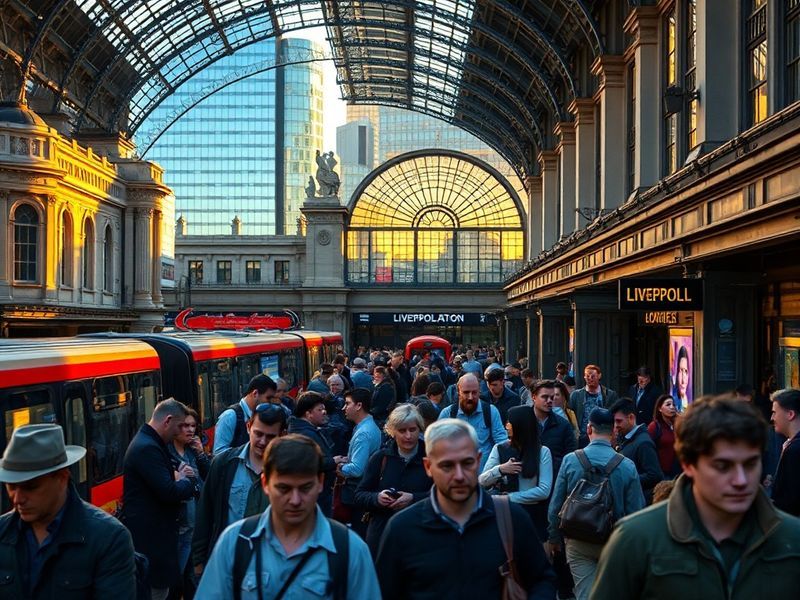
Liverpool Street: History, Transport & Culture in London
“`html
Liverpool Street: A London Hub Through Time and Culture
Liverpool Street is one of London’s most iconic transport interchanges, a place where history, commerce, and daily commuting intersect. Since its opening in 1874, the station has evolved from a Victorian-era railway terminus into a modern transport nexus serving millions each year. Beyond its functional role, Liverpool Street has embedded itself in the city’s cultural fabric, appearing in literature, film, and local memory as a symbol of London’s relentless pace and enduring character.
Its location in the City of London financial district means it is not just a gateway for travelers but also a vital artery for the capital’s workforce. With connections to the London Underground, National Rail, and soon Crossrail, Liverpool Street remains at the forefront of the city’s evolving transport network. This article explores the station’s history, its role in modern London, and the ways it has shaped—and been shaped by—the city around it.
The History of Liverpool Street Station
Liverpool Street Station opened on February 2, 1874, as the London terminus of the Great Eastern Railway. Designed by architect Edward Wilson, the original building featured a grand façade with a central arch flanked by two towers, reflecting the opulence of the Victorian era. The station was built to accommodate the growing demand for rail travel, particularly from East Anglia and beyond, as London expanded rapidly during the Industrial Revolution.
In its early decades, Liverpool Street was more than a transport hub—it was a social space. The Great Eastern Hotel, opened in 1884 and still operating today, became a destination for travelers and London’s elite. The station also played a role in wartime history, serving as a key site during both World Wars. During World War II, its location made it a target for bombing, and parts of the station were damaged in the Blitz. The resilience of the station mirrored that of the city itself, rebuilt and reopening in 1951 after extensive repairs.
The station underwent significant redevelopment in the late 20th century, including the construction of the Broadgate development in the 1980s, which transformed the surrounding area into a bustling commercial district. Today, remnants of its Victorian past can still be seen in the station’s architecture, particularly in the restored façade and parts of the original concourse.
Liverpool Street as a Transport and Business Hub
Liverpool Street is one of the busiest stations in the UK, serving over 65 million passengers annually. It is a major hub for both National Rail and the London Underground, with the Central, Circle, Hammersmith & City, and Metropolitan lines converging here. The station’s location in the heart of the City of London makes it essential for the daily commute of thousands of financial professionals, tech workers, and service industry employees.
The station’s role extends beyond commuting. It is a key interchange for travelers heading to and from destinations across the UK, including Stansted Airport via the Stansted Express. With the Elizabeth Line (Crossrail) now operational, Liverpool Street has further cemented its position as a critical link in London’s transport network, reducing journey times and improving connectivity to the west and east of the city.
Surrounding Liverpool Street is a dense cluster of office buildings, banking towers, and corporate headquarters. The area is home to major financial institutions, law firms, and tech companies, making it one of the most economically significant districts in the UK. The station’s proximity to these businesses ensures its continued relevance as a vital cog in London’s economic engine.
Key Transport Links from Liverpool Street
- National Rail: Services to East Anglia, including Norwich, Ipswich, and Cambridge, as well as Stansted Airport.
- London Underground: Connections to the Central, Circle, Hammersmith & City, and Metropolitan lines.
- Elizabeth Line (Crossrail): Direct links to Paddington, Canary Wharf, and Reading.
- London Buses and Taxis: Extensive bus network and taxi ranks for last-mile connectivity.
Liverpool Street in Popular Culture
Liverpool Street has long captured the imagination of writers, filmmakers, and artists, often serving as a backdrop to stories of ambition, anonymity, and urban life. In literature, the station has been immortalized in works such as Monica Ali’s Brick Lane, where it represents the crossing points of different cultures and classes in London. The station’s role as a gateway to the East End and beyond makes it a symbol of the city’s diversity and constant motion.
In film, Liverpool Street has appeared in several notable productions. The 1967 thriller The IPCRESS File features scenes set in and around the station, reflecting the Cold War tensions of the era. More recently, the station has been used in films like Paddington 2 and TV series such as Doctor Who, where its historic architecture provides a visually striking setting. The station’s appearance in popular culture underscores its status as an enduring symbol of London’s identity.
Beyond its cinematic and literary appearances, Liverpool Street has also been a muse for photographers and artists. Its juxtaposition of old and new—Victorian arches against modern glass facades—offers a visual narrative of London’s continuous evolution. The station’s role in popular culture ensures that it remains more than just a functional space; it is a cultural landmark in its own right.
The Future of Liverpool Street
Liverpool Street is not resting on its laurels. The station is currently undergoing further redevelopment as part of a £1 billion investment to modernize and expand its facilities. This includes improvements to the Underground station, new retail and dining spaces, and enhanced accessibility for passengers with disabilities. The project aims to create a more seamless and enjoyable experience for the millions who pass through each year.
One of the most significant changes is the integration of the Elizabeth Line, which has already begun to transform the way people travel across London. By reducing congestion on other lines and providing faster connections to key destinations, the Elizabeth Line is expected to further boost Liverpool Street’s importance as a transport hub. The station’s role in this expanded network will be crucial in supporting London’s growing population and economy.
Beyond transport, the area surrounding Liverpool Street continues to evolve. The Broadgate development, which surrounds the station, is undergoing further expansion, adding new office spaces, cultural venues, and public areas. These changes reflect a broader trend in London, where historic landmarks are being reimagined to meet the needs of a modern, dynamic city.
Liverpool Street’s future is not just about bricks and mortar; it is about preserving the station’s heritage while embracing innovation. As London continues to grow and change, Liverpool Street will remain a constant, a place where the past and future of the city intersect.
Why Liverpool Street Matters
Liverpool Street is more than just a station—it is a microcosm of London itself. It embodies the city’s history, from its Victorian origins to its role in the modern economy. It is a place of transit, where millions of journeys begin and end each day, and a cultural touchstone that has inspired artists, writers, and filmmakers for generations. Its continued relevance is a testament to its adaptability and enduring significance.
For commuters, it is a vital part of their daily routine. For travelers, it is a gateway to the city. For Londoners, it is a familiar landmark that has witnessed the city’s triumphs and challenges. As London looks to the future, Liverpool Street will undoubtedly remain at the heart of the city’s story, a place where history and modernity coexist.
Whether you’re passing through its grand arches, catching a train to the coast, or simply soaking in its atmosphere, Liverpool Street offers a glimpse into the soul of London. It is a reminder that in a city of constant change, some places remain timeless.
For those interested in exploring more about London’s transport history, check out our Travel section. To dive deeper into the cultural impact of London’s landmarks, visit our Culture category.