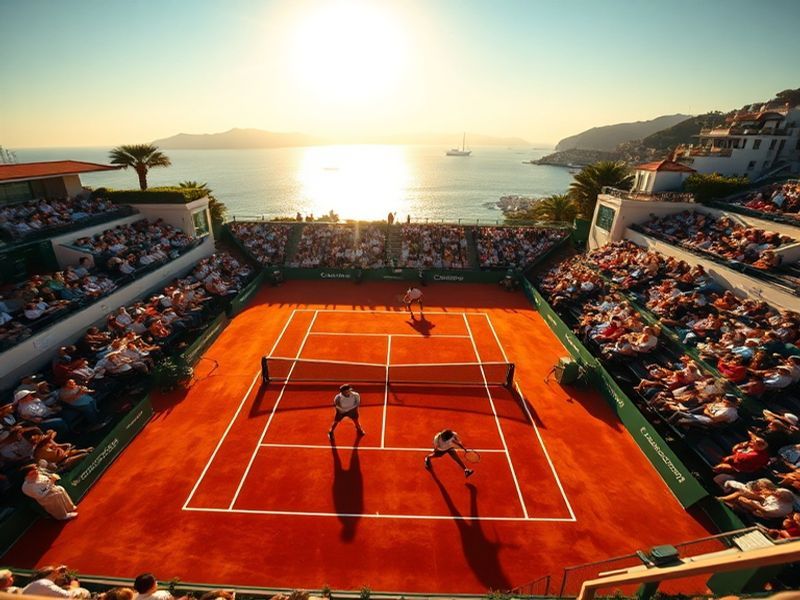
Tennis Meets Mediterranean Splendor
The ATP Monte Carlo Masters, officially known as the Rolex Monte-Carlo Masters, stands as one of professional tennis’s most iconic events. Held annually in Roquebrune-Cap-Martin, France—just across the border from Monaco—the tournament blends elite athleticism with the opulence of the French Riviera. Since its inception in 1897, the event has evolved from a regional gathering into a global spectacle, drawing the sport’s top players and a sophisticated international audience.
Unlike other Masters 1000 events, Monte Carlo retains a unique charm rooted in tradition and exclusivity. The clay courts, sun-drenched boulevards, and Belle Époque architecture create an atmosphere that feels both timeless and exclusive. It’s a tournament where legends are forged, rivalries deepen, and the sport’s cultural significance shines as brightly as the Mediterranean sun.
A Stage for Clay Court Mastery
Monte Carlo is the first major clay-court tournament of the ATP season, making it a crucial proving ground for players who thrive on the red dirt. The slow, high-bouncing surface demands exceptional endurance, tactical precision, and shot-making creativity. For many athletes, success here sets the tone for the rest of the clay-court swing, culminating at the French Open.
Over the decades, the tournament has been dominated by some of the greatest clay-court specialists in history. Rafael Nadal, the undisputed “King of Clay,” has claimed the title a record twelve times, his dominance on the surface nearly absolute. His rivalry with Novak Djokovic—who has won the event twice—has added another layer of drama, with their matches often transcending mere competition to become tennis theater.
- Rafael Nadal: 12 titles (2005–2012, 2016–2018, 2022)
- Björn Borg: 4 titles (1977, 1979, 1980, 1981)
- Novak Djokovic: 2 titles (2013, 2015)
- Guillermo Vilas: 2 titles (1976, 1982)
But Monte Carlo’s significance extends beyond its champions. It’s a tournament where underdogs have risen, where grass-to-clay transitions have reshaped careers, and where the mental resilience of players is tested as much as their physical prowess. The event’s prestige is reflected in its draw, which often features the ATP’s top seeds weeks before the French Open.
Global Appeal and Cultural Fusion
The ATP Monte Carlo Masters is more than a sporting event; it’s a cultural phenomenon that bridges sports, fashion, and high society. The tournament’s location in the heart of the Riviera ensures a global draw of spectators, from tennis purists to jet-setters and celebrities. The Monte Carlo Country Club, with its lush gardens and grandstands overlooking the sea, offers a backdrop that few sporting venues can match.
This fusion of sport and glamour is a hallmark of European tennis. Events like Wimbledon and the Italian Open share this tradition, but Monte Carlo’s proximity to Monaco—home to the Formula 1 Grand Prix and one of the world’s most affluent cities—elevates its status. The tournament’s invitation list often reads like a who’s who of global elite, from royalty to Hollywood stars, all drawn to the allure of the Côte d’Azur.
Culturally, the event reflects the broader trends in tennis. The rise of players like Carlos Alcaraz and Jannik Sinner has brought a new generation of athleticism and showmanship to the clay, captivating younger audiences. Meanwhile, the tournament’s commitment to sustainability—through initiatives like carbon-neutral travel and waste reduction—signals its adaptation to modern global challenges.
Economic and Sporting Impact
The ATP Monte Carlo Masters is a powerhouse in the tennis economy. As one of the ATP’s nine Masters 1000 events, it offers the highest prize money outside the Grand Slams, with the 2023 champion earning over €1 million. This financial incentive attracts the sport’s elite, ensuring a consistently high level of competition.
The tournament also plays a pivotal role in Monaco’s local economy. Hotels, restaurants, and luxury brands benefit from the influx of visitors, while the event itself generates millions in tourism revenue. The Monaco government’s support underscores the tournament’s importance, not just as a sporting event but as a cornerstone of the principality’s global brand.
For players, the prestige of winning in Monte Carlo extends beyond the trophy. It’s a statement of dominance on the surface, a confidence boost heading into Roland Garros, and a career-defining achievement. The tournament’s history is littered with moments that have shaped tennis lore, from Björn Borg’s early victories to Nadal’s record-breaking streaks.
The Future of Monte Carlo
As tennis continues to evolve, the ATP Monte Carlo Masters faces both challenges and opportunities. The rise of hard-court dominance in modern tennis has led some to question the relevance of traditional clay events. Yet, Monte Carlo’s unique blend of history, culture, and competition ensures its enduring appeal.
Innovations like expanded fan experiences, digital engagement, and sustainability initiatives are helping the tournament stay relevant. The ATP’s push for global expansion also presents opportunities, with younger audiences from Asia and the Americas increasingly drawn to the sport. Monte Carlo, with its international flair, is well-positioned to capitalize on this growth.
For now, the tournament remains a jewel in tennis’s crown. Its legacy is secure, its present is vibrant, and its future is full of potential. Whether you’re a tennis aficionado, a fashion enthusiast, or simply someone who appreciates the finer things in life, Monte Carlo offers an experience that transcends the sport itself.
As the sun sets over the Mediterranean and the echoes of tennis balls resound across the clay, one thing is clear: the ATP Monte Carlo Masters is not just a tournament. It’s a celebration of excellence, tradition, and the timeless allure of the French Riviera.
For more insights into the world of professional tennis, visit our Sports category.