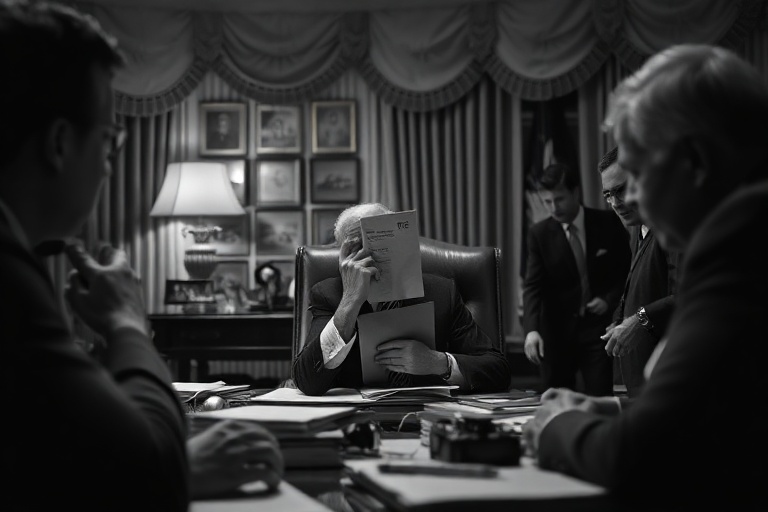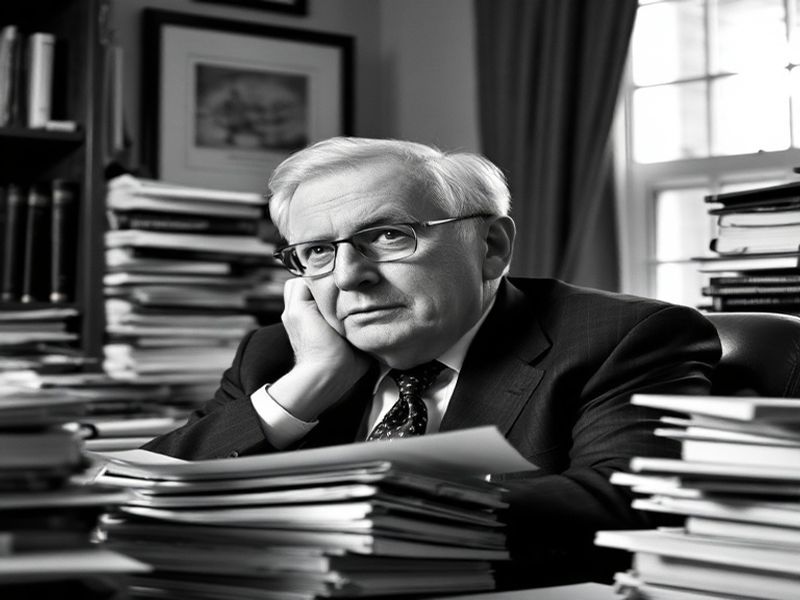
Few names in American journalism carry the weight and recognition of Bob Woodward. For over five decades, he has shaped the field of investigative reporting through relentless pursuit of truth, often at significant personal and professional risk. His work has not only exposed government misconduct but also redefined public trust in media. From uncovering Watergate to chronicling modern political crises, Woodward’s career offers a masterclass in the power—and responsibility—of journalism.
Born in 1943 in Geneva, Illinois, Woodward initially pursued a career in the Navy before transitioning to journalism. His early years at The Washington Post were unremarkable until a fateful assignment in 1972 led to one of the most consequential collaborations in media history. Paired with Carl Bernstein, Woodward’s meticulous approach to sourcing and verification became the gold standard for investigative work. Their coverage of the Watergate scandal not only brought down a presidency but also demonstrated how persistent journalism could hold power accountable.
The Watergate Breakthrough: A New Era of Investigative Journalism
Woodward’s breakthrough came during the Watergate investigation, a case that would redefine his career and the role of the press. The scandal began with a seemingly minor burglary at the Democratic National Committee headquarters in 1972, but Woodward and Bernstein quickly uncovered a web of corruption linking the Nixon administration to illegal activities. Their reporting relied heavily on anonymous sources, particularly a figure known only as “Deep Throat,” later revealed to be FBI Associate Director W. Mark Felt.
Their work was not without controversy. Critics accused Woodward and Bernstein of sensationalism, while Nixon’s administration dismissed their reporting as politically motivated. Yet, their persistence paid off. The Post’s coverage, combined with the release of the White House tapes, led to Nixon’s resignation in 1974. This moment cemented Woodward’s reputation as a journalist willing to confront power directly.
The Watergate era also highlighted Woodward’s distinctive methodology. He famously used a system of meticulously tracking information, often storing details in a series of notebooks and cross-referencing sources to ensure accuracy. This approach became a blueprint for investigative journalism, influencing generations of reporters.
From Watergate to 9/11: A Career Spanning Decades and Crises
Following Watergate, Woodward continued to break major stories, transitioning from reactive investigations to in-depth profiles of political figures. His 1979 book All the President’s Men, co-authored with Bernstein, became a bestseller and solidified their legacies. But Woodward’s work didn’t stop there. Over the next 40 years, he authored or co-authored 21 nonfiction books, many of which became definitive accounts of modern American history.
Some of his most notable works include Veil: The Secret Wars of the CIA, 1981-1987, which exposed the agency’s covert operations, and Plan of Attack (2004), which detailed the Bush administration’s decision-making before the Iraq War. Woodward’s ability to secure interviews with high-ranking officials—often on the condition of anonymity—gave his books an unparalleled depth of insight.
His 2002 book Bush at War provided an unprecedented look at the White House’s response to 9/11, revealing internal debates and tensions. The book was praised for its access but also criticized for its sympathetic portrayal of the administration. Still, it underscored Woodward’s unique position as a journalist who could navigate the corridors of power while maintaining critical distance.
Woodward’s later work has also tackled the Trump administration, with books like Fear: Trump in the White House (2018) and Rage (2020) offering behind-the-scenes accounts of decision-making within the White House. These books, based on interviews with senior officials, painted a portrait of a president often at odds with his own administration. While some critics argued that Woodward’s reliance on anonymous sources weakened his credibility, others saw his work as essential to understanding the turbulence of the era.
The Woodward Method: How He Sources and Verifies Information
One of the most debated aspects of Woodward’s career is his use of anonymous sources. While some journalists argue that such reliance erodes public trust, Woodward has defended the practice as necessary for accessing information that would otherwise remain hidden. His method involves building relationships with sources over years, often through informal meetings and unstructured conversations.
Woodward’s reporting is also characterized by his rigorous verification process. He cross-checks information with multiple sources, often revisiting the same topic over months or years to ensure accuracy. This approach has made his work highly influential, even as it has drawn criticism from those who believe it blurs the line between journalism and access journalism.
His books are often structured as narrative nonfiction, blending reconstructed dialogue with documented events. Critics argue that this style can sometimes blur the line between fact and interpretation. Yet, Woodward’s ability to secure cooperation from powerful figures—while still holding them accountable—remains unmatched in modern journalism.
Legacy and Criticism: The Double-Edged Sword of Power Journalism
Woodward’s influence on journalism is undeniable. He has received nearly every major award in the field, including two Pulitzer Prizes, and his work has shaped how reporters approach investigative and political journalism. Yet, his legacy is not without controversy. Some critics argue that his proximity to power has compromised his objectivity, while others believe his reliance on anonymous sources has contributed to the erosion of public trust in media.
Woodward has also faced scrutiny for his financial success. His books have sold millions of copies, and he has become a sought-after commentator on political affairs. While some see this as a testament to his impact, others view it as evidence of a conflict of interest, particularly when he interviews figures whose actions he later critiques in print.
Despite these criticisms, Woodward’s contributions to journalism remain monumental. He has demonstrated how reporting can shape history, and his work continues to inspire journalists worldwide. In an era of misinformation and declining trust in media, Woodward’s career offers a reminder of the importance of persistence, verification, and courage in the pursuit of truth.
Key Takeaways from Bob Woodward’s Career
- Persistence Pays Off: Woodward’s Watergate reporting proved that even the most entrenched power structures can be challenged through diligent journalism.
- Access vs. Accountability: His ability to secure interviews with high-ranking officials has given his work unparalleled insight but also sparked debates about journalistic independence.
- Verification Over Speed: Woodward’s methodical approach to sourcing and fact-checking sets a standard for accuracy in an era of instant news.
- Legacy of Influence: From exposing government overreach to shaping public perception of major events, Woodward’s work has redefined the role of the journalist in society.
For aspiring journalists, Woodward’s career offers both a model and a cautionary tale. His work demonstrates the power of journalism to hold power accountable, but it also highlights the challenges of maintaining objectivity in a media landscape increasingly dominated by access and speed. As Woodward himself has said, “The primary purpose of journalism is to tell the truth so that people will have the information they need to be sovereign.” In an age of misinformation, that mission has never been more critical.
For those interested in exploring more about the evolution of investigative journalism, you can dive into the News section of Dave’s Locker. To understand how modern scandals compare to historical ones, the Analysis category offers deeper insights into the tools and techniques shaping today’s media landscape.
Bob Woodward’s career is a testament to the enduring power of journalism. In a world where truth is often contested, his work reminds us that accountability begins with a single question—and the courage to pursue the answer.