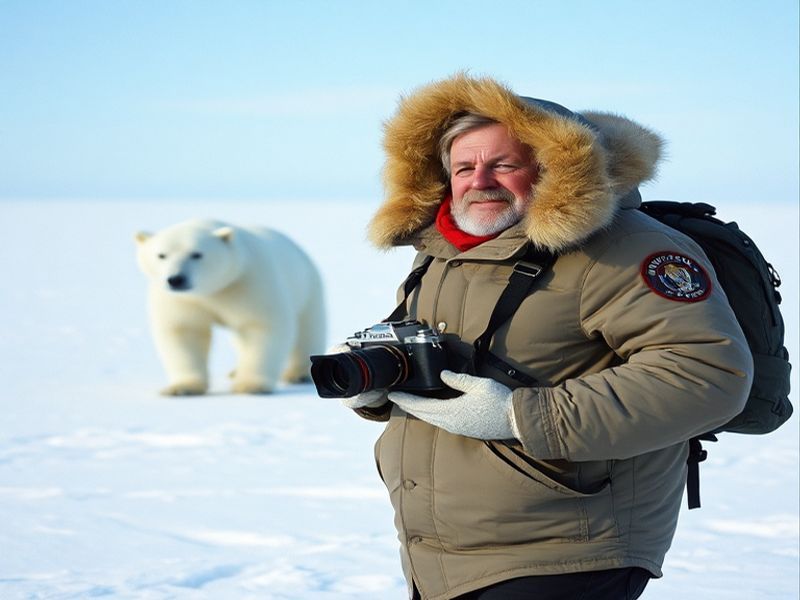
Doug Allan: How One Filmmaker Changed Our View of the Ocean
“`html
Doug Allan: The Man Who Defined Underwater Filmmaking
Few names resonate as strongly in the world of underwater cinematography as Doug Allan. For over four decades, this Scottish filmmaker has captured the planet’s most elusive marine life with a precision and artistry that few can match. His work behind the camera has not only entertained millions but also educated the public about the fragility and beauty of ocean ecosystems.
Allan’s career spans the golden age of natural history filmmaking, from his early days with the BBC’s Natural History Unit to his collaborations with legendary figures like David Attenborough. His footage has graced some of the most iconic nature documentaries ever produced, including Planet Earth, Blue Planet, and Frozen Planet. Yet, beyond the accolades and global recognition, Allan’s true legacy lies in his ability to bring the unseen world of the deep into sharp focus.
The Early Years: From Polar Explorer to Filmmaker
Doug Allan’s journey into the depths of the ocean began far from the water. Born in 1952 in Scotland, Allan initially pursued a degree in marine biology at the University of St. Andrews. His fascination with marine life led him to the icy waters of the Arctic and Antarctic, where he worked as a diver and wildlife photographer. These early expeditions honed his skills in extreme environments, teaching him the patience and resilience required to document life in some of the planet’s harshest conditions.
In the late 1970s, Allan transitioned from science to filmmaking, joining the BBC’s Natural History Unit. His first major project was The Living Planet, a groundbreaking series hosted by David Attenborough. Allan’s ability to capture rare and fleeting moments—such as the courtship dance of penguins or the hunt of a leopard seal—quickly made him a sought-after cinematographer. His work stood out for its technical precision, artistic composition, and an almost poetic sense of timing.
Key Milestones in Allan’s Career
- 1980s: Worked on The Living Planet and The Trials of Life, establishing himself as a leading underwater filmmaker.
- 1990s: Joined the Blue Planet team, contributing to what would become one of the most influential nature documentaries of all time.
- 2000s: Filmed in the Arctic and Antarctic for Frozen Planet, showcasing the impacts of climate change on polar ecosystems.
- 2010s: Continued to push boundaries with Planet Earth II, using cutting-edge technology to capture previously unseen behaviors in marine life.
Mastering the Art of Underwater Cinematography
Allan’s work is distinguished by its technical mastery and emotional depth. Unlike many wildlife filmmakers who rely on telephoto lenses or hidden cameras, Allan often immerses himself in the environment alongside his subjects. This approach requires not only exceptional diving skills but also an intimate understanding of animal behavior. Whether he’s filming orcas in the freezing waters of the Antarctic or documenting the delicate ecosystems of coral reefs, Allan’s footage feels alive with movement and purpose.
One of Allan’s most celebrated sequences comes from Blue Planet, where he captured the first-ever footage of a humpback whale using a bubble net to corral fish. The patience required to wait for such a moment—sometimes for days or weeks—highlights the dedication behind his craft. Allan has often spoken about the importance of observation, noting that the best moments in nature documentaries are not staged but discovered through meticulous patience.
His technical innovations have also set new standards in the industry. Allan was among the first to use high-definition cameras in underwater filming, a move that revolutionized the clarity and detail of marine life footage. He has also pioneered the use of slow-motion techniques to reveal behaviors invisible to the naked eye, such as the intricate movements of plankton or the rapid strikes of a sea lion hunting fish.
The Broader Impact of Allan’s Work
Doug Allan’s influence extends far beyond the screen. His footage has played a crucial role in conservation efforts, bringing attention to endangered species and threatened habitats. For example, his work in the Arctic for Frozen Planet provided stark visual evidence of melting ice caps, a key talking point in discussions about climate change. Similarly, his documentation of plastic pollution in Blue Planet II sparked global outrage and policy changes, including the UK’s ban on single-use plastics.
Allan’s ability to connect with audiences on an emotional level has made him a powerful advocate for ocean conservation. Unlike many nature documentaries that focus solely on the exotic or the dramatic, Allan’s work often highlights the interconnectedness of marine ecosystems. His footage of krill swarms, for instance, underscores how a single species can sustain entire food chains, from whales to seals to penguins. This holistic approach has helped shift public perception, moving beyond the idea of the ocean as a distant, abstract entity to one that is intimately tied to human survival.
Moreover, Allan’s career reflects the evolution of natural history filmmaking itself. In an era where CGI and digital effects dominate entertainment, his work serves as a reminder of the raw power of real-world footage. His documentaries prove that nature is the greatest storyteller of all, capable of captivating audiences without embellishment.
Legacy and Future Generations
As Doug Allan approaches his seventh decade, his legacy continues to inspire a new generation of filmmakers. Many of today’s leading underwater cinematographers cite him as a major influence, particularly his emphasis on patience, preparation, and respect for the natural world. Allan himself has mentored younger filmmakers, sharing his hard-earned lessons from decades in the field.
Yet, despite his success, Allan remains grounded in his mission. In interviews, he often speaks about the urgency of his work, emphasizing that every minute of footage could be the last chance to document a species or habitat. This sense of urgency is more relevant than ever, as climate change and human activity continue to threaten marine ecosystems at an unprecedented rate.
For aspiring filmmakers, Allan’s career offers a blueprint for blending artistry with advocacy. His ability to turn scientific observation into compelling storytelling demonstrates that filmmaking can be both a creative endeavor and a force for change. As technology advances, the tools available to filmmakers will evolve, but Allan’s core principles—patience, precision, and respect for nature—will remain timeless.
In a media landscape often dominated by sensationalism and quick consumption, Doug Allan’s work stands as a testament to the power of slow, deliberate storytelling. His footage doesn’t just show us the ocean; it invites us to fall in love with it—and that love is the first step toward protecting it.
For those looking to explore more about the intersection of nature, science, and filmmaking, be sure to check out our Nature and Documentaries categories on Dave’s Locker. Whether you’re a filmmaker, a scientist, or simply someone who appreciates the beauty of the natural world, these pages offer a wealth of insights and inspiration.
Final Thoughts
Doug Allan’s career is a reminder that the best stories are often the ones we haven’t yet heard—or seen. His work challenges us to look closer, to listen harder, and to recognize that the ocean’s mysteries are not just for scientists or explorers but for all of us. In an age of distraction, Allan’s footage invites us to slow down, to marvel, and to act. That is the true power of great filmmaking.