From Refugee to Record-Breaker: Farah’s Humble Beginnings
Mohamed Muktar Jama Farah was born on March 23, 1983, in Somaliland, a region that would later become the independent state of Somaliland. His childhood was marked by hardship. When Farah was just eight years old, he was sent to live with relatives in Djibouti, fleeing the civil unrest in his homeland. At nine, his journey took another dramatic turn when he was flown to London under the care of a family friend, joining relatives in Hounslow, West London. The transition was not easy. Farah struggled with English and found himself in a new culture, far removed from the arid landscapes of Somaliland. Yet, within this unfamiliar environment, he discovered running—a sport that would redefine his life.
His talent was evident early. Farah joined his school’s athletics club and began competing in local races. By his teens, he was already making waves in British junior competitions. His natural endurance and determination caught the attention of coaches, including Alan Watkinson, who would become a pivotal figure in his development. Farah’s rise from a refugee child to a global athletics star is a testament to resilience and the transformative power of sport. It’s a story that resonates far beyond the track, offering a narrative of hope and perseverance in the face of adversity.
The Making of a Distance Legend
Farah’s breakthrough came in 2010 when he won the European Athletics Championships in Barcelona, claiming gold in both the 5,000 meters and 10,000 meters. It was a defining moment. At 27, he had arrived as a force to be reckoned with in distance running. What set Farah apart was not just his speed but his tactical intelligence. He mastered the art of surging in the final laps, a strategy that became his trademark. His rivalry with Ethiopia’s Kenenisa Bekele and Eritrea’s Zersenay Tadese pushed him to new heights, creating some of the most thrilling races in modern athletics.
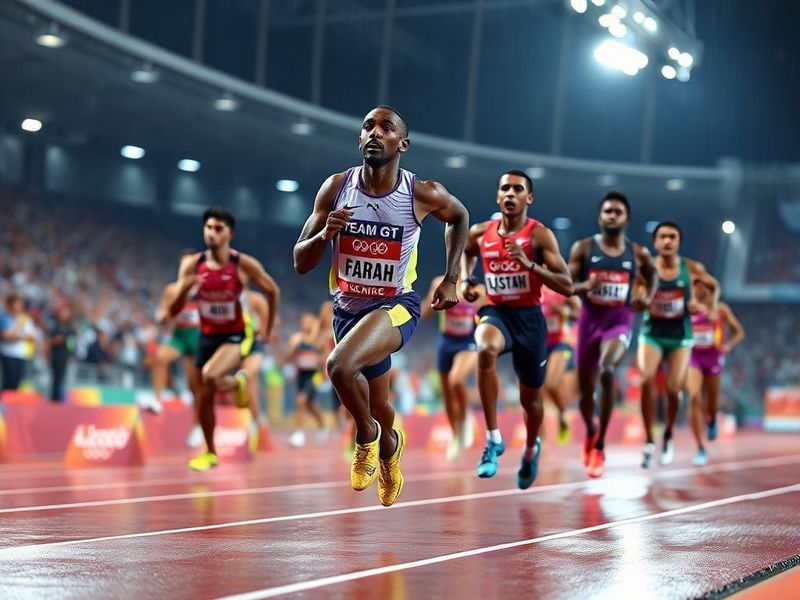
His dominance peaked at the 2012 London Olympics. Farah won gold in the 5,000 meters and 10,000 meters, becoming the first British track athlete to achieve this feat. The home crowd erupted as he crossed the finish line, a moment that transcended sport. It wasn’t just a victory; it was a cultural moment for the UK, particularly for its immigrant communities. Farah’s success challenged stereotypes and highlighted the diversity of British athletics. His celebration—complete with the iconic “Mobot,” a dance move combining a “M” shape with a robot impression—became an instant icon, symbolizing joy and individuality.
Farah’s training regimen was as disciplined as it was grueling. Based in Portland, Oregon, he trained under coach Alberto Salazar, pushing his body to extremes. His work ethic was legendary. He often ran 100-mile weeks, combining long endurance sessions with high-intensity intervals. Yet, Farah balanced this intensity with a grounded personality. He remained approachable, often engaging with fans and sharing his journey openly. This combination of elite performance and relatability endeared him to millions worldwide.
A Global Icon Beyond the Track
Farah’s influence extended far beyond his athletic achievements. He became a symbol of integration and success in the UK. His story—of a refugee finding belonging and excellence—resonated deeply in a country grappling with its identity in a post-Brexit world. Farah embraced this role, using his platform to advocate for refugee rights and community cohesion. In 2017, he revealed a shocking truth: he had been trafficked to the UK as a child and forced into domestic servitude. His disclosure highlighted the hidden struggles of refugees and the importance of safeguarding vulnerable individuals. Farah’s bravery in sharing his story brought global attention to the plight of trafficked children, amplifying calls for systemic change.
His philanthropic efforts further cemented his legacy. Farah established the Mo Farah Foundation, which supports education and healthcare initiatives in Somaliland and Djibouti. He also partnered with organizations like UNICEF and Save the Children, using his voice to address humanitarian crises. In 2020, he was appointed a Knight Bachelor in the Queen’s Birthday Honours for services to athletics and charity, a recognition that underscored his impact beyond sport.
The Farah Effect: How He Changed British Athletics
Before Farah, British distance running was largely the domain of women like Paula Radcliffe. Farah’s success inspired a generation of athletes, particularly those from diverse backgrounds. His achievements paved the way for others like Andrew Butchart and Eilish McColgan, who have since made their mark on the global stage. Clubs across the UK saw surges in membership, with many young athletes citing Farah as their motivation. His influence extended to coaching, as well, with British Athletics investing more in middle- and long-distance programs to replicate his success.
The “Farah Effect” wasn’t just about medals. It was about visibility. For years, British athletics had struggled to attract diverse talent. Farah’s rise changed that narrative. He proved that success in sport wasn’t limited by background or upbringing. His story became a blueprint for aspiring athletes, showing that talent, combined with opportunity and support, could overcome even the most daunting obstacles. This shift had ripple effects across other sports, encouraging diversity and inclusion initiatives in British athletics and beyond.
Farah’s rivalry with Ethiopia’s Hagos Gebrhiwet and Kenya’s Geoffrey Kamworor added another layer to his legacy. Their battles in races like the 2017 World Championships in London were electric, showcasing the highest level of competition. Farah’s ability to perform under pressure in these high-stakes moments solidified his reputation as one of the greatest distance runners of all time. His rivalry wasn’t just about winning; it was about pushing the boundaries of what was possible in the sport.
The Post-Retirement Chapter: A Lasting Legacy
Farah announced his retirement from track in 2023, leaving behind a career that spanned over two decades. His final competitive race was the Big Half Marathon in London, where he finished third. It was a poignant end to a storied career. Farah’s retirement marked the close of an era in distance running, but his influence continues to grow. He transitioned seamlessly into a role as a pundit and commentator, sharing his insights with a new generation of fans. His presence in the media—whether as a pundit for the BBC or a guest on sports shows—kept him connected to the sport he loved.
Beyond the track, Farah’s business ventures have thrived. He launched his own clothing line, “Farah,” in collaboration with fashion brand JD Sports, and has partnered with brands like Lucozade and Nike. His entrepreneurial spirit reflects his ability to leverage his brand while staying authentic to his values. Farah also ventured into writing, publishing his memoir “Ready” in 2013, which became a bestseller. The book offered a raw and honest look at his journey, from his childhood in Somaliland to his Olympic triumphs. It was a reminder that his story was as much about resilience as it was about running.
Looking ahead, Farah’s focus remains on giving back. He continues to support initiatives that empower young people, particularly those from disadvantaged backgrounds. His foundation’s work in Somaliland and Djibouti is expanding, with plans to build schools and healthcare facilities. Farah’s commitment to his roots is unwavering, proving that his legacy is not just about what he achieved on the track but how he uses his platform to create change.
Why Mo Farah’s Story Still Matters
In an era where athletes are often reduced to their statistics or social media presence, Farah’s story stands out. It’s a reminder that sport is about more than victories; it’s about people, perseverance, and purpose. Farah’s journey from a refugee child to a global icon is a narrative that transcends athletics. It speaks to the power of sport as a tool for social change, integration, and personal growth. His impact is felt not just in the medals he won but in the lives he has touched.
For young athletes, Farah’s story is a lesson in discipline and determination. His ability to balance relentless training with personal humility offers a blueprint for success. For communities, his story is a celebration of diversity and the contributions of immigrants. And for the world of athletics, he leaves behind a standard of excellence that future generations will strive to match.
As Farah steps away from competitive running, his legacy is secure. He has redefined what it means to be a distance runner and an athlete. But more importantly, he has redefined what it means to be a role model. His story is far from over. Whether through his charitable work, his media presence, or his ongoing influence in British athletics, Farah continues to inspire. In a world often divided by borders and backgrounds, his journey reminds us that greatness is not confined by circumstance. It’s forged through hard work, courage, and an unshakable belief in oneself.
For more stories on athletes who’ve made a global impact, explore our Sports category.