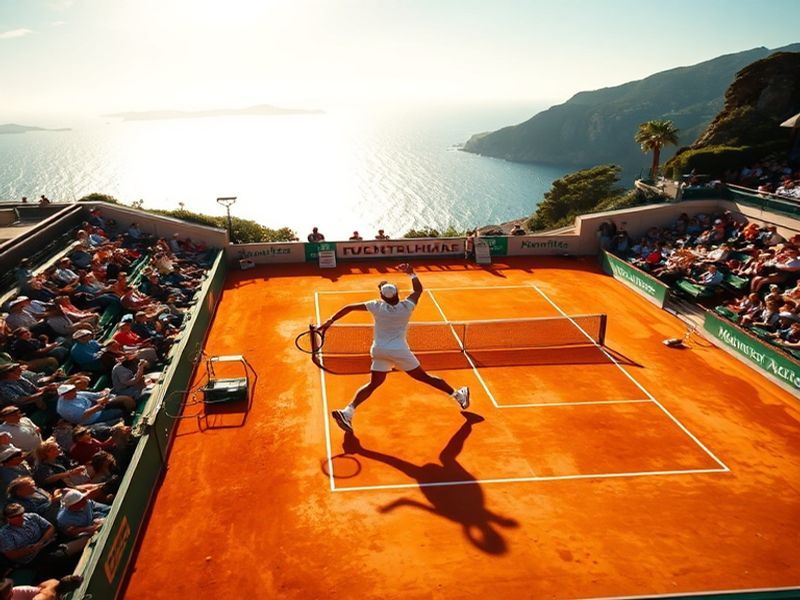
The Monte-Carlo Masters isn’t just another clay-court tournament. It’s a rite of passage, a proving ground where tennis’s past and future collide under the Mediterranean sun. As the first ATP Masters 1000 event of the European clay-court swing, the tournament has long been a barometer of form, a stage for redemption, and a crucible for greatness.
This year’s edition continued that tradition, delivering drama, upsets, and moments that will echo through the season. But beyond the baseline rallies and trophy lifts lies something deeper: the Monte-Carlo Masters is quietly shaping the narrative of modern tennis, one match at a time.
The Tournament’s Unique Place in Tennis History
Founded in 1897, the Monte-Carlo Masters is the oldest tennis tournament in the world still held in its original location. That heritage matters. It gives the event a gravitas few others can match. The red clay of the Monte-Carlo Country Club isn’t just a surface; it’s a character in every match, demanding patience, tactical brilliance, and physical endurance.
Unlike other Masters 1000 events, Monte-Carlo retains its independence and exclusivity. Players don’t just show up—they arrive with intention. The draw is smaller than most Masters 1000 tournaments, and the clay demands a different kind of preparation. It’s a tournament where specialists thrive and pretenders falter.
Over the decades, legends have etched their names into Monte-Carlo’s history. From the relentless baseline mastery of Rafael Nadal—who won the title a record 11 times—to Björn Borg’s dominance in the late 1970s, the tournament has been a stage for both continuity and reinvention.
A Stage for Both Veterans and Rising Stars
One of the most compelling aspects of the Monte-Carlo Masters is its ability to bridge generational gaps. Veteran players like Novak Djokovic and Andy Murray arrive with something to prove, while young stars like Holger Rune and Jannik Sinner use the tournament to announce their arrival on the sport’s biggest stages.
This year was no exception. While Djokovic continued his quest for a 30th Masters 1000 title, younger players pushed the envelope. The semifinal between Rune and Casper Ruud was a masterclass in modern clay-court tennis—high-risk, high-reward, and endlessly entertaining. These matches aren’t just about points; they’re about momentum.
For rising players, Monte-Carlo is a chance to test themselves against the best before the year’s Grand Slams. The clay slows the ball down, rewards precision, and forces creativity. It’s a surface where raw power can be neutralized, where strategy trumps athleticism alone. That’s why a strong showing here often translates into confidence for Roland Garros.
The Tactical Chessboard of Clay Tennis
Clay tennis is a different beast. The slow, high-bouncing ball rewards patience, punishes recklessness, and demands an almost scientific approach to shot selection. At Monte-Carlo, this tactical depth is on full display.
Serves are less dominant. Returns are more effective. Rallies are longer, and the mental aspect becomes as crucial as the physical. Players must adapt in real time, shifting from defensive retriever to aggressive attacker in a single point. It’s tennis as a high-stakes puzzle, and the Monte-Carlo Masters is one of the sport’s most challenging.
This year’s tournament saw several players excel in this environment. Carlos Alcaraz, despite a tough draw, showcased his clay-court prowess with relentless intensity. His ability to slide into position, extend rallies, and finish points with drop shots and lobs made him a fan favorite. Meanwhile, Stefanos Tsitsipas brought his signature blend of power and finesse, using the surface to his advantage with deep, angled groundstrokes.
The clay also exposed weaknesses. Players who rely too heavily on serve-and-volley tactics struggled. Those who lacked the stamina to grind through long rallies found themselves outlasted. The surface doesn’t just test skill—it exposes flaws.
Key Factors in Monte-Carlo Success
Winning at Monte-Carlo isn’t just about talent. It’s about preparation, adaptability, and mental resilience. Here’s what separates the contenders from the also-rans:
- Movement and Slide: The ability to glide across the clay efficiently is non-negotiable. Players who can cover the court with ease dictate rallies.
- Topspin Mastery: Heavy topspin shots are essential for pushing opponents back and creating openings for winners.
- Serve Variety: While not as dominant as on hard courts, a well-placed serve can still set up weak returns on clay.
- Mental Toughness: Long, grueling matches test focus and composure. Players who can stay patient and execute under pressure thrive.
- Adaptability: The ability to shift tactics mid-match—from defensive retriever to aggressive baseliner—is critical.
The Broader Implications of Monte-Carlo’s Legacy
The Monte-Carlo Masters isn’t just a tournament; it’s a microcosm of tennis’s evolution. As the sport becomes faster and more physically demanding, clay remains the great equalizer. It rewards intelligence, patience, and precision—qualities that are becoming increasingly valuable in an era dominated by power and athleticism.
This year’s tournament also highlighted the shifting dynamics of men’s tennis. The ATP Tour is more competitive than ever, with a new generation of players ready to challenge the established order. The results in Monte-Carlo often foreshadow trends for the rest of the season. A strong performance here can propel a player into the French Open with confidence, while a poor showing can derail momentum entirely.
Moreover, the tournament’s influence extends beyond the court. The Monte-Carlo Masters is a cultural event, a gathering of tennis’s elite amidst the glamour of the French Riviera. Sponsors, fans, and media descend on the principality, turning the tournament into a week-long celebration of the sport. This blend of competition and spectacle keeps tennis relevant in the broader sports landscape.
For fans, it’s a chance to see tennis at its most cerebral. For players, it’s a reminder that success isn’t just about speed and power—it’s about craftsmanship. And for the sport itself, it’s a testament to the enduring appeal of clay tennis.
A Glimpse Into the Future
As the 2024 clay-court season continues, the lessons of Monte-Carlo will resonate. Players who excelled here will carry that momentum into Rome and Roland Garros. Those who struggled will look to regroup, knowing that the clay courts of Europe offer a second chance.
But perhaps the most intriguing narrative is the rise of the next generation. Players like Rune, Sinner, and Alcaraz are redefining what it means to succeed on clay. They blend power with creativity, aggression with finesse, and their performances in Monte-Carlo suggest that tennis’s future will be as thrilling as its present.
For now, the red dust of Monte-Carlo has settled. The trophies have been awarded, the memories made. But the tournament’s legacy endures. It’s a reminder that in tennis, as in life, patience and precision often triumph over raw power.
For more insights into the evolution of tennis and the stars who shape it, visit our Sports and Analysis sections.