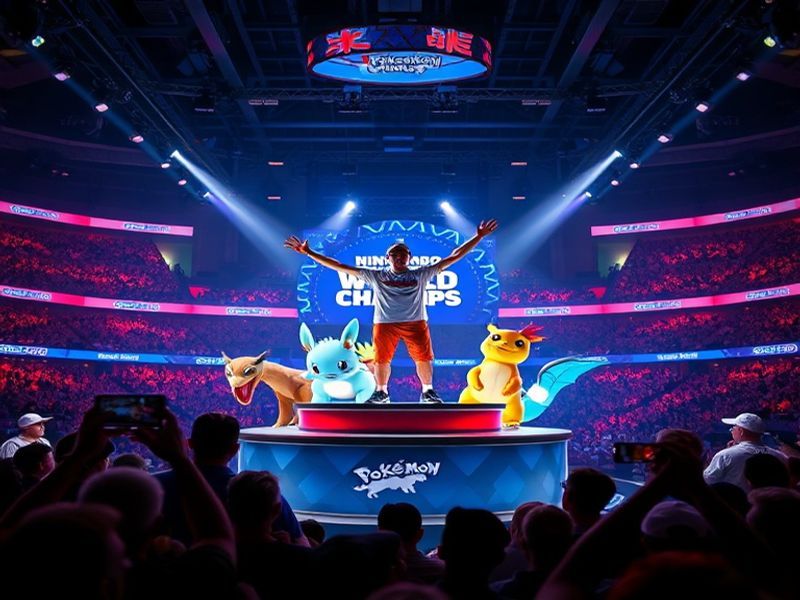
The Pokémon franchise stands as one of Nintendo’s most enduring and influential properties, transcending generations and cultures since its debut in 1996. More than just a game series, Pokémon has evolved into a multimedia empire, shaping the identity of competitive gaming, esports, and digital culture worldwide. At the heart of this phenomenon are the Pokémon Champions—players who have risen to the top through skill, strategy, and dedication.
Nintendo’s investment in competitive Pokémon has paid dividends far beyond traditional sales figures. The company has cultivated a global community where regional differences in playstyle, team composition, and tournament formats converge into a cohesive competitive scene. This blend of tradition and innovation has solidified Nintendo’s role not just as a hardware innovator, but as a cultural architect in interactive entertainment.
The Rise of Competitive Pokémon on Nintendo Platforms
Competitive Pokémon began in earnest with the release of Pokémon Red and Blue in the late 1990s. While the original games weren’t designed with competitive play in mind, players quickly discovered imbalances and strategies that led to the first unofficial tournaments. Nintendo, recognizing the potential, began supporting structured competition through the Pokémon World Championships, first held in 2004.
The introduction of Pokémon Diamond and Pearl in 2006 marked a turning point. The games introduced the Battle Tower and online ranked battles, enabling players to test their teams globally. Nintendo’s integration of Wi-Fi connectivity allowed for seamless matchmaking across continents, laying the foundation for a unified competitive ecosystem. This digital infrastructure was revolutionary at the time, setting a new standard for online console gaming.
Over the years, Nintendo has consistently updated its competitive offerings. The release of Pokémon Sword and Shield in 2019 brought Dynamaxing and the Dynamax Adventures, adding new layers of strategy. While these mechanics were met with mixed reactions, they demonstrated Nintendo’s willingness to evolve the competitive meta, even at the risk of controversy.
Key Milestones in Nintendo’s Competitive Pokémon History
- 2004: First official Pokémon World Championship held in Hawaii.
- 2010: Introduction of Pokémon Black and White, featuring a rotating battle format that revitalized competitive play.
- 2013: Pokémon X and Y introduced Mega Evolution, sparking a new era of team-building and strategy.
- 2016: Pokémon Sun and Moon debuted Z-Moves, offering temporary but powerful abilities in battle.
- 2022: Pokémon Scarlet and Violet launched with the Terastal phenomenon, reshaping competitive viability and team dynamics.
Each generation has brought new mechanics, forcing players to adapt and innovate. Nintendo’s role in maintaining a balanced yet dynamic competitive scene has been crucial in keeping the franchise relevant across decades.
Global Champions: The Faces of a Worldwide Movement
The Pokémon World Championships have become a premier event in esports, drawing thousands of participants from over 50 countries. Unlike many esports titles, Pokémon maintains a strong grassroots presence, with local leagues and regional qualifiers feeding into international finals. This accessibility has helped the game thrive in diverse markets, from Japan and the United States to Brazil and Europe.
In Japan, where Pokémon originated, the competitive scene is deeply tied to the franchise’s cultural legacy. Japanese players are known for their precision and adherence to meta strategies, often pioneering new team archetypes. Meanwhile, in North America, the scene is marked by creativity and a willingness to experiment with off-meta Pokémon, reflecting the region’s individualistic playstyle.
Europe has emerged as a powerhouse in recent years, with countries like Spain, Germany, and the United Kingdom producing top-tier talent. This rise can be attributed to strong regional tournaments, streaming culture, and the influence of European players in online communities. The global distribution of talent ensures that the Pokémon competitive scene remains vibrant and unpredictable.
Notable champions like WolfeyVGC, Aaron “Cybertron” Zheng, and Shota “Shota” Yoshida have become household names in the community. Their influence extends beyond tournaments—through coaching, streaming, and content creation, they help shape the next generation of players. Their stories reflect the diversity of the Pokémon universe itself: talent knows no borders when it comes to mastering this iconic franchise.
Nintendo’s Strategy: Balancing Tradition and Innovation
One of Nintendo’s greatest strengths has been its ability to balance tradition with innovation. The company has maintained the core mechanics of Pokémon—type matchups, turn-based battles, and team composition—while introducing mechanics that refresh the competitive landscape. This approach ensures that long-time players remain engaged while attracting new ones.
However, innovation comes with risks. The introduction of Dynamaxing in Sword and Shield, for example, sparked significant debate. While it added spectacle to battles, many players felt it diluted strategic depth. Similarly, the Terastal mechanic in Scarlet and Violet has been praised for its impact on team-building but criticized for creating power creep and unpredictability.
Nintendo’s response has been measured. The company regularly updates the competitive ruleset through the Pokémon Global Link, adjusting bans and restrictions to maintain balance. This responsive governance has earned trust within the community, even as individual game iterations face scrutiny.
The company also invests heavily in accessibility. Nintendo ensures that competitive Pokémon remains playable across all its platforms, from the Nintendo 3DS to the Nintendo Switch. This inclusivity has helped the franchise reach players in regions with limited access to high-end gaming hardware, further expanding its global footprint.
The Cultural Impact of Pokémon Champions
Beyond competition, Pokémon Champions have become cultural ambassadors. Their success stories are shared across social media, YouTube, and Twitch, amplifying the franchise’s reach. Streamers like Monomi “Monkey” Konno and Aaron Zheng have built careers around Pokémon content, drawing millions of viewers and inspiring aspiring players worldwide.
The influence of Pokémon extends into education and social development. Competitive play teaches strategic thinking, adaptability, and resilience—skills that translate beyond the game. Schools and community centers have used Pokémon tournaments as platforms for youth engagement, fostering teamwork and problem-solving in a fun, inclusive environment.
In Japan, Pokémon has been integrated into educational programs, using the franchise’s popularity to teach concepts like probability and resource management. In Brazil, local leagues have used Pokémon as a tool for social inclusion, bringing together children from diverse backgrounds through shared passion. The franchise’s ability to bridge cultural divides underscores its universal appeal.
Nintendo’s commitment to preserving this legacy is evident in its ongoing support for the Pokémon Company International. Through consistent updates, community engagement, and global tournaments, the company ensures that Pokémon remains a living, evolving part of gaming culture.
A Lasting Legacy in Gaming
The story of Pokémon Champions and Nintendo is one of persistence, adaptability, and community. From its origins as a humble RPG to its current status as a global esports phenomenon, Pokémon has proven that great games endure when they evolve with their audience. Nintendo’s role in this journey has been pivotal—not just as a publisher, but as a steward of a cultural movement.
As the franchise looks toward the future, with new games, mechanics, and competitive formats on the horizon, one thing is certain: the spirit of the Pokémon Champion will continue to inspire. Whether through the thrill of victory, the camaraderie of shared passion, or the joy of discovery, Pokémon remains a testament to the power of gaming to unite and elevate.
For millions around the world, the journey to become a Pokémon Champion is more than a competition—it’s a way of connecting with others, mastering a craft, and leaving a mark on a legacy that spans generations. And Nintendo, through its relentless innovation and respect for tradition, ensures that this legacy endures.