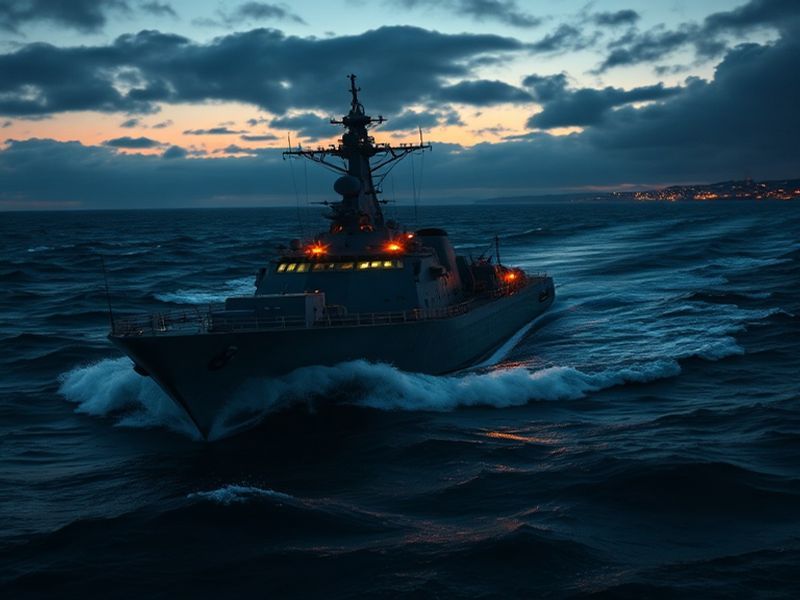
The phrase “Russian warship” carries weight in global discourse—not just as a description of a naval vessel, but as a symbol of military strength, political assertion, and geopolitical tension. It has evolved from a Cold War-era emblem of Soviet naval dominance to a modern-day shorthand for assertive foreign policy under Russian leadership. This evolution reflects broader shifts in international power dynamics, where naval presence serves as both a strategic tool and a psychological weapon.
To understand its significance today, we must trace its historical roots, examine its contemporary role in conflicts like the Black Sea crisis, and assess its implications for global security architecture. The story of the Russian warship is not just about steel and firepower—it’s about the enduring link between naval power and national identity.
The Historical Evolution of Russian Naval Power
The Russian Navy has long been a cornerstone of national prestige. Founded by Peter the Great in the late 17th century, it emerged as a key player during the Great Northern War, securing Russia’s access to the Baltic Sea. By the 19th century, the imperial fleet became a symbol of imperial ambition, culminating in the disastrous Russo-Japanese War of 1904–05, which exposed critical weaknesses in naval strategy.
The Soviet era transformed the navy into a global force. The Red Banner Baltic, Northern, Pacific, and Black Sea fleets formed a strategic network designed to project power across multiple theaters. Iconic vessels like the Kirov-class battlecruisers and Typhoon-class submarines became symbols of technological prowess and ideological rivalry during the Cold War. These ships were not merely tools of defense—they were instruments of deterrence, signaling to NATO that any aggression would be met with overwhelming force.
After the Soviet collapse, the Russian Navy fell into decline due to budget constraints and internal decay. However, a resurgence began in the 2010s under Vladimir Putin. The modernization program prioritized advanced destroyers like the Admiral Gorshkov-class frigates and nuclear-powered submarines such as the Borei and Yasen classes. These platforms were designed not only for defense but for power projection—capable of striking targets thousands of miles from Russian shores.
Symbolism and Psychological Warfare in the 21st Century
The modern Russian warship is as much a psychological weapon as it is a physical one. Its presence in contested waters—from the Black Sea to the Eastern Mediterranean—serves as a constant reminder of Russia’s willingness to assert its interests through hard power. The 2022 blockade of Ukrainian ports by Russian naval forces, including the cruiser Moskva, demonstrated how ships could shape the outcome of land conflicts without firing a single shot.
This approach reflects a doctrine known as “escalate to de-escalate”—using limited but visible force to deter further escalation while achieving strategic objectives. The sinking of the Moskva, Ukraine’s most high-profile naval victory, did not cripple Russia’s fleet. Instead, it elevated the warship to mythic status in Russian state media, where it became a martyr for national resilience. The narrative shifted from technological defeat to ideological triumph, reinforcing the idea that Russian ships embody an unbreakable will.
Psychological operations extend beyond combat. Russian ships conducting “friendly” port visits in Africa or Latin America often carry cultural and diplomatic delegations, blending military presence with soft power. The Admiral Kuznetsov, Russia’s sole aircraft carrier, has become a traveling emblem of prestige, despite its well-documented operational failures. Its deployments to Syria and the Mediterranean serve as mobile stages for Russian global influence.
Key Moments: Warships in Modern Geopolitical Crises
Several incidents involving Russian warships have defined the 21st century’s security landscape. Below are pivotal moments that illustrate their role in shaping international responses:
- 2014 Annexation of Crimea: Russian naval infantry and coastal defense units, supported by Black Sea Fleet ships, secured key ports without resistance. The presence of the Saratov landing ship and other vessels prevented Ukrainian naval counter-moves.
- 2018 Kerch Strait Incident: Russian coast guard vessels, operating under the guise of naval support, rammed and seized Ukrainian ships attempting to transit the strait. The Don and Korolyov patrol boats became symbols of Russia’s willingness to use force to control maritime access.
- 2022 Black Sea Blockade: The cruiser Moskva led a fleet that blockaded Ukraine’s ports, crippling grain exports and triggering a global food crisis. The ship’s sinking in April 2022—whether by Ukrainian missiles or accident—only intensified its symbolic power.
- 2023–24 Mediterranean Deployments: The Admiral Gorshkov, armed with hypersonic missiles, conducted patrols near U.S. and NATO assets, signaling Russia’s continued global reach despite sanctions and economic strain.
Each of these events demonstrates how Russian warships are not isolated instruments but integral components of a broader strategy—one that blends military capability with informational warfare. Their deployment is calibrated to test Western resolve, probe alliance cohesion, and assert Russian sovereignty over maritime zones.
Broader Implications: What the Russian Warship Stands For
The rise of the Russian warship as a geopolitical symbol reflects deeper shifts in the international order. Three trends stand out:
- Erosion of Post-Cold War Norms: The unchecked use of naval power in contested waters—such as the Black Sea, where Russia rejects international maritime law—signals a retreat from the rules-based order established after 1991. The U.S. and EU have responded with sanctions and naval patrols, but the cat-and-mouse games continue.
- Technological Asymmetry: While Russia lacks the carrier groups of the U.S. Navy, it compensates with asymmetric capabilities: hypersonic missiles, electronic warfare suites, and long-range strike platforms. The Zircon missile, capable of striking targets 1,000 km away at Mach 9, turns every destroyer and frigate into a potential strategic threat.
- Domestic Consolidation of Power: In Russian state media, warships are framed as guardians of the homeland, defending against a hostile West. Their imagery is woven into patriotic narratives, reinforcing public support for military spending and authoritarian governance. The warship becomes a metaphor for national endurance.
These dynamics pose challenges for NATO and allied states. Should they escalate naval presence in response? Or risk further provocation? The dilemma reflects a broader uncertainty: in a multipolar world, where naval power is increasingly contested, how do democracies balance deterrence with de-escalation?
One thing is clear: the Russian warship is no longer just a ship. It is a statement. A warning. A bargaining chip. And its voyage across the world’s oceans will continue to shape the future of global security.
Conclusion: The Warship as Mirror of Power
From Peter the Great’s Baltic fleet to the Moskva cruiser, the Russian warship has always been more than steel and sailors. It is a reflection of national ambition, a tool of coercion, and a stage for global drama. In an era where cyberattacks and drone swarms dominate headlines, the warship endures as a tangible symbol of sovereignty and strength.
Its story is not just about military technology or naval tactics. It is about how nations use symbols to project power, how history shapes modern decisions, and how the sea remains the ultimate arena for asserting global influence. As long as Russia seeks to assert its place on the world stage, its warships will sail—watched, feared, and debated.
One day, they may even return to peaceful ports. Until then, they remain both shield and sword for a nation unwilling to be ignored.
Explore more on global military trends on Dave’s Locker or dive deeper into strategic analysis to understand how naval power shapes history.