Walt Disney World Resort: History, Business & Future Plans
“`html
Walt Disney World Resort: A Legacy of Magic and Innovation
Since its opening in 1971, Walt Disney World Resort in Orlando, Florida, has grown from a single theme park into a sprawling destination spanning 27,000 acres. The resort, owned and operated by The Walt Disney Company, remains the largest and most visited vacation resort in the world, welcoming over 52 million guests annually. Beyond its theme parks, the resort includes four major theme parks, two water parks, 27 themed resort hotels, and a vast entertainment and dining complex.
What began as a vision of Walt Disney himself has evolved into a cultural and economic powerhouse. The resort’s creation was driven by Disney’s desire to create a destination that would extend the magic of his animated films into immersive, real-world experiences. Today, Walt Disney World stands as a testament to innovation in entertainment, hospitality, and storytelling.
The Evolution of Walt Disney World
Walt Disney’s original concept for the resort was far more ambitious than the theme parks that exist today. His plan, known as the “Florida Project,” included a futuristic city called EPCOT (Experimental Prototype Community of Tomorrow), which was intended to be a living, working community showcasing innovative urban planning and technology. After Disney’s passing in 1966, his brother Roy O. Disney oversaw the completion of the first phase of the resort, which opened as the Magic Kingdom in October 1971.
The resort has since expanded dramatically. EPCOT opened in 1982, shifting its focus from Disney’s original vision to a theme park celebrating human achievement and international culture. Disney’s Hollywood Studios (originally Disney-MGM Studios) debuted in 1989, immersing guests in the glamour and history of cinema. Animal Kingdom, the largest of the four parks, opened in 1998, blending conservation with adventure storytelling.
Each expansion reflected changing tastes and technological advancements. The introduction of FastPass in 1999 revolutionized the guest experience by allowing visitors to bypass long lines, while the 2012 launch of the MagicBand—a wearable RFID device—further streamlined park navigation and payments. These innovations underscored Disney’s commitment to blending fantasy with practical convenience.
The Four Theme Parks: A World of Varied Experiences
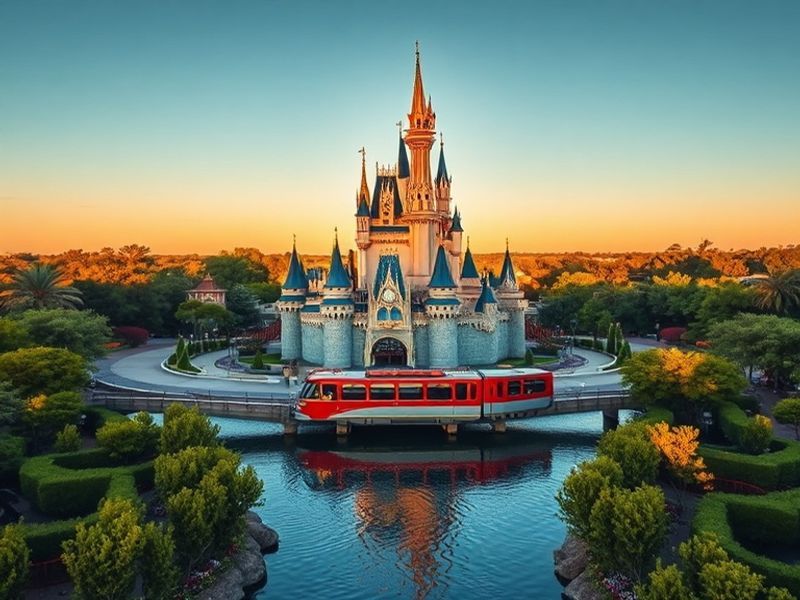
The Magic Kingdom is the heart of Walt Disney World, renowned for its iconic Cinderella Castle and classic attractions like Space Mountain and Pirates of the Caribbean. It remains the most visited theme park in the world, drawing families with its nostalgic charm and timeless rides.
EPCOT, with its distinctive geodesic spheres, offers a dual identity. The World Celebration, World Discovery, World Nature, and World Showcase areas present a mix of futuristic exhibits, thrilling rides like Guardians of the Galaxy: Cosmic Rewind, and cultural pavilions representing 11 countries. The park’s annual festivals, such as the Food & Wine Festival, have become major draws for food enthusiasts.
Disney’s Hollywood Studios transports guests into the golden age of Hollywood, with attractions like the Twilight Zone Tower of Terror and Mickey & Minnie’s Runaway Railway. The park’s newest addition, Star Wars: Galaxy’s Edge, immerses visitors in the Star Wars universe with fully realized sets, interactive experiences, and a thrilling ride aboard the Millennium Falcon.
Animal Kingdom is the largest of the four parks, spanning 580 acres of lush landscapes. Its centerpiece, the Tree of Life, is adorned with intricate animal carvings and serves as the gateway to immersive lands like Pandora – The World of Avatar. The park’s focus on conservation and wildlife education sets it apart, offering experiences like the Kilimanjaro Safaris and the Festival of the Lion King show.
The Business Behind the Magic
Walt Disney World is not just a theme park; it is a multi-billion-dollar economic engine. In 2022, the resort generated over $22 billion in revenue, supporting more than 77,000 jobs in Central Florida. The impact extends beyond tourism, with spillover effects in hospitality, retail, and transportation sectors.
The resort’s business model is built on several revenue streams. Ticket sales account for a significant portion of income, but the real financial power lies in ancillary services. Disney’s resort hotels, ranging from value-oriented options like All-Star Resorts to luxury accommodations at Disney’s Grand Floridian Resort & Spa, command premium pricing. Dining plans, merchandise sales, and exclusive experiences like the Bibbidi Bobbidi Boutique contribute substantially to the bottom line.
Disney’s approach to pricing is strategic and dynamic. The company employs a tiered pricing system for tickets, with discounts for multi-day visits and promotions during off-peak seasons. Annual passes, once a staple of Disney’s revenue model, have been restructured in recent years to focus on Florida residents and frequent visitors, reflecting broader shifts in consumer behavior.
The Role of Technology in Guest Experience
Technology has always been a cornerstone of Disney’s innovation, and Walt Disney World is no exception. The resort was an early adopter of RFID technology with the MagicBand, which functions as a park ticket, hotel key, and payment method. Guests can link their MagicBands to the My Disney Experience app, allowing them to check wait times, make dining reservations, and even unlock their hotel rooms.
Augmented reality (AR) and virtual reality (VR) are increasingly integrated into attractions. For example, the Rise of the Resistance ride in Star Wars: Galaxy’s Edge uses advanced robotics and projection mapping to create a fully immersive experience. Meanwhile, the upcoming TRON Lightcycle / Run roller coaster at Magic Kingdom will feature next-generation ride systems that blend digital and physical elements seamlessly.
The My Disney Experience app has become an essential tool for park navigation. It provides real-time wait times, mobile food ordering, and interactive maps. Disney has also experimented with AI-driven personalization, using guest data to tailor recommendations and offers. These advancements reflect a broader trend in the entertainment industry toward hyper-personalization.
Challenges and Controversies
Despite its success, Walt Disney World has faced its share of challenges. Labor shortages during the post-pandemic recovery strained operations, leading to reduced hours and temporary closures of popular attractions. The resort has also grappled with criticism over ticket pricing, which some argue has become prohibitively expensive for families. A one-day, one-park ticket currently costs around $150 per person, and prices continue to rise annually.
Environmental concerns have also been a point of contention. The resort’s massive water usage and energy consumption have drawn scrutiny, particularly in drought-prone Florida. In response, Disney has implemented sustainability initiatives, such as solar farms and water conservation programs. However, critics argue that these efforts are not enough to offset the resort’s ecological footprint.
The company has faced backlash over labor practices as well. In 2022, Disney employees at Walt Disney World voted to unionize, citing issues related to wages, benefits, and working conditions. The move marked a significant shift in the company’s relationship with its workforce, which has historically been non-unionized. Disney has since engaged in negotiations with the newly formed unions, though tensions remain.
Looking Ahead: The Future of Walt Disney World
The future of Walt Disney World is likely to be shaped by several key trends. First is the continued integration of technology to enhance guest experiences. Disney has already hinted at the potential for AI-driven attractions and even more immersive AR/VR experiences. The upcoming 50th-anniversary celebrations in 2021 marked the beginning of a new era, with ongoing additions like the new Mary Poppins attraction in EPCOT and the expansion of Star Wars: Galaxy’s Edge.
Another trend is the focus on sustainability and eco-friendly practices. Disney has committed to achieving net-zero greenhouse gas emissions for its direct operations by 2030. This includes transitioning to renewable energy sources and reducing waste. The company is also investing in conservation efforts, such as the Disney Conservation Fund, which supports wildlife and habitat protection projects worldwide.
Finally, Walt Disney World is likely to continue expanding its offerings beyond traditional theme parks. The resort has already diversified with experiences like the NBA Experience at Disney Springs and the upcoming Star Wars: Galactic Starcruiser, a two-night immersive hotel adventure. These additions reflect a broader shift toward creating multi-day, multi-faceted vacations that cater to a variety of interests.
For families, Disney enthusiasts, and travelers seeking a blend of nostalgia and innovation, Walt Disney World remains unparalleled. Its ability to reinvent itself while staying true to its core values of storytelling and magic ensures its place as a timeless destination.
As the resort approaches its 60th anniversary in 2031, one thing is certain: the magic is far from over.