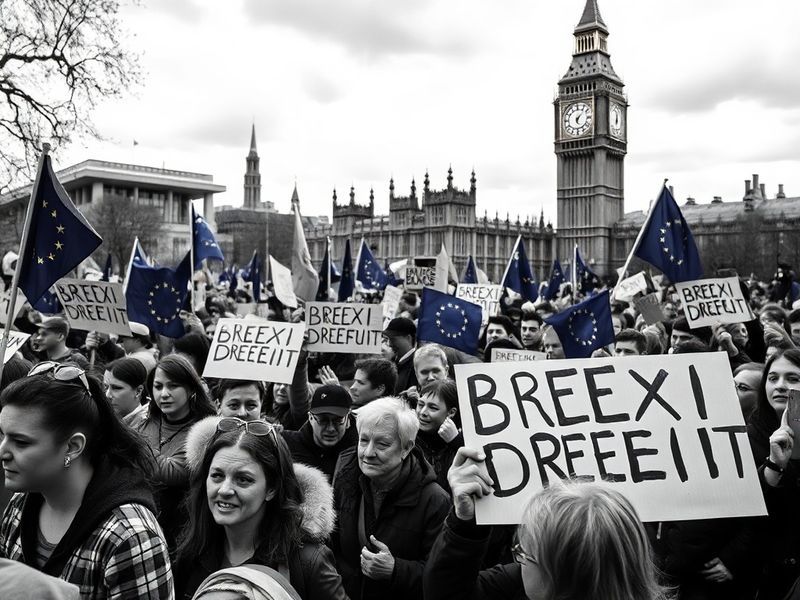
Five years after the United Kingdom formally left the European Union on January 31, 2020, the full impact of Brexit continues to unfold. The decision, confirmed by a razor-thin margin in the 2016 referendum, reshaped not just Britain’s relationship with Europe, but also its global standing, economic trajectory, and domestic politics. While some effects were immediate—such as trade disruptions and political upheaval—others have emerged gradually, revealing long-term structural shifts in labor markets, regulation, and national identity.
The journey to Brexit was anything but smooth. It involved years of political gridlock, two general elections, and multiple extensions to the Article 50 negotiation period. The UK’s departure marked the first time a member state had chosen to leave the EU, setting a precedent that continues to influence European integration debates. Today, as the dust begins to settle, it’s clear that Brexit’s legacy will be both profound and contested for decades to come.
The Economic Aftermath: Trade, Investment, and Growth
The most immediate and visible consequences of Brexit were economic. The UK’s departure from the EU single market and customs union introduced new barriers to trade, customs checks, and regulatory divergence. While the full economic impact is still being quantified, early data suggests a measurable slowdown in growth and investment.
According to the Office for Budget Responsibility, Brexit has reduced UK productivity by around 4% compared to what it would have been had the UK remained in the EU. This decline reflects reduced trade flows, labor shortages in key sectors, and lower foreign direct investment. The financial services sector, a cornerstone of the UK economy, has particularly felt the strain, with some firms relocating operations to EU cities like Frankfurt and Paris.
Yet not all effects have been negative. The UK has pursued independent trade deals, most notably with Australia and Japan, and has seen some diversification in its export markets. However, critics argue these agreements have done little to offset the losses from reduced access to the EU market—the UK’s largest trading partner.
Key Economic Shifts Since Brexit
- UK goods trade with the EU fell by nearly 15% between 2019 and 2023, according to government data.
- Foreign direct investment into the UK dropped by 25% in 2022, the lowest level since 2010 (EY UK Attractiveness Survey).
- Inflation in the UK has remained persistently higher than in the EU, partly attributed to supply chain frictions and labor shortages.
- London’s share of European financial services activity has declined from 40% in 2016 to around 35% in 2024.
- The UK now has more trade agreements than the EU—but most are smaller in scope and economic impact.
Political Consequences: Stability, Identity, and the Future of the Union
Brexit did not just change the UK’s economic relationship with Europe; it reshaped its political landscape. The referendum exposed deep divisions within the country, particularly between England and Scotland, where 62% of voters chose to remain in the EU. This has intensified calls for Scottish independence, with First Minister Humza Yousaf and his successor John Swinney both pledging to hold a new referendum.
The political turbulence surrounding Brexit also contributed to the fall of two prime ministers—Theresa May and Boris Johnson—and the brief tenure of Liz Truss, whose mini-budget triggered market chaos and eroded confidence in UK economic management. The Conservative Party, which led the Brexit campaign, has since struggled to regain electoral momentum, losing nearly 500 local council seats in the 2023 local elections.
Meanwhile, the Labour Party, which largely opposed Brexit during the referendum but has since softened its stance, now leads in the polls. Keir Starmer has signaled that while he will not seek to rejoin the EU, he aims to rebuild closer ties through a more cooperative framework. This pragmatic approach reflects a broader shift in public opinion: polls now consistently show a majority of Britons believe Brexit was a mistake, though reversing it remains politically toxic for most parties.
Social and Cultural Impact: Migration, Identity, and Public Sentiment
One of the most visible social changes has been in migration patterns. EU migration to the UK dropped sharply after 2020, while non-EU migration surged to fill labor gaps in healthcare, hospitality, and agriculture. This shift has altered the composition of British cities and towns, with some areas facing depopulation of younger workers and others experiencing rapid demographic change.
The end of freedom of movement has also affected cultural exchange. Erasmus+ student exchanges, which allowed UK students to study across Europe, have been replaced by more limited schemes. Arts and cultural sectors, which relied heavily on EU funding and collaboration, have reported funding gaps and administrative hurdles.
Public sentiment toward Brexit has also evolved. While 52% voted to leave in 2016, recent surveys indicate that around 55-60% now believe it was the wrong decision. However, there is little appetite for a reversal. Instead, the focus has shifted toward managing the consequences and finding ways to mitigate its negative effects without reopening old wounds.
What Comes Next? The Future of UK-EU Relations
The UK and EU have taken steps to stabilize their relationship. The Windsor Framework, agreed in 2023, eased trade tensions over Northern Ireland by reducing customs checks on goods moving from Great Britain to Northern Ireland. This deal helped restore some political goodwill and reduced the risk of a trade war.
Looking ahead, the UK is likely to pursue a more pragmatic, sector-by-sector approach to EU relations. Areas such as climate policy, data sharing, and security cooperation remain ripe for collaboration. However, full reintegration into EU structures—such as the single market or customs union—remains off the table for now, constrained by political and public opinion.
For the EU, Brexit has served as a cautionary tale about the risks of disintegration. It has strengthened the bloc’s resolve to deepen integration, particularly in defense and economic policy, as a bulwark against future exits. Meanwhile, the UK faces a delicate balancing act: maintaining sovereignty while rebuilding influence on the world stage.
As the UK marks five years since its departure, one thing is clear: Brexit is not a single event, but a process. Its full implications will continue to unfold over the coming decades, shaping not just the UK’s future, but the very idea of what it means to be European in a post-Brexit world.
For those seeking deeper analysis on UK-EU relations or the political shifts in Westminster, explore our Politics and News sections for ongoing coverage and expert commentary.