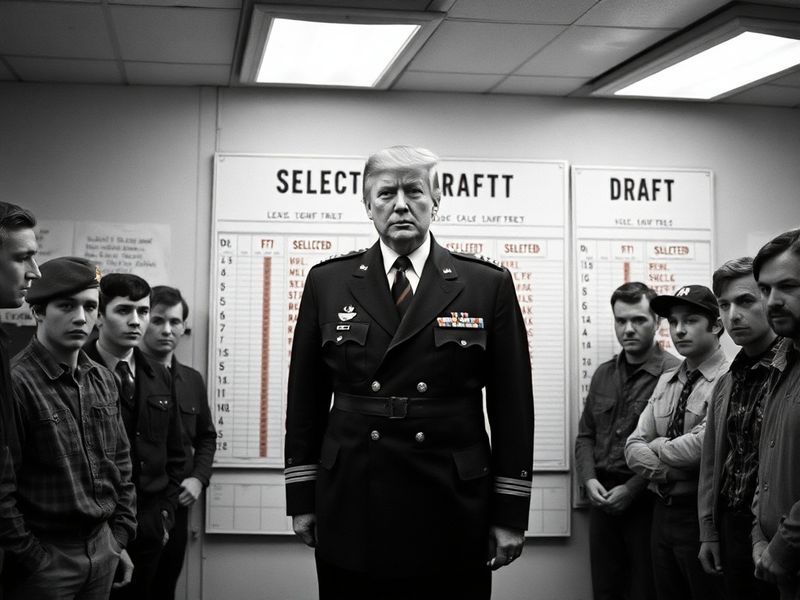
Donald Trump Military Draft: Fact vs. Fiction in 2024
“`html
Donald Trump Military Draft: Separating Fact from Fiction
During the 2024 presidential campaign, Donald Trump’s potential return to the White House reignited longstanding questions about military conscription. While no official draft policy has been proposed, the mere mention of Trump’s name has fueled speculation about what a second Trump administration might mean for U.S. defense policy and Selective Service obligations. To understand the context, we need to examine the historical relationship between Trump’s policies and military conscription, the current state of the draft debate, and the broader implications for American society.
Trump’s Record on Military and National Service
Donald Trump’s presidency (2017–2021) was marked by a strong emphasis on military strength, defense spending, and support for veterans. However, he never publicly endorsed a return to the draft during his first term. In fact, his administration consistently promoted an all-volunteer military and expanded recruitment efforts. Yet, Trump’s rhetoric often reflected a transactional view of military service, particularly in his comments about NATO allies and burden-sharing. He once suggested that countries like Germany and South Korea should increase their defense contributions, raising questions about whether he would consider broader forms of national service in the future.
During his 2024 campaign, Trump has reiterated his support for a strong military but has not directly addressed the draft. His silence on the issue has not stopped speculation, especially among younger voters and military families who recall how the Vietnam-era draft shaped national politics. The absence of a clear stance leaves room for interpretation—and concern.
Key Points About Trump and the Draft
- No official draft policy proposed: Despite rumors, no Trump administration or campaign document has called for reinstating the draft.
- Support for an all-volunteer force: Under Trump, the military remained volunteer-based, with no plans to change recruitment models.
- Rhetoric on burden-sharing: Trump has criticized allies for not spending enough on defense, which some interpret as a critique of over-reliance on U.S. troops.
- Generational tension: Younger voters, many of whom oppose conscription, remain skeptical of any policy that could expand mandatory service.
It’s important to note that the draft—officially known as the Selective Service System—has been inactive since 1973, when the U.S. ended conscription after the Vietnam War. Today, only men aged 18–25 are required to register, though no new inductions have occurred in over 50 years. The system remains in place primarily as a contingency measure in case of a national emergency requiring rapid military expansion.
Why the Draft Rumors Persist
The persistence of draft rumors during Trump’s campaigns can be attributed to several factors. First, Trump’s unpredictable leadership style and willingness to challenge longstanding norms make it difficult to dismiss any policy idea outright. Second, the political polarization of the past decade has led to widespread distrust of institutions, including the military. Conspiracy theories about a potential draft have circulated online, often fueled by misinformation or partisan agendas. Finally, the rise of global tensions—particularly with Russia, China, and Iran—has led some analysts to speculate about whether a major conflict could force a return to conscription.
In 2023, a Pentagon report suggested that the U.S. military could face recruiting shortfalls in the coming years, leading to renewed discussions about expanding the talent pool. While this report did not mention a draft, it did raise questions about whether voluntary recruitment alone can sustain America’s defense needs. Some conservative commentators have argued that a draft could help address recruitment gaps, while progressives have warned against reviving a system that disproportionately targeted poor and minority communities during the Vietnam era.
Public Opinion and Generational Divides
Public support for the draft has fluctuated over the decades. A 2023 Pew Research poll found that only 35% of Americans support reinstating the draft, with strong opposition among younger adults. The poll revealed a stark generational divide: 52% of Baby Boomers supported the idea, compared to just 22% of Gen Z respondents. This gap reflects broader attitudes toward military service, with younger generations more likely to view conscription as an infringement on personal freedom.
Opponents of the draft often cite ethical concerns, arguing that mandatory service could disproportionately affect marginalized communities. Historically, draft lotteries during the Vietnam War disproportionately impacted low-income and minority draftees, leading to widespread protests and civil unrest. Modern advocates for social justice argue that any return to conscription must include safeguards to prevent similar inequities.
Broader Implications of a Potential Draft
If a future administration were to consider reinstating the draft, the implications would extend far beyond military policy. A mandatory service program could reshape workforce dynamics, education systems, and even cultural attitudes toward patriotism. For example, a draft could incentivize colleges to offer deferments or alternative service options, creating a new kind of student deferment system reminiscent of past eras. It could also lead to significant changes in how the military recruits and retains talent, particularly in an era where technological skills are increasingly valuable.
On the international stage, a return to the draft could signal a major shift in U.S. defense strategy. Allies long accustomed to relying on American military power might interpret conscription as a sign of increased isolationism or unilateralism. Conversely, adversaries like Russia or China could view a draft as evidence of U.S. resolve, potentially escalating global tensions. The geopolitical consequences of such a move would be profound and difficult to predict.
What Would a Trump-Era Draft Look Like?
Given Trump’s transactional approach to governance, any draft policy under his administration would likely prioritize efficiency and political messaging over egalitarian ideals. For example, Trump might push for a draft that includes both men and women—aligning with the military’s current gender-neutral policies—but with exemptions for certain groups, such as students or individuals with critical civilian roles. Alternatively, he could propose a tiered system where wealthier individuals could buy their way out of service, a practice that was common during the Civil War and World War I.
Another possibility is that Trump could frame a draft as part of a broader “national service” initiative, blending military conscription with civilian programs like AmeriCorps or Peace Corps. This approach would allow him to appeal to both hawks who want a stronger military and progressives who advocate for civic engagement. However, such a hybrid system would face significant legal and logistical challenges, particularly in defining what constitutes “acceptable” civilian service.
Conclusion: Staying Informed in an Era of Uncertainty
The debate over a military draft under Donald Trump—or any future president—is complex and multifaceted. While no concrete plans exist to reinstate conscription, the possibility remains a potent symbol of broader anxieties about military overreach, economic inequality, and national identity. For voters, military families, and young adults, staying informed means watching for policy proposals, scrutinizing legislative actions, and engaging in informed discussions about the role of service in American society.
One thing is clear: the draft is not just a military issue; it’s a societal one. Its revival would force the nation to confront questions about equality, freedom, and the true cost of global leadership. Until then, rumors of a Trump-era draft serve as a reminder of how deeply military service is woven into the fabric of American politics—and how easily fear can shape the national conversation.
For those interested in exploring related topics, visit Dave’s Locker Politics for ongoing coverage of military policy and Dave’s Locker News for the latest headlines.