Defining the Frontier Beyond Geography
The word “frontier” once summoned images of untamed wilderness, where settlers pushed against the edges of known civilization. Today, it has evolved beyond physical borders into a concept that defines human ambition, cultural exchange, and technological conquest. In the 21st century, frontiers exist in digital landscapes, deep space, and even within the human mind.
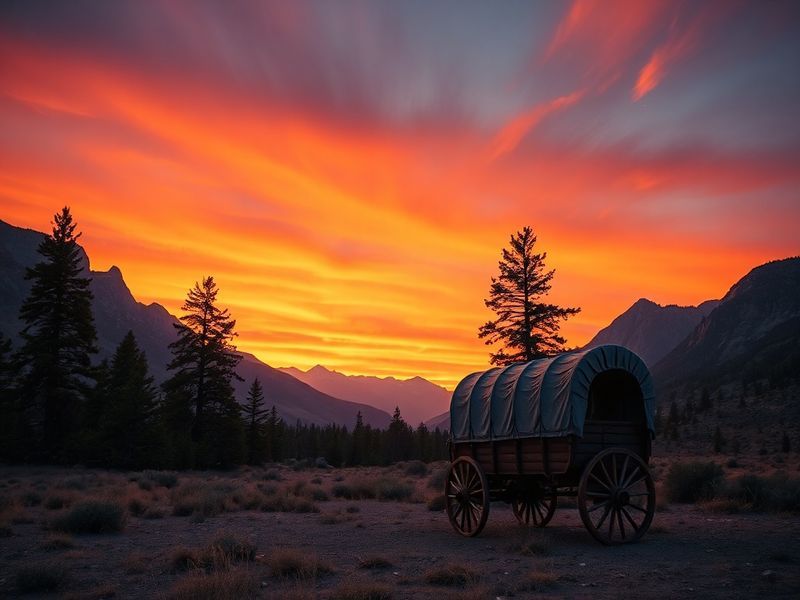
Historically, frontiers were linear—they marked where one society ended and another began. The American frontier, for example, was a moving boundary that reshaped the nation’s identity. But modern frontiers are multidimensional. They appear in the form of virtual reality platforms where users create entire worlds, in the Arctic where melting ice reveals new trade routes, and in the microcosms of laboratories where scientists edit genes with CRISPR technology.
The Psychological Frontier: Breaking Mental Barriers
Perhaps the most profound frontier today is the one within ourselves. Human potential has always been a contested space, but recent decades have seen unprecedented efforts to redefine its limits. From athletes breaking physical records to artists exploring uncharted emotional territories, the frontier is now as much about perception as it is about geography.
The rise of extreme sports like free solo climbing, where athletes scale cliffs without ropes, exemplifies this shift. Alex Honnold’s 2017 ascent of El Capitan in Yosemite National Park wasn’t just a physical feat—it was a psychological one. The frontier here was the mind’s ability to conquer fear. Similarly, in sports, athletes increasingly push boundaries not just in performance but in how they are perceived, with esports and adaptive athletics redefining what competition can look like.
Digital Frontiers: The New Gold Rush
The internet was once hailed as a frontier of democratized information, but today’s digital frontiers are far more complex. Cryptocurrency, decentralized finance, and the metaverse represent new kinds of land grabs—this time for data, identity, and digital real estate.
Consider the metaverse, a term that has moved from science fiction to Silicon Valley’s favorite buzzword. Companies like Meta (formerly Facebook) envision a future where virtual worlds operate as seamlessly as physical ones. Yet, this frontier is fraught with challenges: issues of privacy, digital ownership, and the erosion of real-world social structures. In China, where the government tightly controls digital spaces, the metaverse is becoming a battleground for cultural and political influence.
Beyond virtual worlds, blockchain technology is creating frontiers in trust and transparency. Decentralized autonomous organizations (DAOs) allow communities to govern themselves without traditional hierarchies. This isn’t just a technological shift—it’s a cultural one, challenging centuries-old systems of power and control.
The Cosmic Frontier: Humanity’s Next Step
Space exploration remains the ultimate frontier, and recent years have seen a surge in activity that feels almost like a new gold rush. Private companies like SpaceX and Blue Origin are not just launching satellites—they’re building the infrastructure for a multi-planetary future. NASA’s Artemis program aims to return humans to the Moon by 2025, with plans for a sustainable lunar presence. Meanwhile, Mars colonization is no longer a distant dream but a near-term goal.
Yet, space is not just a physical frontier. It’s also a cultural and ethical one. Who gets to go? Who controls the resources? These questions are already sparking debates. The 1967 Outer Space Treaty, which governs international space law, is being tested by commercial ventures that see space as a new economic frontier. The tension between exploration and exploitation is palpable.
Cultural Frontiers: Where Traditions Clash and Blend
Frontiers aren’t just about exploration—they’re about encounter. When cultures collide at the edges of societies, new forms of expression emerge. The Silk Road was a frontier of trade and ideas, connecting East and West in a way that reshaped art, religion, and cuisine. Today, globalization has accelerated this process, but it has also created friction.
Consider the rise of K-pop and its global influence. South Korea’s cultural frontier isn’t just in Seoul’s bustling districts—it’s in the streaming platforms of Latin America, the concert halls of Europe, and the playlists of Africa. Similarly, Afrobeats has become a global phenomenon, blending traditional West African rhythms with hip-hop, dancehall, and pop. These cultural frontiers are not passive; they are active negotiations of identity and power.
Food is another arena where cultural frontiers are constantly being redrawn. The popularity of food from regions like Oaxaca, Mexico, or Sichuan, China, has grown exponentially, but so has the backlash against cultural appropriation. Chefs and home cooks alike are navigating the fine line between appreciation and exploitation, turning the kitchen into a frontier of its own.
The Ethics of Frontier Expansion
With every frontier comes a set of ethical dilemmas. The exploitation of Indigenous lands for resources, the commercialization of space, and the commodification of culture all raise questions about who benefits from these expansions—and who pays the price.
In the Arctic, melting ice is opening new shipping routes, but it’s also threatening the way of life for Indigenous communities like the Inuit. Their knowledge of the land, passed down through generations, is now at odds with the rapid changes brought by climate change and industrialization. Similarly, in the Amazon, the frontier of deforestation is erasing not just trees but entire ecosystems and cultures that have thrived there for millennia.
Technology offers another layer of ethical complexity. The frontier of artificial intelligence promises breakthroughs in medicine and science, but it also risks deepening inequalities. Who controls AI, and who gets to decide its rules? The answers to these questions will shape the next century of human progress.
A Balanced Approach to the Unknown
So how do we navigate these frontiers responsibly? The answer may lie in a blend of caution and curiosity. Indigenous knowledge, for example, offers valuable insights into sustainable living—insights that modern frontiers often overlook in their rush to expand. In Canada, the concept of “Two-Eyed Seeing” encourages integrating Indigenous and Western perspectives to address challenges like climate change and resource management.
Meanwhile, in technology, the open-source movement champions transparency and collaboration. Projects like Linux and Wikipedia prove that frontiers can be built on shared knowledge rather than proprietary control. This approach could serve as a model for other fields, from space exploration to cultural exchange.
Conclusion: The Frontier as a Mirror
The frontier has always been a reflection of human ambition. Whether it’s the vastness of space, the depths of the ocean, or the uncharted territories of the mind, frontiers challenge us to ask: What are we willing to risk? What are we willing to lose? And what are we willing to preserve?
In the 21st century, frontiers are no longer just about claiming new lands—they’re about defining new ways of living. They force us to confront our values, our limits, and our shared future. As we stand on the edges of these new worlds, the question isn’t just what lies beyond—but who we become in the process.