Joe Johnston’s Jurassic Park III arrived in theaters in 2001 as the franchise’s third installment, but its journey from concept to completion was anything but straightforward. Long before Sam Neill’s Dr. Alan Grant returned to Isla Sorna, Universal Pictures entertained a far different vision for the third film—one that would have drastically altered the series’ trajectory. The story of JA 3, as it was then known, is a fascinating case study in Hollywood development, creative pivots, and the unpredictable nature of blockbuster filmmaking.
What fans ultimately experienced in 2001 bore little resemblance to the initial ideas floated by Steven Spielberg, Joe Johnston, and the writing teams involved. The version of JA 3 that almost was reveals how close the franchise came to diverging into uncharted territory—territory that might have reshaped its legacy entirely.
The Original Vision: A Return to Isla Nublar
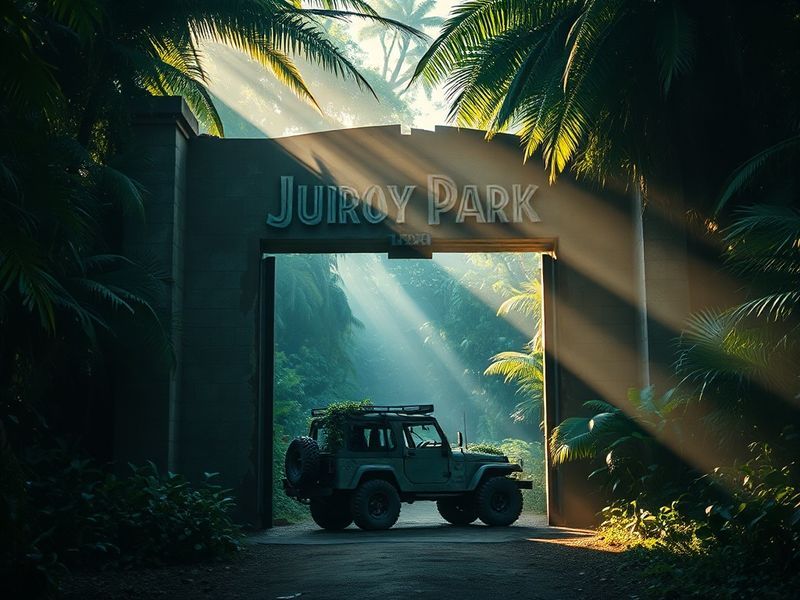
Early in the development of Jurassic Park III, Spielberg and Johnston envisioned a return to Isla Nublar, the original site of the Jurassic Park disaster. This wasn’t just a creative choice; it was a strategic one. By 1997, Isla Sorna—the setting of The Lost World: Jurassic Park—had already been established as a secondary location. A return to the first island promised a sense of continuity and closure.
The initial draft, penned by Peter Buchman (who co-wrote the first film), outlined a story in which Dr. Alan Grant is recruited by a wealthy couple to escort their son on a tour of Isla Nublar. What they find, however, is not the ruins of the original park, but a secret government facility—one that had secretly continued cloning dinosaurs long after the public believed the project was shut down. The film would have culminated in a dramatic escape sequence, with Grant and the boy racing against time as the military moved in to bomb the island.
This draft was ambitious, tying directly into the lore of the first film while introducing new stakes. It also would have allowed for the return of key elements like the Tyrannosaurus rex paddock and the famous visitor center, providing nostalgic callbacks for longtime fans. However, creative differences and logistical concerns led to this vision being shelved.
A Shift in Direction: The Birth of Isla Sorna – Part Two
By 1998, the focus had shifted back to Isla Sorna. This decision was influenced by several factors. For one, The Lost World had underperformed at the box office compared to the original, and Universal was eager to reset the franchise’s narrative momentum. Additionally, the script for the third film needed to be completed quickly, and returning to Isla Sorna—already established as a dinosaur-breeding ground—offered a more contained, cost-effective setting.
The final version of Jurassic Park III followed Dr. Alan Grant on a rescue mission to the island, where he encounters a group of mercenaries and a sinister military figure. The film’s climax involved a Spinosaurus, a new apex predator designed to upstage the T. rex. While this version satisfied audiences and performed respectably at the box office, it lacked the deeper lore and emotional resonance of the original concept.
The Cut Scenes That Could Have Changed Everything
What makes the lost version of JA 3 so compelling are the scenes that were actually filmed but never made it into the final cut. These moments—shot during the early stages of production—offer a tantalizing glimpse into an alternate reality for the franchise.
Among the most notable was a sequence involving a massive aviary filled with Dilophosaurus. In the final film, the aviary is only briefly glimpsed, but early scripts described a full-fledged encounter where the group is trapped inside, with the creatures using their frill-spitting abilities to disorient and attack. This scene would have been a direct callback to the first film’s iconic kitchen scene, where the T. rex breaks in and chaos ensues.
Another cut sequence involved a more elaborate military presence on the island. In early drafts, the U.S. Navy had established a base on Isla Sorna, and the film’s antagonists were part of a black-ops team tasked with retrieving dinosaur DNA. This would have introduced a geopolitical element, as the mercenaries were not just treasure hunters but operatives working for a shadowy government agency. Though these ideas were scaled back in the final version, they hint at the darker, more complex tone the film could have embraced.
The most intriguing cut scene, however, involved a confrontation between Dr. Grant and a pack of Velociraptors in an abandoned InGen lab. The sequence was reportedly tense and visually striking, with the raptors using the lab’s equipment against Grant in a display of cunning intelligence. While this scene was ultimately trimmed for pacing, it underscored the franchise’s recurring theme of dinosaurs outsmarting humans—a theme that had been central to the first two films.
Why the Original Vision Was Abandoned
The shift from Isla Nublar to Isla Sorna wasn’t just a creative decision; it was a financial and logistical one. By the late 1990s, the cost of visual effects had risen dramatically, and the original Jurassic Park had set a high bar for realism. Returning to Isla Nublar would have required recreating the original park’s iconic sets, including the visitor center and the T. rex paddock. This was not only expensive but also risky, as the original park had been destroyed in the first film. The practical and financial challenges made Isla Sorna a more appealing choice.
Additionally, the writing team faced challenges in expanding the original draft. Buchman’s script was ambitious, but it struggled to balance the introduction of new characters and locations with the established lore. The idea of a secret government facility on Isla Nublar, while intriguing, also risked convoluting the franchise’s mythology. Universal executives likely saw the simpler, more contained setting of Isla Sorna as a safer bet.
There was also the matter of audience expectations. By 1999, the Jurassic Park brand was synonymous with Isla Sorna, thanks to The Lost World. A return to the first island might have felt like a step backward, both creatively and commercially. The decision to set Jurassic Park III on Isla Sorna was, in many ways, a calculated move to keep the franchise fresh while staying true to its roots.
The Legacy of the Lost JA 3
The version of Jurassic Park III that almost was serves as a fascinating footnote in the franchise’s history. It highlights the unpredictability of Hollywood and the myriad factors that influence a film’s final form. While the version fans received was a solid, if flawed, entry in the series, the original concept had the potential to be something more ambitious and thematically richer.
In hindsight, the shift to Isla Sorna was not entirely without merit. The final film introduced the Spinosaurus, a dinosaur that remains one of the franchise’s most popular creations. It also delivered a sense of closure to the Isla Sorna storyline, paving the way for the eventual return to Isla Nublar in Jurassic World (2015). Without Jurassic Park III, the franchise might not have survived long enough to see its eventual revival.
That said, the lost version of JA 3 remains a tantalizing “what if” in the minds of fans. Imagine a film where Dr. Grant returns to Isla Nublar, only to discover a secret government facility still breeding dinosaurs. Imagine an aviary sequence that rivals the T. rex’s kitchen attack in intensity. Imagine a franchise that delved deeper into the ethical and political consequences of genetic engineering. It’s a version of Jurassic Park that fans will never see—but one that continues to spark imagination and debate.
For those interested in exploring more about the Jurassic Park franchise’s evolution, be sure to check out our analysis of Jurassic Park games through the years, which traces how the franchise expanded beyond the movies. You can also dive into our deeper look at the impact of Jurassic Park on pop culture, which examines how the series shaped the sci-fi genre.
The story of JA 3 is a reminder that even the most carefully planned blockbusters can take unexpected turns. What began as a bold vision for the third film ultimately became something else entirely—but that doesn’t make it any less fascinating to explore.