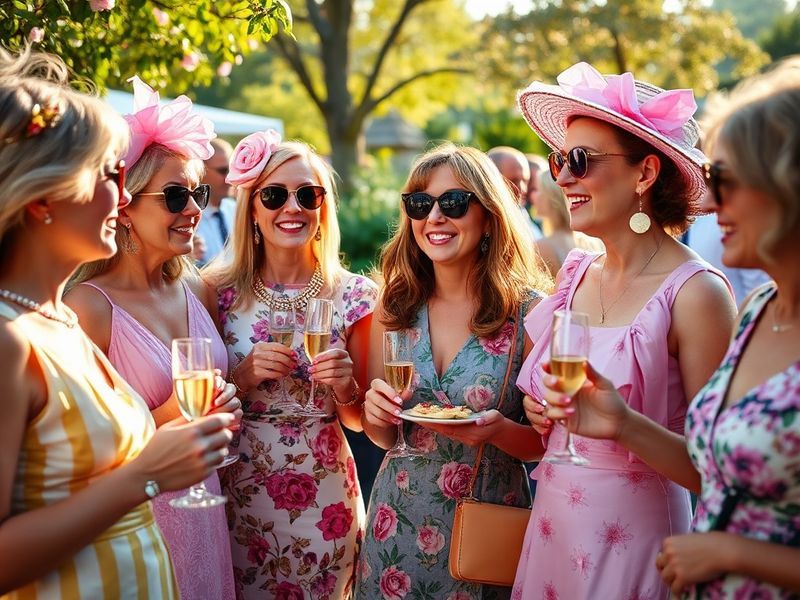
As the sporting calendar evolves, Ladies Day 2026 stands poised to cement its reputation as one of the most anticipated events on the international racing calendar. Scheduled for Tuesday, June 16, 2026, the day will once again transform the historic Ascot Racecourse into a stage where sport, fashion, and culture converge under the British summer sky. But Ladies Day is far more than a social fixture; it has become a global touchpoint for discussions about gender equality, representation, and the future of women’s sport.
While rooted in tradition, the event has undergone significant transformation in recent years. Organizers have actively expanded programming to include more female athletes, commentators, and leaders in the sporting world. This evolution reflects broader cultural shifts, where women’s achievements in sport are increasingly recognized on their own terms—not as secondary narratives to men’s competitions, but as headline stories in their own right.
The Global Rise of Ladies Day
Ladies Day’s influence extends well beyond the green swards of Berkshire. Similar events have emerged worldwide, inspired by the Ascot model but adapted to local cultures and sporting traditions. In Australia, the Melbourne Cup Carnival has introduced its own “Ladies’ Day,” blending racing with high fashion and charity auctions. In the United States, the Kentucky Derby’s “Oaks Day” offers a comparable platform, celebrating both the sport of thoroughbred racing and the achievements of women across diverse fields.
These events are not merely social gatherings. They serve as strategic platforms for advocacy, fundraising, and visibility. For instance, at Ascot in 2024, over £1.2 million was raised for women’s sport charities through ticket sales, auctions, and partnerships. The 2026 edition is expected to build on this momentum, with organizers already confirming collaborations with global women’s sports federations and equality-focused organizations.
It is this dual identity—both glamorous and purposeful—that distinguishes Ladies Day from other sporting fixtures. It invites not just attendance, but participation: in conversations, in philanthropy, and in redefining what it means to celebrate women in the public eye.
Fashion Meets Function: A Cultural Phenomenon
The sartorial spectacle of Ladies Day remains one of its most enduring draws. Millions tune in annually to the BBC’s coverage not just for the racing, but for the unparalleled display of British millinery and haute couture. The event has become a runway for designers, milliners, and stylists, with hats often becoming as talked-about as the winners on the track.
Yet this fashion narrative is increasingly intertwined with substance. Designers are collaborating with women’s charities, with proceeds from special collections going toward grassroots sports programs. The 2026 theme, “Crowns of Courage,” is set to spotlight women who have overcome adversity in sport—athletes, coaches, and advocates whose stories will be woven into the event’s visual identity.
- Hats as Symbols: No longer mere accessories, headpieces are being designed to reflect personal or collective journeys—some incorporating embroidery of athletes’ names, others using sustainable materials to honor eco-conscious values.
- Sustainability in Style: The 2026 dress code encourages the use of vintage, upcycled, or ethically sourced fabrics, reflecting a growing demand for responsible fashion within the event’s traditional glamour.
- Inclusivity in Design: For the first time, adaptive fashion consultants are working with designers to ensure the event is accessible to women with disabilities, offering custom-fit garments and sensory-friendly materials.
This evolution signals a quiet revolution in how we view such iconic events. They are no longer frozen in time but are actively adapting to modern values—balancing spectacle with responsibility, glamour with purpose.
Sport on the Front Foot
The sporting program for Ladies Day 2026 reflects a deliberate push toward gender parity. The day will feature top-tier races exclusively for female jockeys and trainers, including the newly inaugurated Queen Elizabeth II Stakes (Fillies’ Division), offering a prize purse equal to that of the historic Royal Hunt Cup.
This shift is part of a broader movement across horse racing. In 2025, the International Federation of Horseracing Authorities (IFHA) mandated that all Group 1 races worldwide must include at least 30% female participation in field sizes by 2027. Ladies Day 2026 serves as a showcase for this progress, with jockeys from Saudi Arabia, Japan, and Brazil among the contenders.
Behind the scenes, the event is also a proving ground for female leadership. The 2026 race day will be overseen by a predominantly female executive team, including the first woman to serve as Clerk of the Course at Ascot in its 300-year history. This leadership pipeline is critical in an industry historically dominated by male networks.
Beyond the Turf: A Platform for Change
Ladies Day has grown into a cultural symposium. The 2026 program includes a series of talks and panels under the banner “Beyond the Finish Line,” hosted in partnership with Sports and the International Olympic Committee. Topics range from the mental health challenges faced by elite female athletes to the business of women’s sport sponsorship.
Notable speakers for 2026 include:
- Dina Asher-Smith, British sprinter and Olympic medallist, on “Breaking Barriers in Track and Field”
- Fatma Samoura, former FIFA Secretary General, on “Leadership in a Male-Dominated World”
- Dr. Emma Ross, Head of Physiology at the English Institute of Sport, on “The Science of Female Athletic Performance”
These discussions are live-streamed globally, reaching audiences from Tokyo to Toronto. They are designed to educate, inspire, and challenge perceptions—not just about sport, but about what women can achieve when given equal opportunity.
The Future: What Lies Ahead for Ladies Day?
Looking forward, Ladies Day 2026 is more than an event; it is a statement. It represents a growing recognition that celebration and progress are not mutually exclusive. As sport increasingly reflects the values of its audience, events like Ladies Day are leading the way in redefining tradition for the modern era.
Organizers have announced plans to launch a global “Ladies Day Network,” connecting similar celebrations across five continents. This network will facilitate shared fundraising, athlete exchanges, and joint advocacy campaigns, ensuring that the momentum generated each June in Ascot radiates outward, year-round.
Moreover, with the Paris 2024 Olympics having just concluded, the focus on women’s sport has never been sharper. Ladies Day 2026 arrives at a pivotal moment—amid record viewership, new sponsorship deals, and a public increasingly hungry for authentic representation. The event stands ready to meet that demand, not just as a sporting occasion, but as a cultural milestone.
As the sun sets over Ascot on June 16, 2026, the hats will come off, the champagne will be poured, and the stories will be told. But the real victory will be measured not in trophies alone, but in the quiet, enduring shift in how the world sees—and celebrates—women in sport.